Page: 5 / 13
Technical presentation
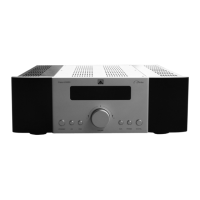
Amplifier
CLASS AP100 is the first generation of this
amplifier.
The amplifier is designed to provide maximum
sound quality. All inputs and speaker connections
are gold plated and of the highest quality.
A powerful toroidal transformer contributes to an
effective power supply. Four power output
transistors per channel make it possible to handle
high currents.
The first generation is now built by modules (for
future development) and has got a lot of new
components with improved quality.
Class A/Class AB
The amplifier can be switched between class A and
AB. This means you do not always
A mode if not feasible.
CLASS A MODE
Class A mode increases the
the output transistors to achieve the best possible
performance.
The amplifier draws a lot of power
even when idling, creating lots of heat dissipation
making it very hot.
CLASS AB MODE
Class AB is the standard operating mode among
conventional amplifiers. The maximum output
power is radically higher than in Class A mode.
This mode is suitable when you want to play loud
for long periods. The risk of ove
considerably lower than with class A operation.
Class A mode uses a higher nominal
quiescent current through the output
stage, which in turn produces more heat
dissipation. The output transistors heat
the cooling sink, and the temperature is
measured by a sensor, feeding the
information back to the output stage, thus
regulating the bias.
There is a button for changing between
A/AB on the front panel.
Cabinet
The new cabinet, with softer corners, is almost
completely made from solid al
the quality impression as well as the mechanical
stiffness.
Outer interference is effectively shielded, and the
alumini
um contributes to spreading the heat
generated inside. This improves the
dissipation, cooling for the amplifier better.



 To Next Page