EasyManua.ls Logo

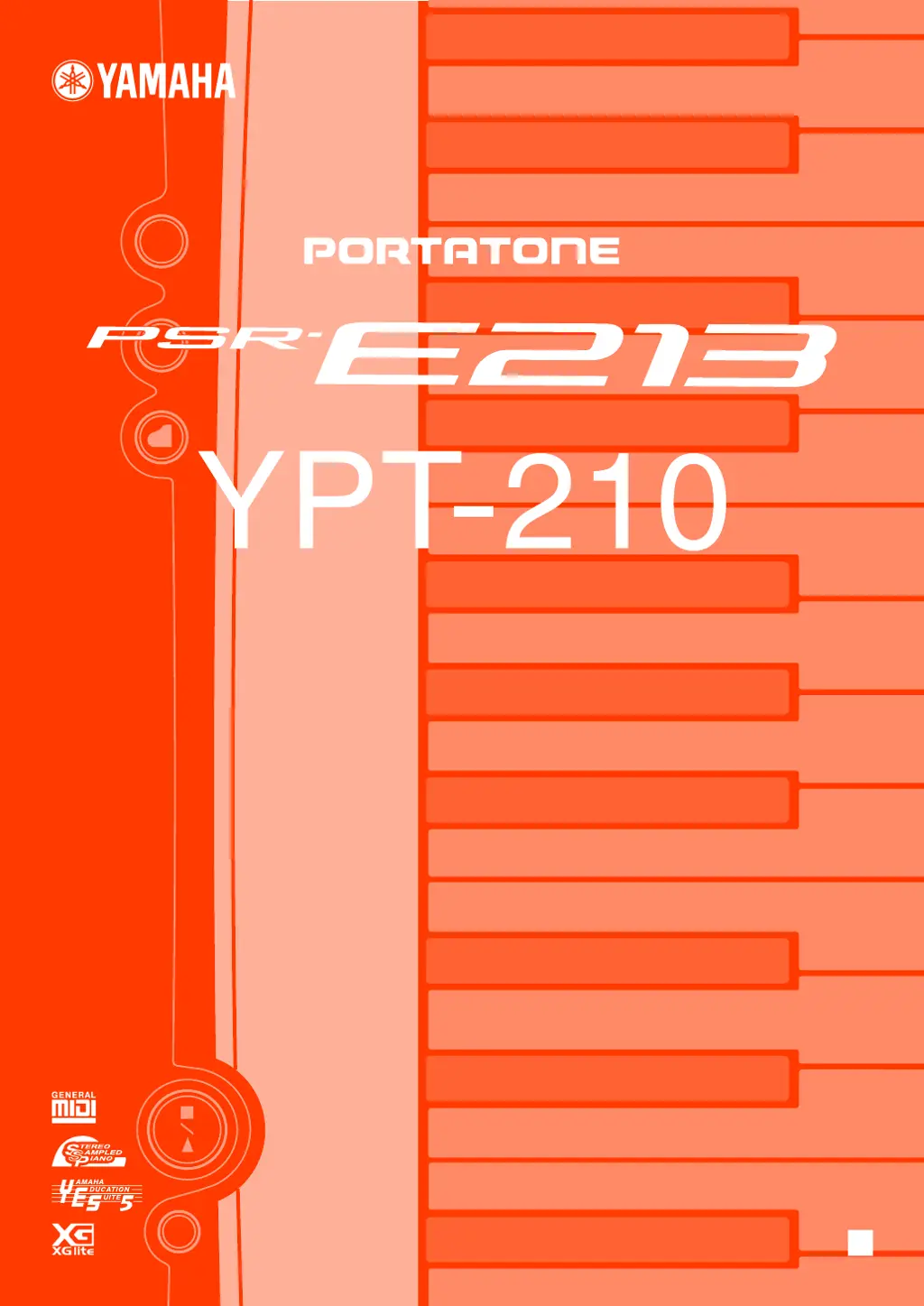
Yamaha PSR-E213 - User Manual

Yamaha PSR-E213
72 pages
Print Icon
To Next Page IconTo Next Page
Loading...
Owner’s Manual
EN

Table of Contents

Questions and Answers

  • D
    Denise HarmonAug 18, 2025
    How to fix a Yamaha PSR-E213 Electronic Keyboard when the style does not sound properly?
    • E
      esmithAug 19, 2025
      If the Style does not sound properly on your Yamaha Electronic Keyboard, ensure that the Style Volume is set to an appropriate level. Also, check if the Split Point is set at an appropriate key for the chords you are playing and make sure the “ACMP ON” indicator is showing in the display by pressing the [ACMP ON/OFF] button.
  • R
    Richard BushAug 21, 2025
    What to do if the Style or Song does not play back on my Yamaha PSR-E213?
    • E
      Edward EvansAug 21, 2025
      If the Style or Song does not play back when the [START/STOP] button is pressed on your Yamaha Electronic Keyboard, make sure External Clock is set to OFF.
  • A
    aprilwardAug 23, 2025
    How to troubleshoot no sound on Yamaha PSR-E213?
    • T
      Tammy AndersonAug 23, 2025
      If you don't hear any sound from your Yamaha Electronic Keyboard, check that nothing is connected to the PHONES/OUTPUT jack on the rear panel. Also, check the Local Control on/off.
  • C
    Cameron HahnAug 26, 2025
    Why does the sustain pedal on my Yamaha PSR-E213 Electronic Keyboard seem reversed?
    • T
      Thomas PadillaAug 26, 2025
      If the footswitch (for sustain) seems to produce the opposite effect on your Yamaha Electronic Keyboard, it means that the polarity of the footswitch is reversed. Make sure that the footswitch plug is properly connected to the SUSTAIN jack before turning on the power.
  • J
    jessicamorrisAug 28, 2025
    Why does my Yamaha Electronic Keyboard make noise when I use my mobile phone?
    • L
      Lorraine BirdAug 28, 2025
      Using a mobile phone in close proximity to the Yamaha Electronic Keyboard may produce interference. To prevent this, either turn off the mobile phone or use it further away from the instrument.
  • J
    Joanna DavisAug 30, 2025
    What to do if the Yamaha PSR-E213 volume is too soft?
    • M
      Madison MilesAug 30, 2025
      If the volume of your Yamaha Electronic Keyboard is too soft, the sound quality is poor, the rhythm stops unexpectedly or won't play, or the song doesn't play correctly, the batteries may be low or dead. Replace all six batteries with completely new ones, or use the optional AC adapter.
  • M
    melinda94Sep 1, 2025
    Why does my Yamaha Electronic Keyboard make a popping sound when turned on or off?
    • N
      Nathan KerrSep 2, 2025
      When the Yamaha Electronic Keyboard is turned on or off, a popping sound is temporarily produced. This is normal and indicates that the instrument is receiving electrical power.
  • A
    Angela YoungSep 3, 2025
    Why does my Yamaha PSR-E213 sound cut off?
    • S
      staceyhollandSep 4, 2025
      If not all of the voices seem to sound, or the sound seems to be cut off on your Yamaha Electronic Keyboard, it may be because the instrument is polyphonic up to a maximum of 32 notes. If a Style or Song is playing back at the same time, some notes/sounds may be omitted (or “stolen”) from the accompaniment or Song.
  • R
    ryanbrownSep 6, 2025
    Why does the right hand side of my Yamaha Electronic Keyboard not produce sound?
    • B
      Bobby Patterson DDSSep 6, 2025
      When using the Dictionary function on your Yamaha Electronic Keyboard, the keys in the right hand area are used only for entering the chord root and type.
  • R
    Rebecca GriffinSep 8, 2025
    Why is there no rhythm when I select Pianist styles on my Yamaha PSR-E213 Electronic Keyboard?
    • M
      Margaret RandolphSep 8, 2025
      The Style numbers 093–100 (Pianist) on your Yamaha Electronic Keyboard have no rhythm parts, so no rhythm will play. This is not a malfunction.

Summary

FCC Information (U.S.A.)

Important Notice: Do Not Modify This Unit!

Warnings against unauthorized modifications to the unit.

Precautions

Warning

Basic precautions to avoid serious injury or death.

Caution

Basic precautions to avoid physical injury or damage.

Setting Up

Power Requirements

How to connect the AC adaptor or use batteries.

Using an AC Power Adaptor

Detailed steps for connecting the AC power adaptor.

Using Batteries

Detailed steps for inserting batteries.

Setting Up (Connections)

Turning On the Power

How to turn the instrument on and adjust the volume.

Quick Guide - Changing Voices

Power On and Volume Adjustment

Steps to power on the instrument and adjust master volume.

Quick Guide - Changing Voices (Continued)

Quick Guide - Playing Songs

Selecting and Listening to Songs

How to select and play a built-in song.

Quick Guide - Playing Songs (Continued)

Quick Guide - Playing with a Style

Selecting a Style Rhythm

How to select and start a Style rhythm.

Quick Guide - Playing with a Style (Continued)

Playing with Auto Accompaniment

How to use auto accompaniment and sync start.

Playing Chords with Styles

Details on playing chords and melodies with styles.

Basic Operation and Displays

Basic Operation (Power;Volume)

Steps to power on the instrument and adjust master volume.

Basic Operation and Displays (Continued)

Song Lesson

Lesson 1: Listen & Learn

How to use Lesson 1 to listen and learn a song.

Song Lesson (Continued)

Lesson 1 Operation Details

Details on selecting parts and stopping Lesson 1.

Lesson 2: Timing

How to play notes with correct timing in Lesson 2.

Lesson 3: Waiting

How to play correct notes and wait for the right timing in Lesson 3.

Song Settings

Song Settings (Continued)

Play With Effects

Play With Effects (Continued)

Handy Performance Features

Setting the Split Point

How to set the split point for the keyboard.

Transpose Function

How to shift the overall pitch of the instrument.

Handy Performance Features (Continued)

Tuning

How to fine-tune the pitch of the instrument.

Song;Style Tempo Control

How to adjust the tempo for songs and styles.

Style (Auto Accompaniment) Functions

Starting Style Playback

Methods for starting style playback (Immediate, Chord, Tap).

Style (Auto Accompaniment) Functions (Continued)

Stopping Style Playback

Methods for stopping style playback (Immediate, Sync Start, Ending).

Playing Auto Accompaniment Chords

Easy Chords

How to play simple chords using one to three fingers.

Standard Chords

How to play chords using normal fingerings.

Playing Auto Accompaniment Chords (Continued)

Function Settings

Selecting and Changing Values

How to navigate and change settings using the FUNCTION button.

Function Settings (Continued)

Troubleshooting

Troubleshooting Guide

Common problems and their possible causes and solutions.

Specifications

Specifications

Technical specifications of the instrument.

Yamaha PSR-E213 Specifications

General IconGeneral
MIDI-keyboard number of keys61 keys
Product colorBlack
Compatible productsGM XGlite
Interface-
DC-in jackYes
Dimensions (WxDxH)945 x 348 x 110 mm
Power requirements12 V
Power source typeDC
Power consumption (typical)10 W
Weight and Dimensions IconWeight and Dimensions
Weight4400 g

Related product manuals