EasyManua.ls Logo

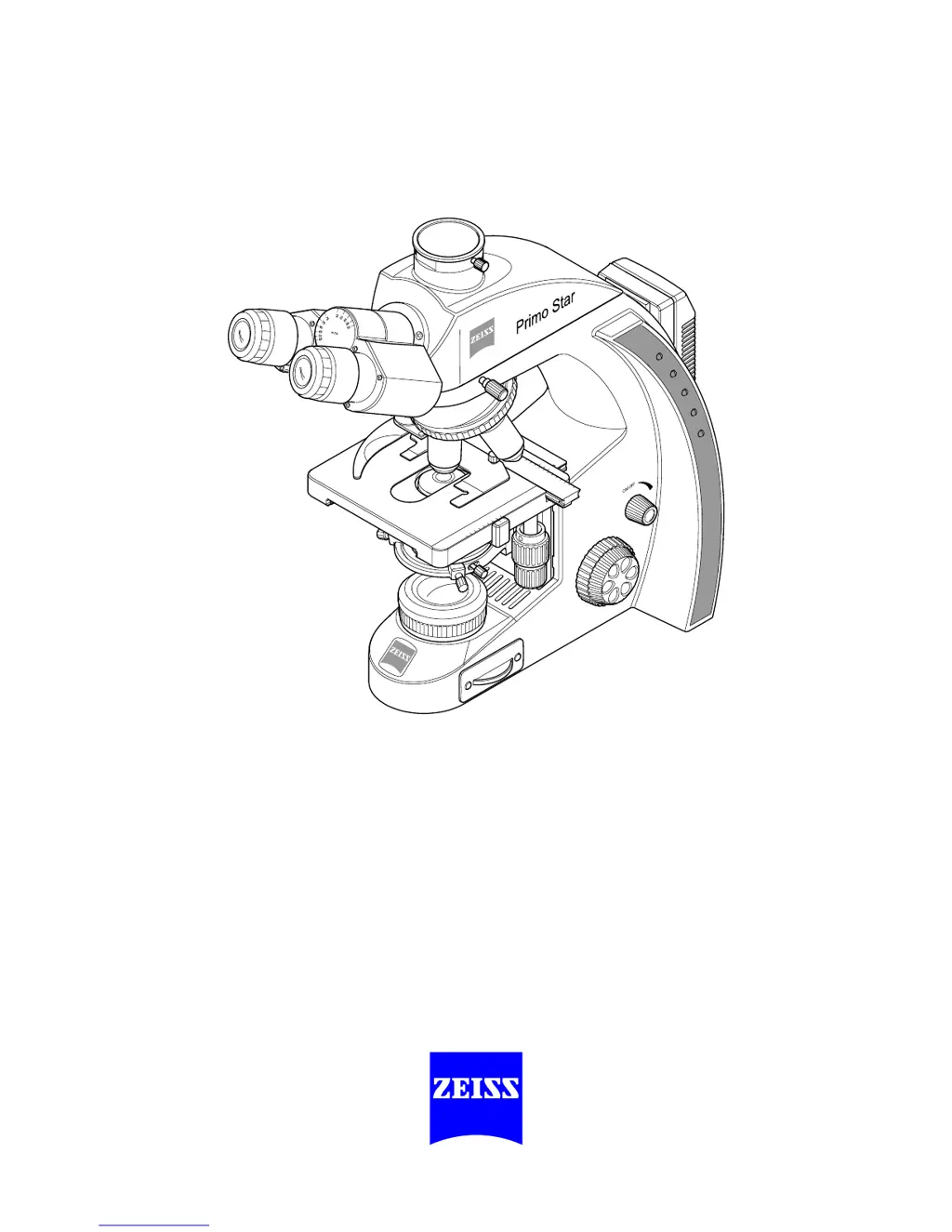
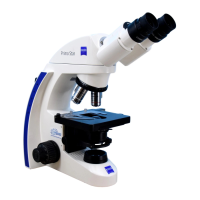
Zeiss Primo Star - User Manual

Zeiss Primo Star
28 pages
Print Icon
To Next Page IconTo Next Page
Loading...
Primo Star
Operating manual
Bedienungsanleitung
Mode d’emploi
Instrucciones de manejo
Инструкция по применению
操作手册

Questions and Answers

  • B
    Brian FrenchJul 27, 2025
    Why is the 6V 30W halogen lamp flickering in my Zeiss Primo Star?
    • C
      Carrie BeasleyJul 27, 2025
      The flickering of the 6V 30W halogen lamp in your Zeiss Microscope, unstable light intensity, or inhomogeneous illumination can occur because the average service life of the 6V 30W halogen lamp has been reached, the power cable is incorrectly installed or broken, or the pins of the 6V 30W halogen lamp have not been inserted correctly or symmetrically in the lamp holder. To resolve this, replace the 6V 30W halogen lamp, connect the power cable correctly or replace it, and ensure the pins of the 6V 30W halogen lamp are correctly and symmetrically inserted in the lamp holder.
  • J
    Jordan GarciaJul 31, 2025
    What to do if my Zeiss Primo Star's 6V 30W halogen lamp or LED source does not light up?
    • A
      Angelica VegaJul 31, 2025
      If the 6V 30W halogen lamp or the LED source of your Zeiss Microscope does not light up when switched on, it could be due to the power plug not being properly connected to the power outlet, or the 6V 30W halogen lamp or LED source may be defective. Ensure the power plug is connected to the power outlet. If the issue persists, replace the defective 6V 30W halogen lamp or the LED module.
  • C
    Carrie BarryAug 6, 2025
    Why is the image in my Zeiss Primo Star Microscope blurry with low resolving power?
    • J
      Janet MuellerAug 6, 2025
      Low resolving power and poor image contrast in your Zeiss Microscope can be caused by several factors: the aperture diaphragm not being opened to the correct size, the condenser not focused correctly, using the wrong cover slip thickness for transmitted-light objectives, using no or non-specified immersion oil with an immersion objective, air bubbles in the immersion oil, immersion oil on the front lens of a dry objective, or dirt/dust on the optical surfaces. To fix this, set the aperture diaphragm to the correct size, focus the condenser, use standard 0.17 mm cover slips, use the supplied immersion oil (removing any bubbles), clean the front lens of the dry objective, and clean all optical components.
  • W
    whitneyramseyAug 11, 2025
    How to fix focus differences after changing the objective on my Zeiss Microscope?
    • L
      Leslie MaloneAug 11, 2025
      If you experience greater focus differences after changing the objective on your Zeiss Microscope, the focusing eyepieces may not have been set correctly. Set the focusing eyepieces to the corresponding defective vision to resolve this.
  • A
    April JenkinsAug 16, 2025
    Why is the field of view not completely visible in my Zeiss Microscope?
    • K
      Kimberly NelsonAug 16, 2025
      If the field of view is not completely visible in your Zeiss Microscope, it could be due to several reasons: the nosepiece with the objective not being switched into the click-stop position, the condenser not being set correctly, the aperture diaphragm or luminous-field diaphragm not being adjusted correctly, or the filter not being inserted correctly in the filter mount. Ensure the nosepiece with the objective is in the click-stop position, set the condenser correctly, adjust the aperture and luminous-field diaphragms correctly, and insert the filter correctly into the filter mount.
  • A
    alyssa40Aug 20, 2025
    What to do if the stage of my Zeiss Primo Star comes down by itself?
    • J
      joel88Aug 20, 2025
      If the stage of your Zeiss Microscope comes down by itself and the image focus is unstable, the adjusted torque of the coarse focusing drive may be too low. Increase the torque of the coarse focusing drive to make the motion stiffer.

Summary

Instrument Safety Guidelines

General Safety Notes

Essential safety precautions for microscope operation.

Instrument Safety and EMC Compliance

Adherence to electrical safety standards and electromagnetic compatibility.

Unpacking, Transportation, and Storage

Procedures for handling the microscope during transport and storage.

Disposal Procedures

Guidelines for the proper and legal disposal of the microscope.

Microscope Use Precautions

Instructions and warnings for safe and correct microscope usage.

Warranty Information

Details on warranty coverage, conditions, and limitations.

Microscope Description and Features

System Overview and Components

Diagram and list of microscope parts and accessories.

Total View Diagram

A labeled illustration of the complete microscope assembly.

Intended Use and Applications

Primary applications and intended purpose of the Primo Star microscope.

Key Features and Design

Detailed breakdown of the microscope's main features and design elements.

Objective Specifications

Explanation of objective types, magnifications, and numerical apertures.

Setup and Operation Guide

Initial Microscope Setup

Step-by-step instructions for unpacking, connecting, and powering on the microscope.

Microscope Controls Overview

Identification and explanation of all user-accessible control elements.

Operating the Microscope

Guides interpupillary distance, viewing height, ametropia compensation, and brightfield setup.

Converting the Microscope

Procedures for changing tubes, filters, lamps, objectives, and installing cameras.

Care and Troubleshooting

Instrument Care and Maintenance

Recommendations for proper cleaning, maintenance, and environmental conditions.

Troubleshooting Common Issues

Identification of common problems and their step-by-step solutions.

Appendix and Technical Data

Technical Specifications

Detailed specifications, dimensions, weight, and operating parameters.

Zeiss Primo Star Specifications

General IconGeneral
Objectives4x, 10x, 40x, 100x (oil)
Magnification40x to 1000x
Observation MethodsBrightfield
IlluminationLED
Objective LensesAchromatic
Eyepiece10x
StageMechanical stage
CondenserAbbe condenser, NA 1.25
FocusCoaxial coarse and fine focus
FocusingCoaxial coarse and fine focusing
Power Supply100-240 V, 50/60 Hz
Optical SystemInfinity optical system

Related product manuals