Need help?
Do you have a question about the 3M 9001 and is the answer not in the manual?
Highlights critical safety information, consequences of misuse, and contact details for proper respirator use.
Specifies approved uses for dusts/mists and lists applications where the respirator should not be used.
Outlines user requirements like training, fit testing, and actions for distress or damage during use.
Details the required temperature and humidity for storage and the shelf life of the unopened product.
Provides a detailed, illustrated guide on how to properly wear and seal the respirator for effective protection.
Explains how to perform a seal check by covering the respirator and exhaling to detect air leaks.
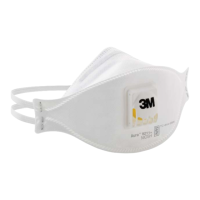
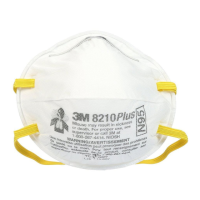
The 3M 9001 Particulate Respirator is a standard-size, earloop-style device designed to provide respiratory protection against certain airborne particles. It is intended for use in environments where individuals may be exposed to mechanically generated dusts and non-oil mists. This respirator is suitable for protecting against particles encountered in the processing of various materials, including minerals such as coal and iron ore, as well as wood, cotton, and flour. It offers protection in concentrations up to ten times the Occupational Exposure Limits or as specified by local regulations.
The primary function of the 3M 9001 Particulate Respirator is to filter out particulate matter from the air inhaled by the wearer, thereby reducing exposure to harmful airborne particles. It operates as a filtering facepiece respirator, meaning it covers the nose and mouth, and the entire device acts as the filter. The respirator is designed to create a seal around the wearer's face, ensuring that air passes through the filtering material before being inhaled. This helps prevent the inhalation of dusts and mists that could otherwise lead to respiratory issues or other health problems. The device is classified under the GB2626-2006 KN90 standard, indicating its filtration efficiency for non-oil particles.
The 3M 9001 Particulate Respirator is designed for ease of use, though proper fitting and training are crucial for its effectiveness. The fitting instructions outline a clear, step-by-step process for donning the respirator:
The respirator is intended for single-use applications and should be discarded and replaced if it becomes damaged or if breathing resistance becomes excessive. It is crucial not to alter, wash, abuse, or misuse the respirator, as these actions can compromise its protective capabilities. The device should not be used with beards or other facial hair, or any other conditions that prevent a good seal between the face and the sealing edge of the respirator. It is also important to ensure the respirator is not crushed or squeezed by outside forces, especially during activities like biking or running, as this can lead to deformation and damage, potentially affecting its performance. External forces acting on the noseclip or staples could also result in injury to the wearer.
While the 3M 9001 Particulate Respirator is a disposable device and does not require traditional maintenance like cleaning or part replacement, there are important considerations related to its condition and storage that contribute to its effective "maintenance" in terms of readiness for use:
The device is not designed for paint spraying or sandblasting applications, nor does it provide protection against gases and vapors. It should never be used in atmospheres containing less than 19.5% oxygen, as it does not supply oxygen. Furthermore, it is not suitable for use in oil mist atmospheres. Failure to follow all instructions and warnings, or failure to wear the respirator during all times of exposure, can significantly reduce its effectiveness and may lead to illness or permanent disability. The wearer must leave the contaminated area immediately if breathing becomes difficult, or if dizziness or other distress occurs.
 General
| Product Type | Particulate Respirator |
|---|---|
| Valve | No |
| Material | Non-woven fabric |
| Usage | Disposable |
| Type | Filtering Facepiece |
| Nose Clip | Yes |
| Headbands | Yes, elastic |
| Fluid Resistance | No |
| Applications | Construction |


 To Next Page