EasyManua.ls Logo

3M DBI SALA Pro Series - User Manual

3M DBI SALA Pro Series
24 pages
Print Icon
To Next Page IconTo Next Page
Loading...
© 3M 2020
USER INSTRUCTIONS
5902281 REv. J
ANSI Z359.13 OSHA 1910.140
ANSI Z359.3 OSHA 1926.502
1
X
Model L W
Y
A B C D E A B C F G
1
L
W
X
Y
1
1340040
1
6.0 ft. (1.83 m) 1.75 in. (4.45 cm)
1
1
1340125 1 6.0 ft. (1.83 m) 1.95 in. (4.95 cm)
1
1
1340200 1 6.0 ft. (1.83 m) 1.75 in. (4.45 cm)
1
1
1341001 1 6.0 ft. (1.83 m) 1.95 in. (4.95 cm)
1
1
1341002 1 3.0 ft. (0.91 m) 1.95 in. (4.95 cm)
1
1
1341004 1 4.0 ft. (1.22 m) 1.95 in. (4.95 cm)
1
1
1341050 1 6.0 ft. (1.83 m) 1.75 in. (4.45 cm)
1
1
1341051 1 6.0 ft. (1.83 m) 1.75 in. (4.45 cm)
1
2
L
W
Y
Y
X
1
1340060
2
6.0 ft. (1.83 m) 1.75 in. (4.45 cm)
1
1
1340180
2
6.0 ft. (1.83 m) 1.95 in. (4.95 cm)
2
1
1340181
2
5.0 ft. (1.52 m) 1.95 in. (4.95 cm)
2
1
1340182
2
4.0 ft. (1.22 m) 1.95 in. (4.95 cm)
2
1
1340183 2 10.0 ft. (3.05 m) 1.95 in. (4.95 cm)
2
1
1340187 2 6.0 ft. (1.83 m) 1.95 in. (4.95 cm)
2
1
1342001 2 6.0 ft. (1.83 m) 1.95 in. (4.95 cm)
2
1
1342200 2 6.0 ft. (1.83 m) 1.75 in. (4.45 cm)
2
1
1342201 2 6.0 ft. (1.83 m) 1.75 in. (4.45 cm)
1
1
1342250 2 6.0 ft. (1.83 m) 1.75 in. (4.45 cm)
1
1
1342275 2 6.0 ft. (1.83 m) 1.75 in. (4.45 cm)
1
A B C D E F G
Pro Series
Lanyards

Other manuals for 3M DBI SALA Pro Series

Question and Answer IconNeed help?

Do you have a question about the 3M DBI SALA Pro Series and is the answer not in the manual?

Summary

Safety Information: Energy Absorbing Lanyards

General Safety Warning for Lanyard Use

Highlights critical safety warnings and potential consequences of misuse.

Reducing Risks with Energy Absorbing Lanyards

Provides specific precautions to mitigate risks when using energy absorbing lanyards.

Safety Information: Work Positioning;Travel Restraint Lanyards

General Safety Warning for Work Positioning;Travel Lanyards

Emphasizes critical warnings and potential outcomes of improper use.

Reducing Risks with Work Positioning;Travel Lanyards

Lists specific safety precautions for work positioning and travel restraint applications.

Reducing Risks When Working at Height

Provides essential safety measures for elevated work environments.

Product Application and Requirements

Training Requirements for Lanyard Use

Emphasizes the need for trained personnel to install and use the equipment.

System Requirements for Fall Protection

Body Support and Harness Requirements

Mandates the use of a full body harness and proper connection points.

Installation and Adjustment Procedures

Lanyard Usage Guidelines

Pre-Use Checks and Verification

Details essential checks to perform before each use of the lanyard.

Procedures After a Fall Incident

Instructs on immediate actions and service removal after a fall.

Equipment Inspection Procedures

Inspection Frequency and Intervals

Defines the required frequency for user and competent person inspections.

Handling Defects and Unsafe Conditions

Specifies actions to take when defects or unsafe conditions are found.

Summary

Safety Information: Energy Absorbing Lanyards

General Safety Warning for Lanyard Use

Highlights critical safety warnings and potential consequences of misuse.

Reducing Risks with Energy Absorbing Lanyards

Provides specific precautions to mitigate risks when using energy absorbing lanyards.

Safety Information: Work Positioning;Travel Restraint Lanyards

General Safety Warning for Work Positioning;Travel Lanyards

Emphasizes critical warnings and potential outcomes of improper use.

Reducing Risks with Work Positioning;Travel Lanyards

Lists specific safety precautions for work positioning and travel restraint applications.

Reducing Risks When Working at Height

Provides essential safety measures for elevated work environments.

Product Application and Requirements

Training Requirements for Lanyard Use

Emphasizes the need for trained personnel to install and use the equipment.

System Requirements for Fall Protection

Body Support and Harness Requirements

Mandates the use of a full body harness and proper connection points.

Installation and Adjustment Procedures

Lanyard Usage Guidelines

Pre-Use Checks and Verification

Details essential checks to perform before each use of the lanyard.

Procedures After a Fall Incident

Instructs on immediate actions and service removal after a fall.

Equipment Inspection Procedures

Inspection Frequency and Intervals

Defines the required frequency for user and competent person inspections.

Handling Defects and Unsafe Conditions

Specifies actions to take when defects or unsafe conditions are found.

Overview

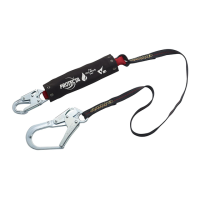
This document provides comprehensive information regarding the 3M™ DBI-SALA® Pro Series Lanyards, which are designed for fall protection in various work environments. The lanyards are categorized into different models, each with specific features and applications, and are compliant with ANSI Z359.13, ANSI Z359.3, OSHA 1910.140, and OSHA 1926.502 standards.

Function Description:

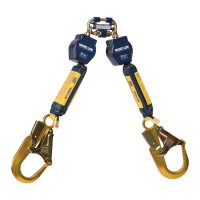
The Pro Series Lanyards serve as a critical component of a personal fall protection system. They are primarily intended for Restraint or Work Positioning applications, preventing users from reaching or being exposed to a fall hazard. Energy-Absorbing Lanyards, which include an integral energy absorber, can also be used for Fall Arrest applications, mitigating the forces experienced during a fall. Twin Leg Lanyard models are designed for 100-percent tie-off, allowing continuous fall protection while moving between anchorage points. The lanyards connect the user's harness to an anchorage point or structure, with the energy absorber end always attaching to the harness for Fall Arrest systems.

Important Technical Specifications:

The lanyards come in various lengths (L) and widths (W), depending on the model. For instance, models like 1340040, 1340125, and 1340200 are 6.0 ft (1.83 m) long, with widths of 1.75 in (4.45 cm) or 1.95 in (4.95 cm). Shorter lanyards, such as 1341002, are 3.0 ft (0.91 m) long. The materials used include Web - Polyester, Web - Elastic Polyester, Cable - Galvanized, and Nylon Rope.

Energy absorbers are integrated into specific models, indicated by "Shock Pack" or "Tubular Web" in the "Energy Absorber" column of Table 1. The capacity of these lanyards is for one person with a combined weight (including clothing, tools, etc.) within the range of 130 lb. to 310 lb. (59 kg to 140 kg). The average arresting force is 900 lbf (4.0 kN), and the maximum free fall is 6.0 ft (1.83 m).

Connector specifications vary by model. Common connectors include Snap Hooks (Zinc-Plated Steel) with gate openings of 3/4 in. (19 mm) or 2-3/8 in. (60 mm), Rebar Hooks (Alloy Steel) with 2-3/8 in. (60 mm) gate openings, Rope Grabs (Steel), and Carabiners (Zinc-Plated Steel) with 1-1/8 in. (28.6 mm) gate openings. All connectors have a gate strength of 3,600 lbf (16 kN) and a tensile strength of 5,000 lbf (22.2 kN).

The Energy Absorber Deployment graph (Figure 5) illustrates free fall and deployment distance based on user weight (130 lb., 220 lb., 310 lb.). It also defines maximum allowable deployment distances (OSHA and ANSI) and maximum allowable free fall (OSHA/ANSI). For ANSI/OSHA lanyards with free fall distances of 6.0 ft (1.8 m) to 12.0 ft (3.7 m), or for user weights of 310 lb. (140 kg) to 420 lb. (191 kg), an additional 1.0 ft (0.3 m) is added to the deployment distance calculation.

Usage Features:

  • Anchorage Connection: Lanyards can be connected to various anchorage options, including rebar hooks, tie-off adapters choked around I-beams, or tie-back lanyards around angle iron. Proper connection ensures minimal free fall and swing fall hazards.
  • Harness Connection: Lanyards must be used with a Full Body Harness. For Fall Arrest, the energy absorber end connects to the harness dorsal D-ring. Some models feature a Choker Loop for attachment to the harness D-ring or web loop.
  • Lanyard Adjustment: Models with an adjuster allow users to shorten or lengthen the lanyard leg(s) to eliminate slack, reducing tripping hazards.
  • Twin Lanyard 100% Tie-Off: Twin-leg lanyards enable continuous fall protection by allowing users to attach one leg to a new anchorage point before disconnecting the other from the previous one.
  • Parking Attachment: Harness lanyard parking attachments are provided for securing the free end of a lanyard leg when not in use for fall protection, preventing entanglement. These attachments are not to be used as primary attachment elements.
  • Compatibility: Only 3M approved components and subsystems should be used together to ensure compatibility and safety. Connectors must be compatible in size, shape, and strength, and must fully close and lock during use.
  • Fall Clearance: A detailed calculation method (FC = M + A + B + C + 1.5 m (5 ft.) + 0.6 m (2 ft.)) is provided to determine the required fall clearance below the working surface, considering factors like maximum anchorage system deflection, lanyard length, deployment distance, estimated harness stretch, and safety factor.

Maintenance Features:

  • Inspection Frequency: Lanyards must be inspected by the user before each use and by a Competent Person at least annually. More frequent inspections may be required under extreme working conditions.
  • Inspection Procedures: Detailed inspection points are provided for various components:
    • End Connectors (Figure 15): Inspect snap hooks, carabiners, rebar hooks, and D-rings for damage, corrosion, and proper working condition. Gates should open, close, lock, and unlock properly.
    • Web Lanyards Webbing and Stitching (Figure 16): Check webbing for cuts, frays, broken fibers, tears, abrasions, heavy soiling, mold, burns, or discoloration. Inspect stitching for pulled or cut stitches.
    • Cable Lanyards Wire Rope (Figure 17): Inspect wire rope for cuts, kinks, broken wires, bird-caging, welding splatter, corrosion, or severe abrasion. Ferrules should be checked for cracks or damage. Replace if six or more randomly distributed broken wires in one lay, or three or more broken wires in one strand in one lay, or any broken wires within 1 inch (25 mm) of the ferrules.
    • Energy Absorber (Figure 19): Verify that the integral energy absorber has not been activated. Indicators of activation include an open or torn cover, pulled out or frayed webbing, or ripped/missing stitching.
    • Tubular Web Impact Indicator Label (Figure 18): Inspect for impact indication; if the webbing is torn, revealing the label, the lanyard must be removed from service.
    • Labels (Figure 20): All labels must be present and fully legible.
  • Removal from Service: Any device subjected to a fall arrest or impact force, or found to have an unsafe or defective condition during inspection, must be immediately removed from service and destroyed.
  • Cleaning: Lanyards should be periodically cleaned with water and a mild soap solution. The web lifeline should be rinsed and thoroughly air-dried without forced heat.
  • Storage and Transport: Store lanyards in a cool, dry, clean environment, away from direct sunlight and chemical vapors.
  • Product Life: The functional life is determined by work conditions and maintenance; as long as it passes inspection criteria, it can remain in service.

This comprehensive guide ensures that users are well-informed about the proper selection, installation, operation, and maintenance of 3M™ DBI-SALA® Pro Series Lanyards to ensure safety and compliance with relevant standards.

3M DBI SALA Pro Series Specifications

General IconGeneral
Brand3M
ModelDBI SALA Pro Series
CategorySecurity Sensors
LanguageEnglish

Related product manuals