Chasing
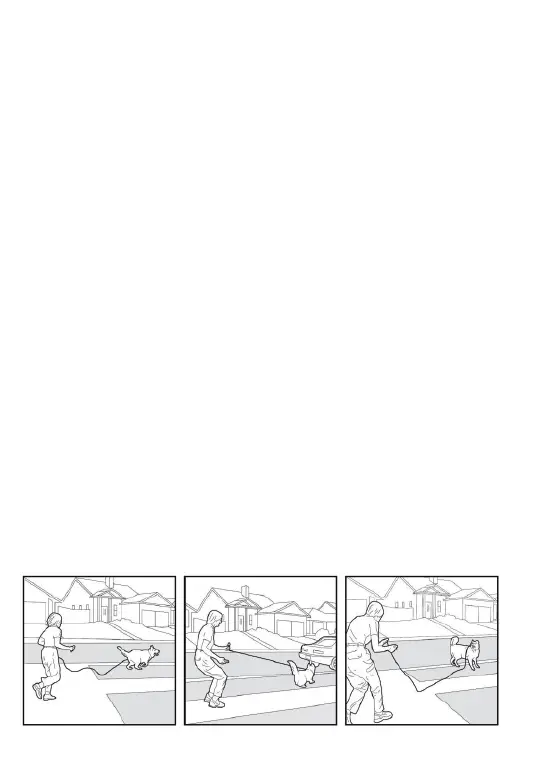
Chasing is an insncve behavior smulated by moving objects. Some
dogs have a parcularly strong desire to chase that can put them in
harm’s way and leave you helpless. Never allow your dog off the leash or
out of a contained area unl they have learned the “Come” command,
regardless of the distracon. Be consistent and correct your dog every
me they chase something.
CAUTION! It is vitally important that you and your dog remain safe while
learning during on-leash training. Your dog should be on a strong leash,
long enough for him to aempt to chase an object, but short enough for
him not to reach a road or other unsafe area. You must also be physically
strong to restrain your dog when they try to chase.
1. If your dog has not learned the “Come” command, keep a leash on them
so that you can physically stop them before they reach the object that is
being chased.
2. Choose the intensity level that is one level above your pet’s Recognion
Level.
3. Set up a scenario where your dog is enced to chase an object. Common
items could be cars, motorcycles, bicycles, etc. (do not use toys).
4. When the object passes in front of your dog, make sure to hold the leash
with a firm grip. As soon as your dog begins to chase the object, press and
hold the [S] buon unl they stop.
5. When your dog stops chasing the object, immediately release the buon,
walk backwards and give the “Come” command. Praise your dog as they
come to you.
6. Repeat the process unl your dog stops chasing the object.
21


 To Next Page
 Loading...