Because smaller dogs are much more delicate, you want to stay on a
lower seng. Begin with an audible tone or vibraon, moving to one of
the lower sengs if necessary. Only move up if your dog doesn’t respond
to the current seng.Be very cauous when training small puppies. You
never want to frighten your puppy. It’s best to avoid any physical
smulaon unl your dog reaches at least adolescence (18-24 months).
Limit your electric collar to an audible tone at this stage.
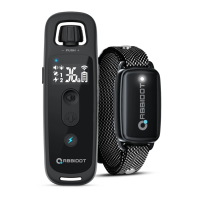
Step One: Size your e-collar appropriately for your smaller dog, ensuring
a snug (yet not too ght) fit. You should be able to fit two fingers
between the contact leads and your dog’s skin.
Your electric collar’s contact points should make contact with your dog’s
skin. Make sure they aren’t covered by maed fur.The contact points
should apply only light pressure to your dog’s neck.
Step Two: Begin training using beep with vibraon mode. If you need to
use ‘safe shock with beep’, start at level 1 and slowly increase unl you
find a suitable level.
Step Three: Give your small dog a command he knows, while simultane-
ously pressing the acvaon buon on your dog’s e-collar remote. You’ll
release the smulaon once your dog follows through!
Remember, this isn’t meant to be used as punishment and shouldn’t be
uncomfortable. It is only a sort of physical reinforcer to go along with
your audible commands.
Closely monitor your small breed dog during the first day of use to ensure
a proper, working fit.
Removing your dog’s electric collar at night or when you can’t offer
supervision is recommended. There is always a slight chance the collar
can catch and cause a hazard.
TRAINING SMALL DOGS
What Setting Should You Use with Small Breeds?
24



 To Next Page