EasyManua.ls Logo

Acer SA270 - User Manual

Acer SA270
28 pages
Print Icon
To Next Page IconTo Next Page
Loading...
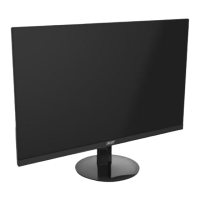
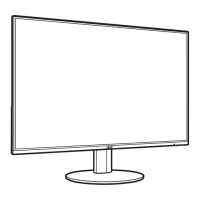
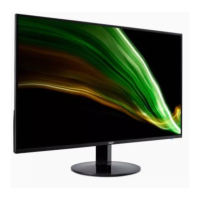
Acer LCD Monitor
User Guide

Other manuals for Acer SA270

Question and Answer IconNeed help?

Do you have a question about the Acer SA270 and is the answer not in the manual?

Summary

Special notes on LCD monitors

Information for your safety and comfort

Safety instructions

Read instructions, keep for reference, and follow product warnings and guidance.

Cleaning your monitor

Follow cleaning guidelines: unplug monitor first and use a soft cloth for cleaning.

Connecting;disconnecting the device

Guidelines for connecting/disconnecting power: ensure base is attached, turn off monitor/computer.

Accessibility

Ensure power outlet is accessible and close to operator for easy disconnection of equipment.

Safe listening

Protect hearing: gradually increase volume, limit high volume listening time, avoid blocking surroundings.

Warnings

General warnings: avoid water, unstable surfaces, blocking ventilation, inserting objects into slots.

Using electrical power

Operate from indicated power type, avoid cord strain, and ensure proper grounding.

Product servicing

Refer all servicing to qualified personnel. Unplug if cord is damaged, liquid spilled, or unit dropped.

Potentially explosive environments

Switch off device in potentially explosive areas like gas stations or areas with dust/chemicals.

Additional safety information

Keep small parts and enhancements out of the reach of small children.

IT Equipment Recycling Information

Acer's commitment to environmental protection and recycling of used equipment.

Disposal instructions

Do not discard electronics in trash; recycle according to Waste Electrical and Electronics Equipment regulations.

LCD pixel statement

Explains occasional pixel defects (black/red dots) are normal and not a malfunction.

Tips and information for comfortable use

Advice to prevent eyestrain and physical injury from prolonged computer use.

Finding your comfort zone

Tips for comfort: adjust viewing angle, use footrest, maintain good posture.

Taking care of your vision

Reduce eyestrain: rest eyes, blink frequently, keep display clean, adjust brightness/contrast.

Developing good work habits

Develop habits like breaks, stretching, fresh air, and exercise for productive computer use.

Declaration of Conformity

Federal Communications Commission Declaration of Conformity

Unpacking

Contents of the Box

Check for LCD monitor, quick start guide, audio, D-sub, HDMI, DVI cables, and AC adapter.

Attaching the base (for selected models)

Instructions for securely attaching the monitor base to the monitor stand arm.

Installation

Screen position adjustment

Adjust monitor tilt up to 15 degrees up or 5 degrees down for optimal viewing.

Connecting the adapter and AC Power cord

Connect the AC power cord to the adapter, then plug into a properly grounded AC outlet.

Power saving

Monitor enters power saving mode (blinking blue light) and recovers in approximately 3 seconds.

Display Data Channel (DDC)

DDC protocol enables plug-and-play and informs host system about monitor capabilities.

Connector pin assignment

Details pin assignments for 15-pin and 24-pin display signal cables.

19-pin color display signal cable

Details pin assignments for the 19-pin color display signal cable.

Standard timing table

Table listing standard display modes, resolutions, and corresponding refresh rates.

Connect cable(s)

Connect VGA, DVI, HDMI, audio cables to computer; ensure both devices are switched off.

Connect the adapter

Connect AC power cord to adapter, then plug adapter into a grounded AC outlet.

Turn on the monitor and computer

Turn on monitor first, then computer, for correct startup sequence.

Users controls

Panel controls

Overview of panel buttons: Power, < / >, Menu/Enter, Auto/Exit, Empowering Key, and their functions.

Using the Shortcut Menu

Access common settings via shortcut menu using Empowering, Auto, Menu, Volume, Input buttons.

Input Source Selection

Select video sources (VGA, DVI, HDMI); options for auto source detection.

Acer eColor Management

Operation and features of Acer eColor Management for picture modes: User, ECO, Standard, Graphic, Movie.

Using the OSD Menus

Picture Menu

Adjust picture quality settings: Blue Light, Brightness, Contrast, Color Temp, Auto Config.

OSD Menu

Adjust OSD menu location and timeout settings. Default timeout is 10 seconds.

Setting Menu

Configure general settings: Wide Mode, DDC/CI, OD, ACM, Input, Language, Auto Source, Quick Start Mode, Reset.

Information Menu

Troubleshooting

VGA Mode

Troubleshoot VGA issues: no picture, unstable picture; includes LED status and remedies.

DVI;HDMI Mode (Optional)

Troubleshoot DVI/HDMI issues: no picture visible; includes LED status and remedies.

Summary

Special notes on LCD monitors

Information for your safety and comfort

Safety instructions

Read instructions, keep for reference, and follow product warnings and guidance.

Cleaning your monitor

Follow cleaning guidelines: unplug monitor first and use a soft cloth for cleaning.

Connecting;disconnecting the device

Guidelines for connecting/disconnecting power: ensure base is attached, turn off monitor/computer.

Accessibility

Ensure power outlet is accessible and close to operator for easy disconnection of equipment.

Safe listening

Protect hearing: gradually increase volume, limit high volume listening time, avoid blocking surroundings.

Warnings

General warnings: avoid water, unstable surfaces, blocking ventilation, inserting objects into slots.

Using electrical power

Operate from indicated power type, avoid cord strain, and ensure proper grounding.

Product servicing

Refer all servicing to qualified personnel. Unplug if cord is damaged, liquid spilled, or unit dropped.

Potentially explosive environments

Switch off device in potentially explosive areas like gas stations or areas with dust/chemicals.

Additional safety information

Keep small parts and enhancements out of the reach of small children.

IT Equipment Recycling Information

Acer's commitment to environmental protection and recycling of used equipment.

Disposal instructions

Do not discard electronics in trash; recycle according to Waste Electrical and Electronics Equipment regulations.

LCD pixel statement

Explains occasional pixel defects (black/red dots) are normal and not a malfunction.

Tips and information for comfortable use

Advice to prevent eyestrain and physical injury from prolonged computer use.

Finding your comfort zone

Tips for comfort: adjust viewing angle, use footrest, maintain good posture.

Taking care of your vision

Reduce eyestrain: rest eyes, blink frequently, keep display clean, adjust brightness/contrast.

Developing good work habits

Develop habits like breaks, stretching, fresh air, and exercise for productive computer use.

Declaration of Conformity

Federal Communications Commission Declaration of Conformity

Unpacking

Contents of the Box

Check for LCD monitor, quick start guide, audio, D-sub, HDMI, DVI cables, and AC adapter.

Attaching the base (for selected models)

Instructions for securely attaching the monitor base to the monitor stand arm.

Installation

Screen position adjustment

Adjust monitor tilt up to 15 degrees up or 5 degrees down for optimal viewing.

Connecting the adapter and AC Power cord

Connect the AC power cord to the adapter, then plug into a properly grounded AC outlet.

Power saving

Monitor enters power saving mode (blinking blue light) and recovers in approximately 3 seconds.

Display Data Channel (DDC)

DDC protocol enables plug-and-play and informs host system about monitor capabilities.

Connector pin assignment

Details pin assignments for 15-pin and 24-pin display signal cables.

19-pin color display signal cable

Details pin assignments for the 19-pin color display signal cable.

Standard timing table

Table listing standard display modes, resolutions, and corresponding refresh rates.

Connect cable(s)

Connect VGA, DVI, HDMI, audio cables to computer; ensure both devices are switched off.

Connect the adapter

Connect AC power cord to adapter, then plug adapter into a grounded AC outlet.

Turn on the monitor and computer

Turn on monitor first, then computer, for correct startup sequence.

Users controls

Panel controls

Overview of panel buttons: Power, < / >, Menu/Enter, Auto/Exit, Empowering Key, and their functions.

Using the Shortcut Menu

Access common settings via shortcut menu using Empowering, Auto, Menu, Volume, Input buttons.

Input Source Selection

Select video sources (VGA, DVI, HDMI); options for auto source detection.

Acer eColor Management

Operation and features of Acer eColor Management for picture modes: User, ECO, Standard, Graphic, Movie.

Using the OSD Menus

Picture Menu

Adjust picture quality settings: Blue Light, Brightness, Contrast, Color Temp, Auto Config.

OSD Menu

Adjust OSD menu location and timeout settings. Default timeout is 10 seconds.

Setting Menu

Configure general settings: Wide Mode, DDC/CI, OD, ACM, Input, Language, Auto Source, Quick Start Mode, Reset.

Information Menu

Troubleshooting

VGA Mode

Troubleshoot VGA issues: no picture, unstable picture; includes LED status and remedies.

DVI;HDMI Mode (Optional)

Troubleshoot DVI/HDMI issues: no picture visible; includes LED status and remedies.

Overview

This document is a user guide for an Acer LCD Monitor, providing comprehensive instructions for setup, operation, and maintenance, along with important safety information and troubleshooting tips.

Function Description

The Acer LCD Monitor is designed to display visual information from a host system. It supports various input signals, including VGA, DVI, and HDMI, allowing for flexible connectivity with different computers and devices. The monitor is equipped with an on-screen display (OSD) menu that enables users to adjust a wide range of settings to optimize picture quality, manage power consumption, and customize the display to their preferences. It supports plug-and-play functionality through the Display Data Channel (DDC) protocol, which allows the monitor to automatically communicate its capabilities to the host system. The monitor is designed for ease of use, with intuitive controls and a clear interface for navigating settings.

Usage Features

The Acer LCD Monitor offers several features to enhance the user experience and ensure comfortable viewing.

  • Screen Position Adjustment: Users can adjust the monitor's tilt to optimize their viewing position. The monitor can be tilted up to 15 degrees upwards and 5 degrees downwards, allowing for ergonomic adjustments to suit individual needs.
  • Power Saving Mode: The monitor includes a power-saving mode that activates when a control signal from the display controller indicates inactivity. In this mode, the LED light blinks blue, and the monitor remains in a low-power state until a control signal is detected or the keyboard/mouse is activated. The recovery time from power-saving mode to "on" is approximately 3 seconds.
  • Display Data Channel (DDC) Support: The monitor supports the DDC2B standard, which facilitates plug-and-play installation. This protocol allows the monitor to automatically inform the host system about its supported resolutions and timing, simplifying setup.
  • Panel Controls: The monitor features a set of panel controls for easy operation:
    • Power Button/Indicator: Turns the monitor on/off. A blue light indicates power on, while a blinking blue light signifies standby or power-saving mode.
    • < / > Button: Used to navigate through desired functions and change settings within the OSD menu.
    • Menu/Enter Button: Activates the OSD menu and selects functions within it.
    • Auto/Exit Button: Exits the OSD menu when active. When inactive, pressing this button for two seconds activates the Auto Adjustment function, which automatically optimizes the display position, focus, and clock.
    • Empowering Key: Opens the Acer eColor Management OSD and provides access to various scenario modes.
  • Shortcut Menu: Pressing any of the function buttons (Empowering Key, Auto button, Menu button) opens a shortcut menu, providing quick access to commonly used settings such as Empowering, Auto, Menu, Volume (optional for audio-input models), and Input.
  • Input Source Selection: The monitor allows users to select from different video sources (VGA, DVI, HDMI) that may be connected. The "Auto Source" function can be set to "On" for automatic signal source search or "Off" to manually select the input source using the "Input" hotkey.
  • Acer eColor Management: This feature provides various scenario modes to optimize display settings for different content types:
    • User mode: Allows for fine-tuned, user-defined settings.
    • ECO mode: Adjusts settings to reduce power consumption.
    • Standard mode: Provides default settings reflecting native display capability.
    • Graphic mode: Enhances colors and fine detail for pictures and photographs.
    • Movie mode: Displays scenes with clearest detail, suitable for various lighting environments.
  • OSD Menus: The monitor's OSD menus offer extensive customization options:
    • Picture Menu: Adjusts picture quality settings such as Acer eColor Management, Blue Light filter (with ratios of 80%, 70%, 60%, 50% to reduce blue light exposure), Brightness, Contrast, H. Position, V. Position, Focus, Clock, Color Temp (blue light, warm, cool, and user-defined), 6-axis Saturate, 6-axis Hue, and Auto Config.
    • OSD Menu: Adjusts the OSD menu's location and timeout setting (10 to 120 seconds, default 10 seconds).
    • Setting Menu: Adjusts general settings for the current input signal, including Wide Mode (Full, Aspect, 1:1), DDC/CI (Display Data Channel/Command Interface for software control), OD (Off, Normal, Extreme), ACM (on/off), Input (VGA, DVI, HDMI), Language, Auto Source (on/off), and Quick Start Mode (on/off for faster boot speed).
    • Information Menu: Displays basic information about the LCD monitor, such as resolution, H/V frequency, input type, and serial number.

Maintenance Features

Maintaining the Acer LCD Monitor is straightforward, with clear guidelines provided to ensure its longevity and optimal performance.

  • Cleaning: The monitor should always be unplugged before cleaning. A soft cloth should be used to wipe the screen and the cabinet's front and sides.
  • Electrical Power Usage: Users are advised to operate the product from the type of power indicated on the marking label. If an extension cord is used, ensure the total ampere rating of the equipment plugged into it does not exceed the extension cord's rating. Similarly, the total rating of all products plugged into the wall outlet should not exceed the fuse rating. The product's power cord is equipped with a three-wire grounded plug, which must be inserted into a properly grounded power outlet. The grounding pin is a safety feature that also provides protection from unexpected noise.
  • Product Servicing: Users are advised not to attempt to service the product themselves, as opening covers may expose them to dangerous voltage points or other risks. All servicing should be referred to qualified service personnel. Specific instances requiring professional service include a damaged, cut, or frayed power cord/plug; liquid spilled into the product; exposure to rain or water; the product being dropped or the case damaged; a distinct change in performance; or the product not operating normally after following instructions.
  • IT Equipment Recycling Information: Acer is committed to environmental protection and encourages recycling of used equipment. Information on recycling and Waste from Electrical and Electronics Equipment (WEEE) regulations is available on the Acer website. Users are instructed not to dispose of the electronic device in the trash.
  • LCD Pixel Statement: The LCD unit is manufactured with high-precision techniques. While some pixels may occasionally misfire or appear as black or red dots (0.01% or less), this is considered normal and does not constitute a malfunction.
  • Power Management: The product is shipped with power management enabled, activating the display's Sleep mode within 5 minutes of user inactivity and waking the monitor by moving the mouse or pressing any keyboard key.
  • Vision Care: To reduce eyestrain, users are advised to rest their eyes frequently, take regular breaks to focus on distant points, and blink often. The display should be kept clean, and the head should be positioned so eyes point downward when looking at the middle of the display. Brightness and contrast should be adjusted to a comfortable level. Glare and reflections can be minimized by positioning the display with its side facing a window or light source, minimizing room light with drapes/blinds, using a task light, changing the viewing angle, or using a glare-reduction filter or display visor. Avoid awkward viewing angles and prolonged exposure to bright light sources.
  • Work Habits: Developing good work habits, such as taking short, regular breaks, performing stretching exercises, breathing fresh air, and exercising regularly, contributes to a more relaxing and productive computer use experience.

Acer SA270 Specifications

General IconGeneral
3DNo
Screen shapeFlat
Display diagonal27 \
Display technologyLED
Native aspect ratio16:9
Contrast ratio (typical)-
Display number of colors16.78 million colors
Display brightness (typical)250 cd/m²
Supported graphics resolutions1920 x 1080 (HD 1080)
RMS rated power2 W
Number of speakers2
Product colorBlack
Market positioningGraphics design
Tilt angle range-5 - 15 °
Tilt up angle range0 - 15 °
Tilt down angle range-5 - 0 °
Energy efficiency scaleA to G
Power consumption (standby)0.3 W
Power consumption (typical)17.5 W
Sustainability certificatesENERGY STAR
Cables includedAC
Weight and Dimensions IconWeight and Dimensions
Depth (with stand)212 mm
Height (with stand)453 mm
Weight (with stand)3560 g
Depth (without stand)36 mm
Width (without stand)621 mm
Height (without stand)372 mm
Weight (without stand)3200 g

Related product manuals