Brass and Woodwind
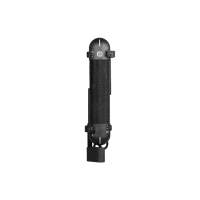
The R84 has become one of the top go-to microphones to record
brass instruments for engineers and musicians alike. Whether live or
in the studio, the R84 is known for capturing the full-bodied sound of
brass and woodwind instruments. Soprano saxophone, trumpet, and
most high- pitched brass and woodwind instruments are known to have
“edgier” or “brilliant” frequency characteristics. The R84’s smooth treble
response is great at preserving these frequencies without aggravating
the striking tonal qualities.
Depending on the instrument’s dynamic range, we recommend starting
by positioning the R84 8 to 16 inches (20-41 cm) away from the
source.
Unlike brass instruments, whose sound emanates entirely from the
bell, woodwinds produce sound from the entire length of the body of
the instrument. When mics are placed favoring the bell, only lowest
fundamentals dominate. For a focused sound, use the yoke mount
(not the mic stand) to point the microphone on axis so that its pickup
encompasses the entire instrument.
If you are concerned about wind blasts, use a pop filter, or position the
microphone slightly off axis.
Strings
The R84 excels at capturing the richness and full sound of string groups
and string soloists. For string soloists, start by positioning the R84 3-5
feet (1-2 m) on axis towards the sound hole. To achieve a balanced
string group sound, try placing the R84 5 to 8 feet (2-3 m) away (either
in front or above) from the section. Use the R84’s exceptional null
points to isolate the R84’s pick up from other sources. If more ambiance
texture is desired, pull the microphone further away from the source.
R84s in a Blumlein configuration (coincident pair at 90-degree angle)
positioned at a distance of 10 to 15 feet (3-5 m) from a string section
will capture a deep and wide image.
For bass string instruments that are bowed and plucked, placing the
R84 about a foot away (0.3-0.5 m) will give you a very nice and defined
low end. The proximity effect of the R84 can be used to your advantage.
10


 To Next Page