3) Ribbon microphones can withstand very high SPL (Sound Pressure
Level) without difficulty, but can be damaged easily by a sudden, strong
gust of air or high levels of very low frequency sound waves (like from
a kick drum or bass cabinet). This can stretch the ribbon, causing the
microphone to start sounding flabby. To avoid possible damage, follow
this simple procedure when positioning the microphone: put the back
of your hand where the mic will be; if you can feel the motion of air on
your hand, place a pop-filter between the microphone and the source of
the wind gusts or simply pull the mic further back. When recording kick
drums or bass guitar cabinets, angle the microphone to make sure that
no wind blasts hit the microphone directly on-axis from the front or back.
4) Your R84 is a valuable and important investment. Like any piece of
recording equipment or musical instrument, it requires common sense
and good basic care to keep it working properly. Given simple, basic
care as described above, your new microphone will perform admirably
for decades.
{
APPLICATION ADVICE
}
“This Side” vs. “That Side”
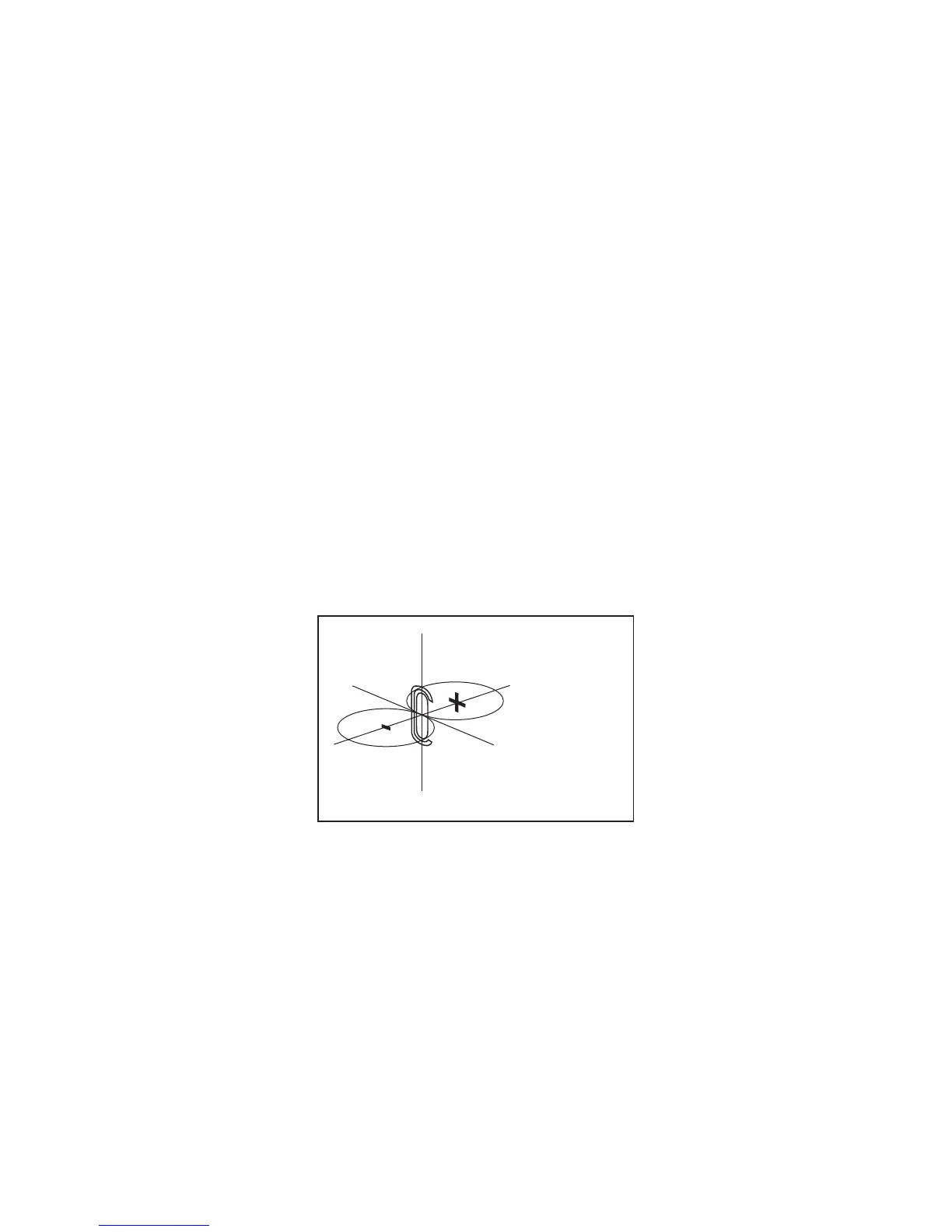
Here is an illustration of the pickup pattern of the R84. The AEA logo
on the front of the R84 points directly towards the ‘principal axis’ (+)
indicated in the diagram.
Figure-of-8 microphones are constructed with positive polarity on the
front and negative polarity on the back. Positive pressure on the front
side of the ribbon produces a positive voltage on Pin-2, with respect to
Pin-3 on the output connector.
The sound of your R84 is slightly different between the front and the
back — subtle, but sufficient to offer two “flavors.” In addition to polarity,
this is the result of using two wraps of grille cloth on the back and only
one on the front. When using the rear lobe, remember to invert the


 To Next Page