Energy consumption per cooking zone (EC electric
cooking)
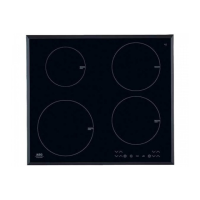
Left front
Left rear
Right front
Right rear
189.1 Wh/kg
189.1 Wh/kg
180.2 Wh/kg
178.3 Wh/kg
Energy consumption of the hob (EC electric hob) 184.2 Wh/kg
IEC / EN 60350-2, BS EN 60350-2 -
Household electric cooking appliances - Part
2: Hobs - Methods for measuring
performance.
The energy measurements referring to the
cooking area are identified by the markings of
the respective cooking zones.
12.2 Hob - Energy saving
You can save energy during everyday
cooking if you follow the hints below.
• When you heat up water, use only the
amount you need.
• If it is possible, always put the lids on the
cookware.
• Put the cookware directly in the centre of
the cooking zone.
• Use the residual heat to keep the food
warm or to melt it.
12.3 Product Information and Product Information Sheet for hood
according to EU and UK Ecodesign and Energy Labelling Regulations
Product Information Sheet
Supplier’s name or trade mark AEG
Model identifier NCH74B01AB
Annual Energy Consumption - AEChood 32.7 kWh/a
Energy Efficiency Class A+
Fluid Dynamic Efficiency - FDEhood 32.0
Fluid Dynamic Efficiency class A
Lighting Efficiency - LEhood - lux/W
Lighting Efficiency Class -
Grease Filtering Efficiency - GFEhood 85.1 %
Grease Filtering Efficiency class B
Minimum Air Flow in normal use 270.0 m3/h
Maximum Air Flow in normal use 550.0 m3/h
Air Flow at intensive/boost setting 650.0 m3/h
A-weighted Sound Power Emissions at minimum speed 50 db(A) re 1 pW
A-weighted Sound Power Emissions at maximum speed 66 db(A) re 1 pW
A-weighted Sound Power Emissions at intensive or boost speed 69 db(A) re 1 pW
Measured power consumption off mode - Po 0.49 W
Measured power consumption in standby mode - Ps - W
26 ENGLISH



 To Next Page