I-V
Measurement
Method
Impedance Measurement
Basics
I-V
Measurement
Method
Basic
Concept
of
I-V
Method
Figure
A
-14.
I-V
Measurement
Method
The
unknown
impedance
,Z,
can
be
calculated
from
the
measured
voltage
and
current
using
Ohm's
law:
(See
circuit
Ain
Figure
A
-14
.)
Z
=
V
I
The
current,
I
,
can be
also
obtained
by
the
voltage
level
of
the
known
resistance
,
R
0
.
Z
=
V
1
I
=
V
1
V
2
R
0
See
circuit
B
in
Figure
A
-14
.
The
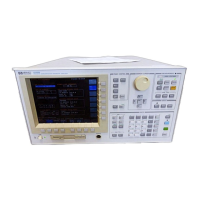
4395A
uses
circuit
B
to
determine
the
unknown
impedance
.
How This Is Dierent From Impedance Conversion in the Network
Analyzer
Mode
The network
analyzer part of the 4395A has an impedance conversion feature that converts
the reection coecient
to impedance
. The reection is determined by the impedance of the
DUT.
Z
=
R
0
1
0
0
1+0
(
0
1
0
1)
If the DUT impedance is equal to the characteristic impedance, there is no reection. When the
impedance is an innite value like OPEN, the all input signal is reected.
When the impedance is greater than characteristic impedance, the measurement error is
increased. For example, for an impedance of 2 k, a 1 percent error in the reection coecient
is converted to a 24 percent error in impedance.
Basic Measurement Theory A-23


 To Next Page
 Loading...