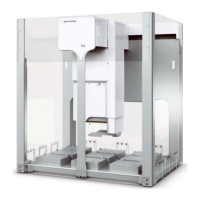
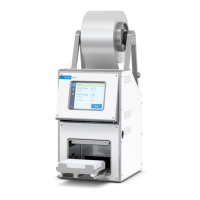
PlateLoc Thermal Microplate Sealer
About this guide
2 Reference for Optimal Thermal Microplate Sealing
About this guide
This guide provides a quick- reference for using the PlateLoc Thermal
Microplate Sealer (PlateLoc Sealer). Use the following guidelines to identify
thermal- sealing- friendly labware and optimize microplate sealing using the
PlateLoc Sealer. You should use this guide in conjunction with the following:
• PlateLoc Thermal Microplate Sealer User Guide
• PlateLoc Seal Selection Guide
You can download the latest version of any PDF file or search the online
kno
wledge base from the Automation Solutions Knowledge Base page.
For more information about automation products, go to the Agilent
Technologies website at www.agilent.com/lifesciences/automation.
Optimizing the sealing quality
Introduction
The PlateLoc Sealer applies a sealing material on top of microplates to seal
individual wells. Sealing the wells protects the contents from evaporation,
condensation, oxidation, and cross- contamination during transport or storage.
The PlateLoc Sealer can be used as a standalone device or in a lab automation
system. The device accepts microplates made from a variety of materials.
The ideal sealing conditions can depend on a number of factors, especially the
labware. Using thermal seal- friendly microplates is key to protecting samples
and critical to successful sample sealing and storage applications.
Microplate sealing tips
The seal quality depends on many factors, including microplate design,
material, lot- to- lot consistency and features, the sealing parameters, whether
the microplates require an insert for support, and the type of seal used.
Microplate design
Automation- friendly and thermal- seal- friendly labware ensures successful
sealing.
• Use only microplates that comply with standards established by the Society
of
Biomolecular Sciences (SBS).
• Raised chimneys around each well produce the best results.
• Avoid microplates that have a raised rim close to the perimeter of the
w
ells. The rim can prevent uniform contact between the hot plate and the
wells.
Figure 1 illustrates these features.


 To Next Page
 Loading...