EasyManua.ls Logo

Allweiler CIRCOR ALLFUEL Series - User Manual

Allweiler CIRCOR ALLFUEL Series
40 pages
Print Icon
To Next Page IconTo Next Page
Loading...
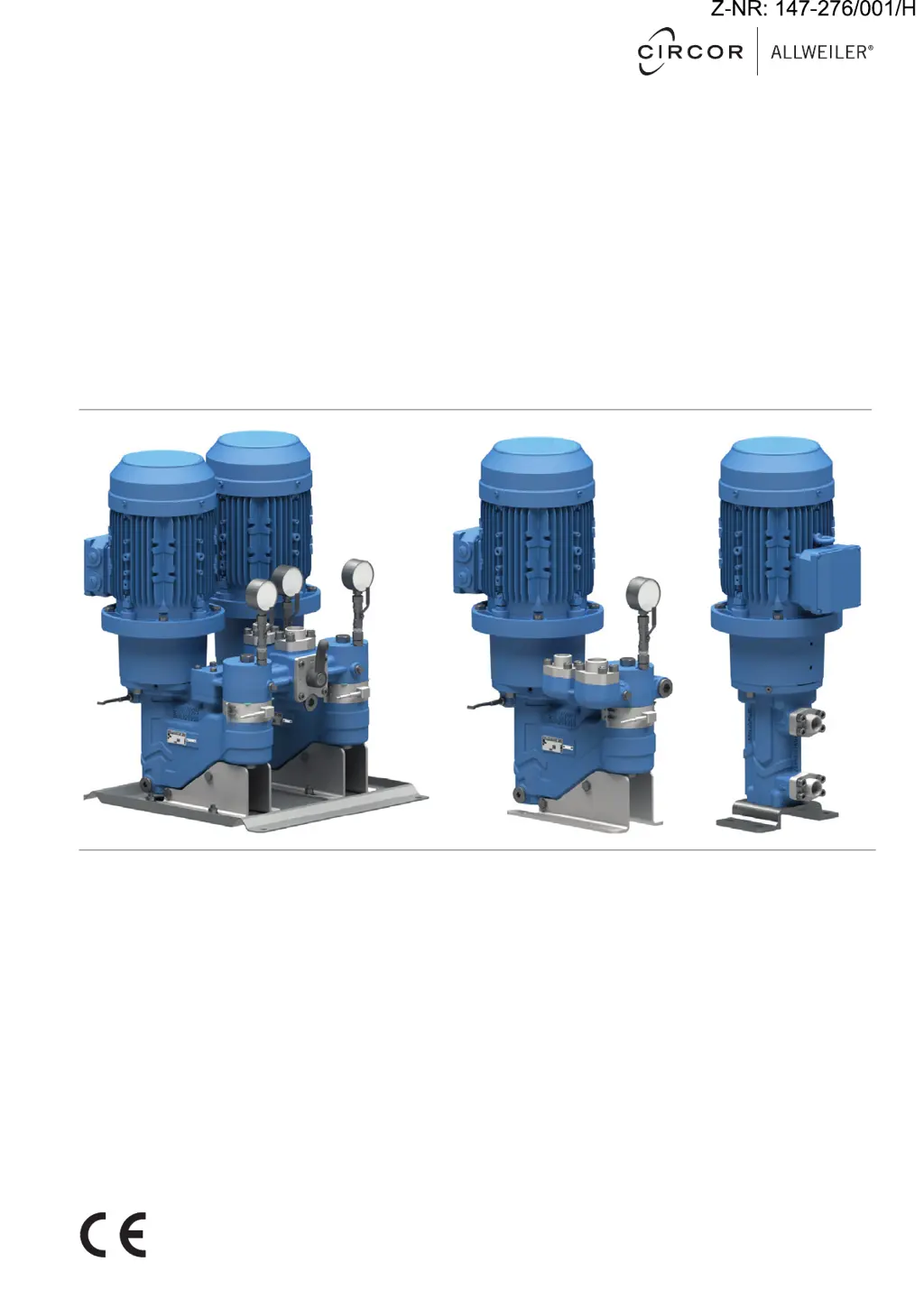
Screw Pump
Original Operating Manual ALLFUEL Series
Version BA-2021.06 en-US
147-276/H
ID-No. 550 851
ALLWEILER GmbH
Postfach 1140
Allweilerstraße 1
78301 Radolfzell
Germany
Phone: +49 (0) 7732-86-0
Fax: +49 (0) 7732-8 6-436
E-mail: service@allweiler.de
Internet: http://www.allweil
er.com
We reserve the right to make techni cal changes.
Read carefully before use.
Retain for future use.

Table of Contents

Questions and Answers

  • L
    Laura LewisAug 29, 2025
    How to fix a Allweiler CIRCOR ALLFUEL that is running roughly?
    • J
      Jacob DrakeAug 29, 2025
      If your Allweiler Water Pump is running roughly, it could be due to the following reasons: The pump might be very dirty, requiring you to dismount and clean it. Alternatively, the supply/suction pipe, pump, or suction strainer could be blocked or encrusted, necessitating cleaning.
  • W
    William SmithNov 6, 2025
    Why is my Allweiler CIRCOR ALLFUEL not pumping?
    • J
      Jessica HullNov 6, 2025
      If your Allweiler Water Pump isn't pumping, several factors could be at play. Start by checking for transport screw plugs and removing them. Inspect the pump for any dry-running damage. Ensure the supply/suction pipe isn't blocked by a fitting; if so, open it. Make sure the supply/suction pipe is fully filled and properly bled. Air pockets might be forming in the supply or suction pipe, so install a fitting for bleeding and correct the piping layout. A blocked pressure line could also be the culprit, so clean it. Confirm the pump is running in the correct rotation. A very dirty pump, or a blocked/encrusted supply/suction pipe or suction strainer may be the reason. Also, check for air being sucked in and seal the source of the malfunction. Finally, excessive gas might be causing cavitation;...
  • S
    shenryNov 13, 2025
    What to do if the Allweiler CIRCOR ALLFUEL pumping rate is insufficient?
    • S
      Stacey FrederickNov 13, 2025
      If your Allweiler Water Pump has an insufficient pumping rate, consider these possibilities: a fitting might be obstructing the supply/suction pipe, so open it. Ensure the supply/suction pipe is completely filled and properly bled. Check for air pockets in the supply or suction pipe; install a bleeding fitting and adjust the piping layout if needed. A blocked pressure line can also reduce the pumping rate, so clean it. Make sure the pump is rotating in the correct direction. A dirty pump, or a blocked/encrusted supply/suction pipe or suction strainer, can also cause this issue. Check for air being sucked in and seal the source of the malfunction. Lastly, excessive gas may be causing cavitation; inspect the cable gland, clean/enlarge the filter, and enlarge the supply/suction pipe cross-sec...
  • C
    Carolyn SantiagoNov 20, 2025
    Why does my Allweiler CIRCOR ALLFUEL have no suction?
    • A
      Ashley TownsendNov 21, 2025
      If your Allweiler Water Pump isn't creating suction, it could be due to several reasons. First, check if a fitting is blocking the supply/suction pipe and open it. Make sure the supply/suction pipe is fully filled and bled properly. Air pockets in the supply or suction pipe can also prevent suction; install a bleeding fitting and correct the piping layout. A blocked pressure line can be the reason, so clean it. Ensure the pump is running with the correct sense of rotation. A dirty pump, or a supply/suction pipe or suction strainer that is blocked or encrusted, might be the cause. Also, check for air being sucked in and seal the source of the malfunction. Finally, excessive gas might be causing cavitation; in that case, check the cable gland, clean/enlarge the filter, and enlarge the supply...

Summary

About this document

Target groups

Defines target audiences and their responsibilities for the manual.

Other applicable documents

Lists related documents and their purposes.

Warnings and symbols

Explains warning symbols, risk levels, and their consequences.

Safety

Intended use

Specifies the correct and incorrect usage of the pump.

General safety instructions

Provides essential safety guidelines for operation, personnel obligations, and safety equipment.

Specific hazards

Details specific risks like explosion, electric shock, moving parts, and hot surfaces.

Layout and function

Label

Describes the pump's nameplates, including type, ATEX, and digital labels.

Layout

Illustrates and labels the main components of the pump.

Shaft seals

Explains the types and function of shaft seals, including mechanical seals.

Bearings and lubrication

Details bearing types and lubrication requirements.

Auxiliary systems (heating)

Describes auxiliary systems, specifically electrical heating of the mechanical seal area.

Hydraulic diagram

Presents the hydraulic circuit diagram for twin units with filters.

Transport, storage and disposal

Transport

Covers unpacking, inspection, lifting procedures, and safety during transport.

Treatment for storage

Instructions for applying preservative to the inside and outside of the pump for storage.

Storage

Guidelines for proper storage conditions, including environmental factors and shaft rotation.

Removing the preservative

Procedures for removing preservative and checking seals before operation.

Disposal

Procedures for safe and environmentally compliant disposal of the pump and its parts.

Setup and connection

Preparing the setup

Checks for ambient conditions, installation site, surface, and preservative removal.

Setup

Instructions for positioning the pump unit with or without a base.

Installing the motor

Steps for mounting the motor onto pumps in flange versions, including coupling alignment.

Planning the pipes

Guidance on pipe sizing, supports, cross-section changes, and leakage discharge.

Connecting the pipes

Procedures for keeping pipes clean, installing suction/pressure lines, and checking stress-free connections.

Electrical connection

Guidelines for connecting the motor and heater electrically, including safety measures.

Installing the coupling guard

Instructions for installing the coupling guard for flanged drives.

Operation

Putting the pump into service for the first time

Steps for initial startup, including preservative removal, auxiliary system prep, filling, and bleeding.

Switching on

Checklist for successful pump startup, ensuring all conditions are met.

Switching off

Procedure for safely switching off the pump after initial startup.

Operation

General operational procedures including switching on, checking working pressure, and switching off.

Shutting down the pump

Measures to take when shutting down the pump for prolonged periods, including draining.

Start-up following a shutdown period

Procedures for restarting the pump after extended downtime (over 6 months).

Operating the stand-by pump

Guidance on operating the stand-by pump, including frequency.

Cleaning the filter

Steps for cleaning the pump's filter unit, including safety precautions.

Maintenance

Inspections

Recommended inspection intervals and critical checks for trouble-free operation.

Maintenance

Details on antifriction bearing replacement and mechanical seal considerations.

Repairs

Procedures for returning the pump, removing it from the unit, and dismounting.

Ordering spare parts

Information required for ordering replacement parts, including pump details.

Troubleshooting

Pump malfunctions

Lists common pump malfunctions, their causes, and remedies.

Pressure relief valve malfunctions

Lists pressure relief valve issues, their causes, and remedies.

Appendix

Sectional drawings

Exploded views and part number designations for pump components.

Technical specifications

Details on ambient conditions, sound pressure levels, and tightening torques.

Declaration of harmlessness

Form for declaring pump harmlessness for return shipments, including medium used.

Declaration of conformity according to EC Machine Directive

Official statement of compliance with EC directives and applicable harmonized norms.

Allweiler CIRCOR ALLFUEL Series Specifications

General IconGeneral
BrandAllweiler
ModelCIRCOR ALLFUEL Series
CategoryWater Pump
LanguageEnglish

Related product manuals