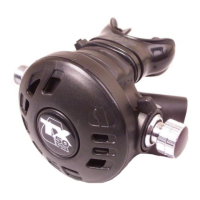
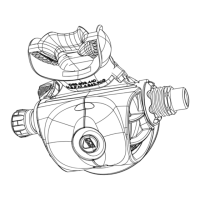
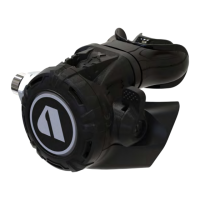
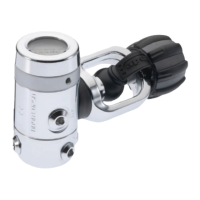
This document is a maintenance manual for the Apeks TX Second Stage Regulator range, intended for use by authorized technicians. It provides detailed procedures for the correct maintenance and repair of these diving regulators, ensuring their optimal performance and safety.
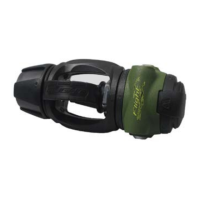
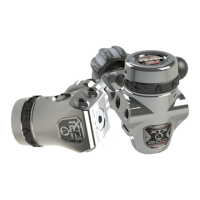
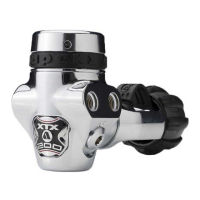
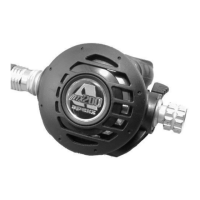
The Apeks TX Second Stage Regulator is a critical component of a diver's life support system, responsible for delivering breathable air to the diver at ambient pressure. The manual covers several models within the TX range, including the TX100, TX50, TX40, and T20, each offering a set of features designed to enhance the diving experience.
Function Description:
The primary function of the TX Second Stage Regulator is to reduce the intermediate pressure from the first stage regulator to a breathable ambient pressure, allowing the diver to inhale air comfortably underwater. It achieves this through a pneumatically balanced valve design, which minimizes breathing effort and ensures consistent air delivery regardless of depth or tank pressure.
Key components work in concert to achieve this function:
- Valve Spindle and Shuttle Valve Assembly: These are at the heart of the regulator, controlling the flow of air. The shuttle valve, with its rubber seating and O-rings, opens and closes to allow air into the mouthpiece.
- Diaphragm: A flexible membrane that senses ambient water pressure. When the diver inhales, the pressure inside the regulator drops, causing the diaphragm to flex inward. This movement is transmitted to the lever, which in turn opens the valve, allowing air to flow.
- Lever: A mechanical link between the diaphragm and the valve spindle. Its precise adjustment is crucial for setting the cracking effort (the force required to initiate airflow).
- Heat Exchanger: This component helps to prevent the regulator from freezing in cold water by transferring heat from the surrounding water to the incoming air, a vital feature for cold-water diving.
- Venturi Control: This feature, present in all TX models, uses the flow of air to create a vacuum effect, assisting in the opening of the valve and further reducing breathing effort.
- Adjustable Cracking Control (TX100, TX50): These models offer a knob that allows the diver to fine-tune the cracking effort, providing a personalized breathing experience. This can be useful for preventing free-flow at the surface or for optimizing performance at depth.
- Purge Button: Located on the front cover, this button allows the diver to manually open the valve and flush water from the regulator or to provide a continuous flow of air for buoyancy control.
- Mouthpiece: The part that the diver holds in their mouth, designed for comfort and to create a watertight seal.
Usage Features:
The Apeks TX Second Stage Regulators are designed for reliability and ease of use in various diving conditions, including cold water.
- Pneumatically Balanced Valve Design: This core feature ensures consistent and low breathing effort, making the regulator comfortable to use even during prolonged dives or under strenuous conditions.
- Integrated Venturi Control: This system enhances airflow and reduces the effort required to breathe, contributing to a smooth and natural breathing experience.
- Adjustable Cracking Control (TX100, TX50): This allows divers to customize the inhalation effort. Turning the knob inward increases the cracking effort, which can help prevent accidental free-flow, especially when entering the water or swimming against a current. Turning it outward reduces the cracking effort, making breathing even easier.
- Cold Water Use: All TX models are suitable for cold water diving, thanks to their robust design and the inclusion of a heat exchanger (where applicable) that helps prevent ice formation within the regulator.
- Durable Finishes: The TX100 features a Satin Chrome Finish, while the TX50, TX40, and T20 models come with a Bright Chrome Finish, providing both aesthetic appeal and corrosion resistance.
- Comfo-bite Mouthpiece (optional): Some models may be equipped with a comfo-bite mouthpiece, designed for enhanced comfort and reduced jaw fatigue during long dives.
Maintenance Features:
The manual emphasizes a structured approach to maintenance, ensuring the longevity and safe operation of the regulators. It is strictly for factory-authorized technicians who have completed an Apeks Service & Repair Seminar.
- Scheduled Annual Service: It is recommended that the Apeks TX second stage regulator be serviced annually, regardless of usage, to ensure continued optimal performance and safety.
- Official Inspection Checklist: A comprehensive list of checks is provided for an official inspection, including immersion tests for leaks, verification of stable medium pressure, checking opening effort, smooth operation of controls, visual inspection of filters, exhaust valves, and mouthpiece, and hose security. Any failure in critical steps necessitates a full service.
- Mandatory Replacement Parts: The manual clearly identifies parts that must be replaced during service, regardless of their apparent condition or the regulator's age. These include all O-rings, the mouthpiece clip, rubber seating, and certain other components, ensuring that critical sealing and functional elements are always new.
- Specialized Tools: A list of recommended tools, including specific Apeks part numbers (e.g., Front Cover Tool PN AT31, Slotted Seat Adjuster PN AT51, O' Ring removal pick PN AT79), is provided to ensure that technicians use the correct equipment, preventing damage to delicate components.
- Cleaning and Lubrication Procedures: Detailed instructions are given for cleaning all parts using an ultrasonic bath with specific cleaning solutions like Biox, followed by rinsing and drying. For lubrication, Christo-Lube® MCG-111 is specified for all O-ring seals, with strict warnings against over-lubrication or using inappropriate lubricants on silicone rubber parts.
- Torque Specifications: Precise torque settings are provided for critical threaded components, such as the Heat Exchanger and Hose, to prevent damage from under or over-tightening. A calibrated torque wrench is required for these steps.
- Test Bench Specifications: Acceptable ranges for opening effort and external leak tests are outlined, allowing technicians to verify the regulator's performance against factory standards after reassembly.
- Troubleshooting Guide: A comprehensive table helps technicians diagnose common issues like leakage, free-flow, excessive breathing work, or water entry, linking symptoms to possible causes and recommended treatments.
- Exploded Parts Diagrams: Detailed diagrams for each model (TX100, TX50, TX40 & T20) are included, showing all components with their part numbers, which is essential for correct disassembly, reassembly, and part identification.
- Nitrox Compatibility Guidelines: The manual addresses nitrox safety, stating that standard Apeks regulators are suitable for oxygen-enriched gases up to 40% (EAN40). For higher oxygen concentrations (up to 100% EAN100), specific cleaning procedures and hyperfiltered compressed gas are required, and the regulator must be serviced accordingly to maintain compatibility.
- General Guidelines: Emphasizes the importance of following each step exactly, reading the entire manual before starting, maintaining a clean and equipped work area, segregating reusable and non-reusable parts, and documenting all service details.

 Need help?
 General

 To Next Page