EasyManua.ls Logo

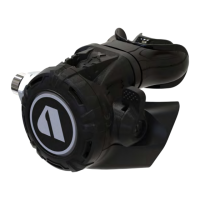
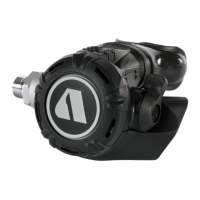
Apeks XL4 - Service Manual

Apeks XL4
23 pages
Print Icon
To Next Page IconTo Next Page
Loading...
TECHNICAL SUPPORT
APEKS MARINE EQUIPMENT LTD, NEPTUNE WAY, BLACKBURN, LANCASHIRE. BB1 2BT
Tel: +44 (0) 1254 692200 Fax: +44 (0) 1254 692211 E-mail: info@aqualung.uk Web: www.apeks.co.uk
MAINTENANCE MANUAL
FOR
AUTHORISED TECHNICIANS
Document No. AP5840
Issue 1
13/11/2017
XL4 SECOND STAGE
REGULATOR
Question and Answer IconNeed help?

Do you have a question about the Apeks XL4 and is the answer not in the manual?

Summary

APEXS XL4 REGULATOR MANUAL OVERVIEW

Manual Copyright and Introduction

Manual copyright notice and introduction to factory-prescribed maintenance procedures.

Safety Warnings and Precautions

Details warnings, cautions, and notes indicating potential injury or product damage.

Scheduled Service and Inspection Guide

Recommends annual examination and bi-annual full service for the regulator.

Second Stage Official Inspection Checklist

Outlines the six key checks for a proper second-stage regulator inspection.

GENERAL GUIDELINES AND CONVENTIONS

General Maintenance Guidelines for Technicians

Emphasizes following procedures exactly, using correct tools, and proper parts handling.

Understanding Technical Conventions and Terms

Explains terminology, directional conventions, and part referencing.

REGULATOR DISASSEMBLY PROCEDURES

XL4 REGULATOR DISASSEMBLY STEPS

Hose Removal and Inspection

Details steps for removing the hose and inspecting crimps for damage.

Exhaust Tee and Mouthpiece Removal

Instructions for detaching the exhaust tee and removing the mouthpiece.

Front Cover and Diaphragm Removal

Guides on removing the clamp ring, inner locking ring, friction ring, and diaphragm.

Venturi Lever and Spindle Removal

Instructions for safely removing the Venturi lever and spindle components.

CONTINUED DISASSEMBLY OF XL4 REGULATOR

Venturi Lever Extraction from Case

Step-by-step removal of the Venturi Lever from the regulator case.

Valve Seat and Inlet Shroud Removal

Details on unscrewing the valve seat and separating the inlet shroud.

Spindle Assembly Extraction

Procedure for removing the spindle assembly using specific tools.

XL4 REGULATOR INSPECTION PROCEDURES

Exhaust Valve Condition Check

How to inspect the exhaust valve for condition and seating surface cleanliness.

Purge Button Assembly Integrity

Checking the purge button and its spring for proper seating.

Venturi Lever and Spindle Condition

Checking the Venturi lever for stress and the spindle for damage.

XL4 REGULATOR REASSEMBLY PROCEDURES

Spindle Body Assembly Steps

Step-by-step guide to assembling the spindle body with its components.

Fitting Spindle Assembly into Case

Instructions on how to correctly insert the spindle assembly into the regulator case.

CONTINUED XL4 REGULATOR REASSEMBLY

Spindle Assembly and Case Integration

Final steps for inserting the spindle assembly and ensuring proper fit.

Valve Seat and Inlet Fitting Installation

Procedures for installing the valve seat and inlet fitting assembly.

Diaphragm and Locking Ring Installation

Procedures for seating the diaphragm, friction ring, and inner locking ring.

FINAL ASSEMBLY OF XL4 REGULATOR

Complete Regulator Reassembly Steps

Detailed sequence for reassembling the purge button, cover, venturi lever, exhaust tee, and hose.

Diaphragm Sealing Verification Method

Method to verify the diaphragm seal by creating a vacuum.

XL4 REGULATOR FINAL TESTING

Setting the Lever Height Adjustment

How to use tools to adjust the lever height for optimal performance.

Gas Flow and Free Flow Test Procedures

Procedures for checking air flow and performing a free flow test.

XL4 REGULATOR PERFORMANCE TESTS

Second Stage Opening Effort Test

Method to measure and adjust the opening effort using specific tools.

Immersion Leak Test

Performing leak checks by submerging the regulator in water.

Subjective Breathing Test Evaluation

Evaluating breathing characteristics for proper function.

CLEANING AND LUBRICATION PROCEDURE

General Cleaning of Metal Parts

Steps for cleaning brass, stainless-steel, and anodised aluminium parts.

General Cleaning of Plastic and Rubber Parts

Procedures for cleaning plastic, composite, rubber components using soapy water.

SPECIALIZED CLEANING AND OXYGEN USE

General Hose Cleaning Guidelines

Guidelines for cleaning regulator hoses, referring to a separate document.

Cleaning Parts for Nitrox and Oxygen Use

Specific cleaning methods for parts used with Nitrox and Oxygen.

FINAL WIPING, INSPECTION AND LUBRICATION

Wiping and Visual Inspection of Parts

Instructions for wiping parts and performing a visual inspection for contaminants.

Lubrication and Dressing for O-rings

Guidance on lubricating O-rings with compatible grease for different uses.

Disinfecting Multi-Use Equipment

Precautions for disinfecting equipment used in training or rental.

XL4 2 ND STAGE EXPLODED PARTS DIAGRAM

Summary

APEXS XL4 REGULATOR MANUAL OVERVIEW

Manual Copyright and Introduction

Manual copyright notice and introduction to factory-prescribed maintenance procedures.

Safety Warnings and Precautions

Details warnings, cautions, and notes indicating potential injury or product damage.

Scheduled Service and Inspection Guide

Recommends annual examination and bi-annual full service for the regulator.

Second Stage Official Inspection Checklist

Outlines the six key checks for a proper second-stage regulator inspection.

GENERAL GUIDELINES AND CONVENTIONS

General Maintenance Guidelines for Technicians

Emphasizes following procedures exactly, using correct tools, and proper parts handling.

Understanding Technical Conventions and Terms

Explains terminology, directional conventions, and part referencing.

REGULATOR DISASSEMBLY PROCEDURES

XL4 REGULATOR DISASSEMBLY STEPS

Hose Removal and Inspection

Details steps for removing the hose and inspecting crimps for damage.

Exhaust Tee and Mouthpiece Removal

Instructions for detaching the exhaust tee and removing the mouthpiece.

Front Cover and Diaphragm Removal

Guides on removing the clamp ring, inner locking ring, friction ring, and diaphragm.

Venturi Lever and Spindle Removal

Instructions for safely removing the Venturi lever and spindle components.

CONTINUED DISASSEMBLY OF XL4 REGULATOR

Venturi Lever Extraction from Case

Step-by-step removal of the Venturi Lever from the regulator case.

Valve Seat and Inlet Shroud Removal

Details on unscrewing the valve seat and separating the inlet shroud.

Spindle Assembly Extraction

Procedure for removing the spindle assembly using specific tools.

XL4 REGULATOR INSPECTION PROCEDURES

Exhaust Valve Condition Check

How to inspect the exhaust valve for condition and seating surface cleanliness.

Purge Button Assembly Integrity

Checking the purge button and its spring for proper seating.

Venturi Lever and Spindle Condition

Checking the Venturi lever for stress and the spindle for damage.

XL4 REGULATOR REASSEMBLY PROCEDURES

Spindle Body Assembly Steps

Step-by-step guide to assembling the spindle body with its components.

Fitting Spindle Assembly into Case

Instructions on how to correctly insert the spindle assembly into the regulator case.

CONTINUED XL4 REGULATOR REASSEMBLY

Spindle Assembly and Case Integration

Final steps for inserting the spindle assembly and ensuring proper fit.

Valve Seat and Inlet Fitting Installation

Procedures for installing the valve seat and inlet fitting assembly.

Diaphragm and Locking Ring Installation

Procedures for seating the diaphragm, friction ring, and inner locking ring.

FINAL ASSEMBLY OF XL4 REGULATOR

Complete Regulator Reassembly Steps

Detailed sequence for reassembling the purge button, cover, venturi lever, exhaust tee, and hose.

Diaphragm Sealing Verification Method

Method to verify the diaphragm seal by creating a vacuum.

XL4 REGULATOR FINAL TESTING

Setting the Lever Height Adjustment

How to use tools to adjust the lever height for optimal performance.

Gas Flow and Free Flow Test Procedures

Procedures for checking air flow and performing a free flow test.

XL4 REGULATOR PERFORMANCE TESTS

Second Stage Opening Effort Test

Method to measure and adjust the opening effort using specific tools.

Immersion Leak Test

Performing leak checks by submerging the regulator in water.

Subjective Breathing Test Evaluation

Evaluating breathing characteristics for proper function.

CLEANING AND LUBRICATION PROCEDURE

General Cleaning of Metal Parts

Steps for cleaning brass, stainless-steel, and anodised aluminium parts.

General Cleaning of Plastic and Rubber Parts

Procedures for cleaning plastic, composite, rubber components using soapy water.

SPECIALIZED CLEANING AND OXYGEN USE

General Hose Cleaning Guidelines

Guidelines for cleaning regulator hoses, referring to a separate document.

Cleaning Parts for Nitrox and Oxygen Use

Specific cleaning methods for parts used with Nitrox and Oxygen.

FINAL WIPING, INSPECTION AND LUBRICATION

Wiping and Visual Inspection of Parts

Instructions for wiping parts and performing a visual inspection for contaminants.

Lubrication and Dressing for O-rings

Guidance on lubricating O-rings with compatible grease for different uses.

Disinfecting Multi-Use Equipment

Precautions for disinfecting equipment used in training or rental.

XL4 2 ND STAGE EXPLODED PARTS DIAGRAM

Overview

The document provided is a maintenance manual for the Apeks XL4 Second Stage Regulator, designed for use by authorized technicians.

Function Description

The Apeks XL4 Second Stage Regulator is a critical component of a scuba diving system, responsible for reducing the intermediate pressure from the first stage to a breathable pressure for the diver. It delivers air on demand during inhalation and allows exhaled air to escape through an exhaust valve. The regulator features a Venturi lever for adjusting breathing performance and a purge button for clearing water.

Important Technical Specifications

The manual outlines several key technical specifications and requirements for the XL4 Second Stage Regulator:

Torque Specifications (Table 4):

  • Inlet Shroud (18) (AP9006): 3 Nm / 2.2 ft.lb

Test Bench Specifications (Table 5):

  • Opening Effort:
    • Condition: High Pressure > 50 bar gauge, Medium pressure 9.5 ± 0.5 bar
    • Acceptable Range: +1.4 to +1.6 in. H₂O (3.5 to 4.0 mbar)
  • External Leak:
    • Condition: High Pressure > 50 bar gauge, Medium pressure 9.5 ± 0.5 bar
    • Acceptable Range: No Leaks allowed

Key Components (Exploded Parts Diagram - Page 22): The regulator comprises numerous parts, with several identified as mandatory replacements during servicing (bold italics in the parts list). These include various O-rings (AP1154, AP1267, AP5711, AP1409), the Valve Seat (AP7563), Silicone Valve Seat (AP2034), and the Flexi Hose (AP0198SHPS).

Usage Features

The manual primarily focuses on maintenance rather than user operation. However, it implicitly describes some usage features:

  • Venturi Lever (9): Allows for adjustment of breathing performance. The manual warns against depressing the tab too far during removal to prevent permanent deformation.
  • Purge Button (2): Used to clear water from the regulator. The manual describes testing its function to ensure an adequate volume of air flows through the mouthpiece.
  • Mouthpiece (11): Designed for diver comfort and secure fit, with a clip (12) to hold it in place.
  • Hose (30): Connects the second stage to the first stage, with hose protectors (29) for durability.

Maintenance Features

The manual provides comprehensive maintenance instructions for authorized technicians, emphasizing precision and adherence to procedures.

Scheduled Service:

  • Annual Examination: Recommended regardless of usage.
  • Full Service: Recommended every two years.
  • Immediate Inspection: If there is any doubt about correct functioning.
  • Documentation: All service and inspection details must be documented to maintain the Limited Lifetime Warranty.

Official Inspection Steps:

  1. Lever Height Check: Using a setting tool.
  2. Opening Effort Check: Must be within the acceptable range.
  3. Pressurized Immersion Test: To check for air leakage.
  4. Exhaust Valve Inspection: Visual check for condition and proper seating.
  5. Hose Inspection: Checking security in crimps by pulling back protectors.
  6. Mouthpiece Inspection: Visual check for tears, holes, and general condition.
    • Failure in steps 1, 2, or 3 requires a full service.
    • Failure in step 4 may require a full service at the technician's discretion.
    • Failure in step 5 or 6 requires part replacement.

General Guidelines:

  • Follow Procedures Exactly: Read the entire manual before starting.
  • Dedicated Work Area: Ensure adequate lighting, cleanliness, and tool access.
  • Part Segregation: Separate reusable, non-reusable, and delicate parts.
  • Genuine Apeks Parts: Use only genuine parts from the service kit (AP0219).
  • Mandatory Replacement Parts: Never reuse mandatory replacement parts.
  • Torque Specifications: Follow all torque specifications using a calibrated torque wrench.

Disassembly Procedures:

  • Detailed steps for removing the hose, front cover & diaphragm, exhaust tee, mouthpiece, Venturi lever & spindle, valve seat, and spindle assembly.
  • O-Ring Removal: Use the "pinch method" or a plastic, brass, or aluminum 'O' Ring removal tool (AT79) to prevent damage to sealing surfaces. All removed O-rings must be discarded and replaced with new ones.
  • Mandatory Replacement Parts: Technicians are reminded to refer to the exploded parts drawing for all mandatory replacement parts that must not be reused.

Inspection Procedures:

  • Visual inspection of parts for cracks, deep scratches, excessive wear, distortion, and scratches on sealing faces, grooves, and bores.
  • Specific checks for the Purge Button Assembly, Venturi Lever, and Spindle.

Reassembly Procedures:

  • Detailed steps for assembling the spindle body, fitting the spindle assembly into the case, and final assembly of the regulator.
  • Lever Alignment: Ensure the lever is not twisted and legs are parallel.
  • Silicone Valve Seat: Ensure the work surface is clean and free from debris to prevent leaks.
  • Torque Specifications: Apply specified torque to the Inlet Fitting assembly (3 Nm / 2.2 ft.lb).
  • Lever Movement: Verify the lever moves freely and sits vertically.
  • Diaphragm Seating: Ensure the diaphragm and friction ring are seated correctly and not creased.
  • Hose Attachment: Torque the hose to the second stage to 5 Nm (3.7 ft/lb).

Final Testing:

  • Lever Height Setting: Using an Inline Adjustment Tool (AT72) and Setting Tool (AT75) to ensure correct lever height and air flow. Warnings are given regarding compressed air safety.
  • Second Stage Opening Effort Test: Using a calibrated test bench to measure opening effort (+1.4 to +1.6 in.H₂O).
  • Immersion Test: Submerging the regulator in clean water to check for air leaks, observing for bubbles over a one-minute period. Soap solution or Snoop™ can be used for very small leaks.
  • Subjective Breathing Test: Depressing the purge button, inhaling slowly and deeply, and tapping the purge button with the Venturi lever in the '+' position to check for freeflow.

Troubleshooting Guide (Table 1):

  • Provides a comprehensive list of symptoms (leakage/freeflow, low purge/excessive work of breathing, water entry) with possible causes and corresponding treatments (e.g., replace silicone seating, reset preliminary settings, replace lever, clean hose, replace O-ring).

Recommended Tool List (Table 2):

  • Lists specialized tools (e.g., AT48, AT71, AT72, AT75, AT76, AT77, AT79) and general tools (spanners, socket, torque wrench, hex key) required for maintenance.

Recommended Lubricants, Cleaning & Disinfectant Solutions (Table 3):

  • Lubricants: Christo-Lube MCG111 and PerFluroLube 20/1 for O-rings (oxygen compatible).
  • Cleaning Solutions: Liquid dishwashing detergent, white distilled vinegar, OAKite #31, NETALU for brass, stainless-steel, plastic, and rubber parts.
  • Oxygen Cleaning Solutions: Promoclean TP1113/TP108, BIOX O2 Liquid for Nitrox/Oxygen cleaning.
  • Disinfectant Solutions: Liquid dishwashing detergent, Chemgene HLD4L, STERANIOS 2% for general low-risk disinfecting and multi-use applications.
  • Warnings: Crucial warnings against using grease/spray on silicone rubber, placing plastic/rubber parts in acid solutions, and using hydrochloric acid or bleach-based disinfectants.

Cleaning & Lubrication Procedure:

  • Detailed steps for pre-cleaning, ultrasonic cleaning, rinsing, and drying brass, stainless-steel, plastic, composite, rubber, and anodized aluminum parts.
  • Specific instructions for cleaning hoses and parts for Nitrox and Oxygen use, including ultrasonic cleaning with specialized solutions and drying in a clean, dust-free atmosphere.
  • Wiping: Use lint-free materials (white filter paper, pure cotton cloth).
  • Inspection: Visually check parts under white light for traces of organic materials, cleaning agents, dust, and humidity.
  • Lubrication: Wear powderless latex gloves. Apply a very light film of oxygen-compatible grease (Christo-Lube MCG111) to O-rings, removing any excess.
  • Disinfection: Guidelines for disinfecting multi-use equipment, emphasizing recommended solutions and cautioning against corrosive disinfectants.

Apeks XL4 Specifications

General IconGeneral
BrandApeks
ModelXL4
CategoryController
LanguageEnglish

Related product manuals