50
th
Anniversary 2500 Bus Compressor API
compression effect that still reduces the overall gain, but the sound is much more punchy and the
signal actually sounds less compressed.
LOUD: A gradual, 10dB/decade filter is applied to the signal feeding the RMS detector, equalizing the
energy going into the RMS detector. This decreases the way lower frequencies act on compression.
The overall difference is a noticeable increase of punch and low frequencies, but a uniformly
compressed signal. It is the “little more punch” function.
• The red LED illuminates when engaged
MED (Medium): A slight attenuation of the low frequencies and a slight boost in the high frequencies,
with a flat mid-range are applied to the signal feeding the RMS detector. This reduces the low
frequencies from pumping the compressor as much and increases the sensitivity of the RMS detector
to the higher frequencies, affecting the higher frequency peaks of the signal.
• The yellow LED illuminates when engaged
NORM (Normal): The
THRUST
®
filter is not inserted in the path to the RMS detector and the 2500
compresses like most units on the market today (the signal in the detection path remains flat).
• The green LED illuminates when engaged
5.1.3 TYPE
The 50
th
Anniversary 2500 can be set to operate in two circuit topologies that determine where the
signal that feeds the RMS detector comes from:
• OLD: Feed-Back topology: The RMS detector receives the signal from after the VCA
• NEW: Feed-Forward topology: The RMS detector receives the signal from before the VCA
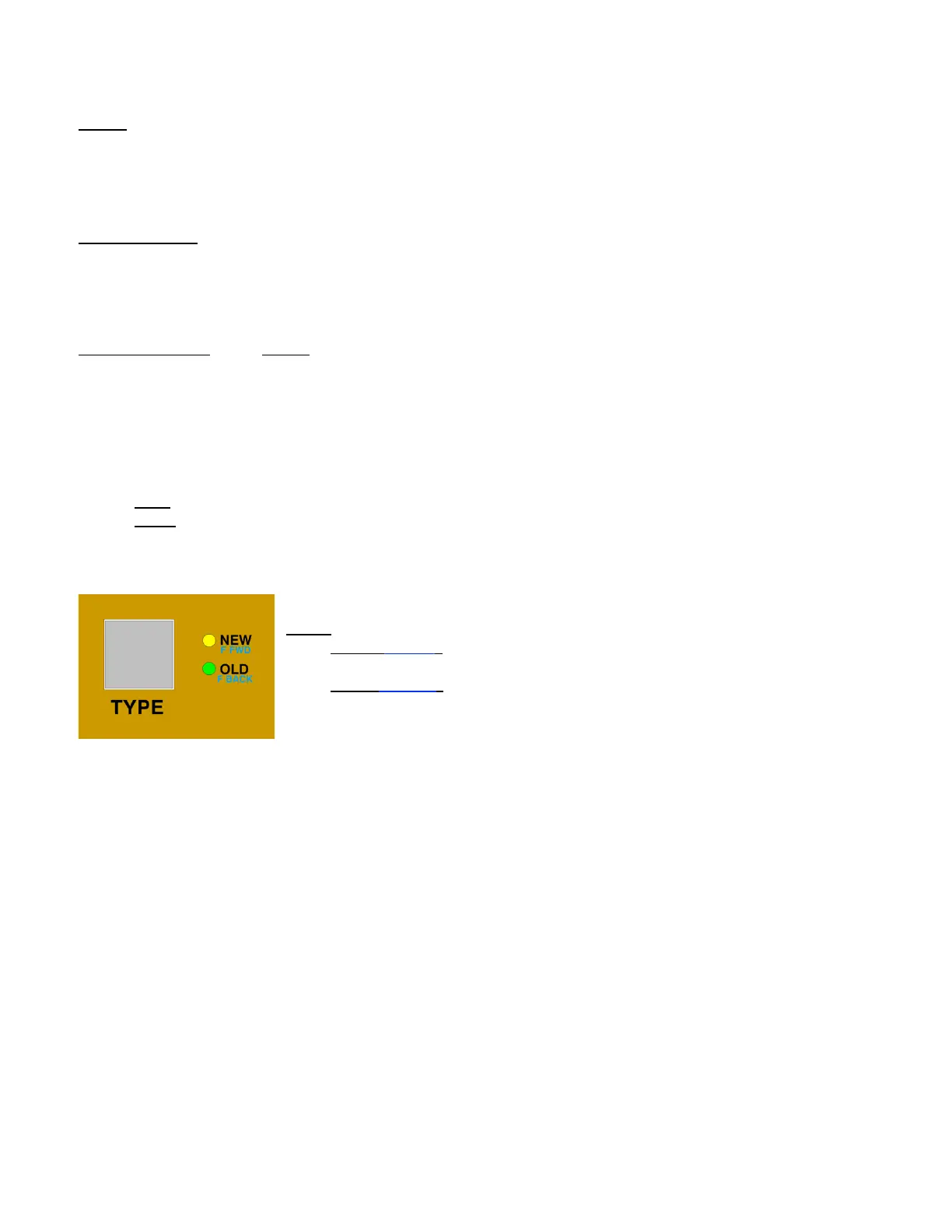
The detection path routing is selected using the TYPE switch.
TYPE: Toggle to select detection path routing
• NEW (F FWD): Engages the feed-forward topology
o Yellow LED
• OLD (F BACK): Engages feed-back topology
o Green LED


 To Next Page