7
Getting Started
⚠CAUTION
Always use a grounded outlet that meets minimum voltage supply requirements for industrial
equipment. Do not use with portable power generators.
⚠CAUTION
Always open valves slowly for safety, and to check for leaks.
⚠CAUTION
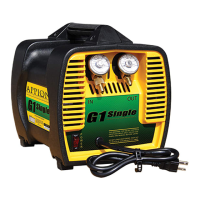
The G1Single is equipped with a 550psi (38.6 kg/cm
2
) pressure shut o switch to protect the
machine from damage. This does not prevent overfilling of the storage container. (See Page 6)
G1SINGLE OPERATION MANUAL
© 2023 APPION INC. - ALL RIGHTS RESERVED
CHECKING YOUR RECOVERY EQUIPMENT
ACCESSORY EQUIPMENT
Before connecting or operating the G1Single, verify that the G1Single will be able to operate properly:
• Check that the debris screen at the inlet fitting is clean before starting every job. This screen prevents
damage to the machine that may get past the inline filter. When pumping dirty/used refrigerant, this screen
may quickly clog and slow the process when used without an inline filter.
• Verify the power source provides adequate voltage at the machine while it is running (within 10% of the
rated power). When using an extension cord, follow the sizing guidelines on Page 4.
Review the information for Care and Maintenance on Page 18 regularly to ensure optimal performance.
Additional equipment may be used to connect the G1Single to the system you are recovering refrigerant from.
Verify operational details and safety information from the manufacturers of other equipment before use.
• . A leaking hose may cause venting of refrigerant, and may introduce atmospheric air or other
contaminants into the recovered refrigerant. Examine the gaskets on each hose to ensure they are intact,
checking for any damage or wear that may lead to leaks.
• Use the shortest length of 3/8”-diameter hoses possible on every connection. IMPORTANT: Do not use
“quick disconnect” or “auto-shuto” hoses for refrigerant recovery, as this can bring the recovery to a halt.
• Use Valve Core Removal Tools with a ball valve (such as Appion MegaFlow VCT) to remove all “Schrader”-
type access valve cores from the System access fittings. This prevents restrictions that would otherwise
limit the performance of the G1Single and/or cause overheating of the recovery cylinder. See Page 15 for
more information.
• The recovery cylinder should have extra capacity beyond the amount you intend to recover. For maximum
recovery speeds, use a recovery cylinder that is already evacuated (500 microns or better). Note: New
recovery cylinders may not be suiciently evacuated - always verify before use.
• Check your refrigerant scale with a known weight to ensure that is operating correctly. A malfunctioning
scale may not alert you to the amount of refrigerant in the storage container.
• Examine your external service gauges for proper operation and calibration of the gauges. Contact the
gauge manufacturer for instructions in this process.
• Use a new inline filter dryer as shown when pumping dirty refrigerant. Replace the filter dryer aer each
use. If the filter has exceeded its capacity, this may aect the performance of the machine.
• Use a sight glass to verify liquid flow. This can also be useful for troubleshooting purposes. Make sure that
the sight glass is in good condition and does not leak.
⚠CAUTION


 To Next Page