6
4) How to Use
CAUTION: During
operation the AS175 may
cause hand-arm vibration,
which can result in fatigue
or discomfort after long
periods of continuous use.
Vibration will increase with
the hardness of material.
Do not operate the tool if
discomfort is experienced,
and ensure that sufficient
rest periods are taken
during cutting. For further
information, contact the
manufacturer.
Fig.5
Fig.6
Apply protective hearing, breathing, eyes and body
protection as appropriate.
With the blades secured and the tool switch OFF, plug
the tool into the power socket.
CAUTION:
Do not block the cooling
intake vents or ingest dust
or debris at the rear of the
motor as this may cause
the motor to overheat. If
working in dusty conditions,
it is recommended that the
vents be regularly cleaned
with an air blast. (See Fig.7
)
Fig.7
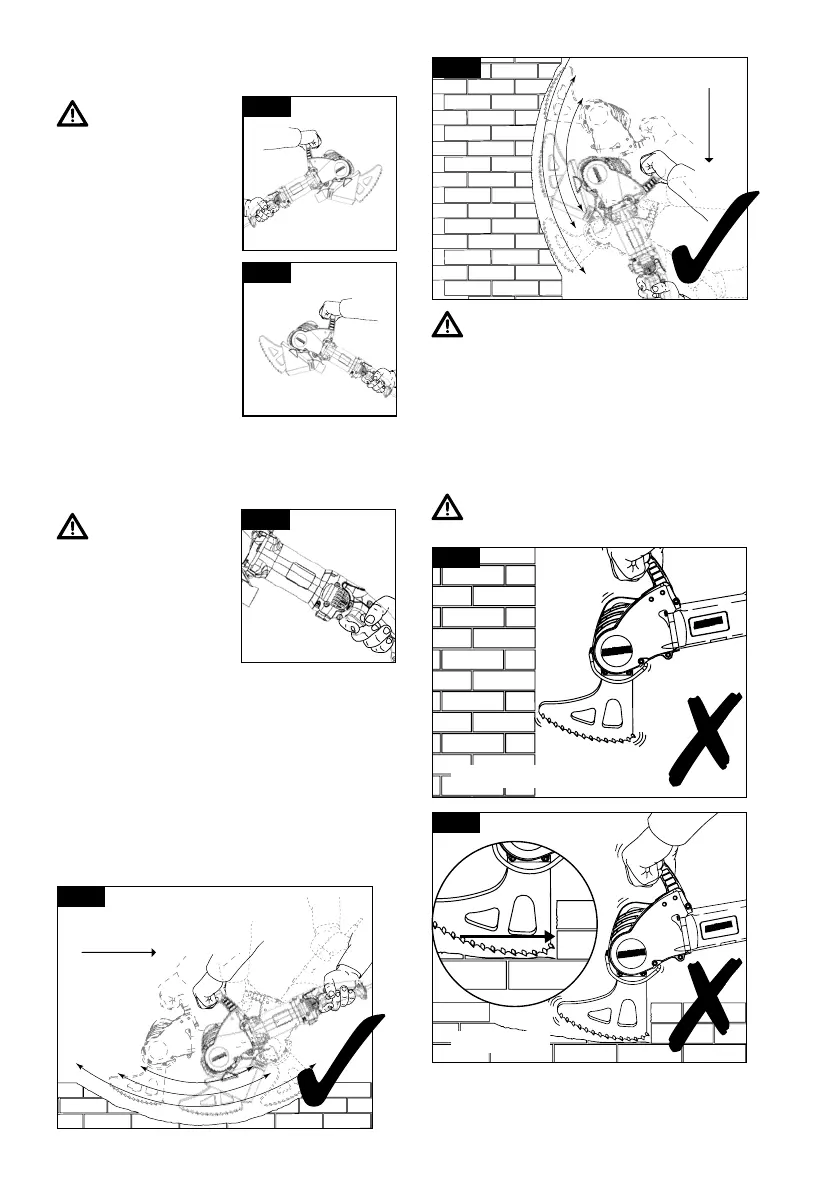
Hold the tool by both the top handle and the motor
housing. (Fig.5 & 6)
To start the cut, hold the tool firmly in your hands and
apply the middle of the blade cutting edge to the work,
keeping in mind that the direction of cut is towards the
rear of the blades.
While cutting, move the tool and blade in a slow
“sawing” motion, which improves the cut rate, reduces
concentrated heat build-up and evens the wear on the
blades. (See Fig.8 & 9)
Direction of cut
Fig.8
Direction of cut
Fig.9
CAUTION: Do not allow the forward or rear end
of the blades to hammer onto hard surfaces (shown in
figs: 10,11 & 13) as this will damage the blades and
tool. If unintentional hammering occurs, stop the tool or
withdraw it from the cut immediately.
When using any of the blade types, avoid hammering
of the ends of the blades into the ends of the cut by
using a slow rocking and sweeping motion. For best
performance try to ensure that the teeth are the only
part of the blade in contact with the workpiece.
CAUTION: Take care when setting the tool down
to avoid chipping the tungsten carbide teeth.
Fig.10
“Hammering!”
Fig.11
“Hammering!”



 To Next Page