11
TEMPERATURE CONTROLLER
1 Temperature is controlled with an infrared optical pyrometer.
2 Always place the lid cover on the graphite crucible.
3 The temperature controller does not function before reaching 800°C (1472 °F) and measures temperatures up
to 1550 °C (2822 °F).
The performance and the power of the machine enable to reach temperatures up to 2000 °C. For the best
accuracy of the temperature measurement the temperature controller is adjusted to display casting
temperatures up to 1550 °C
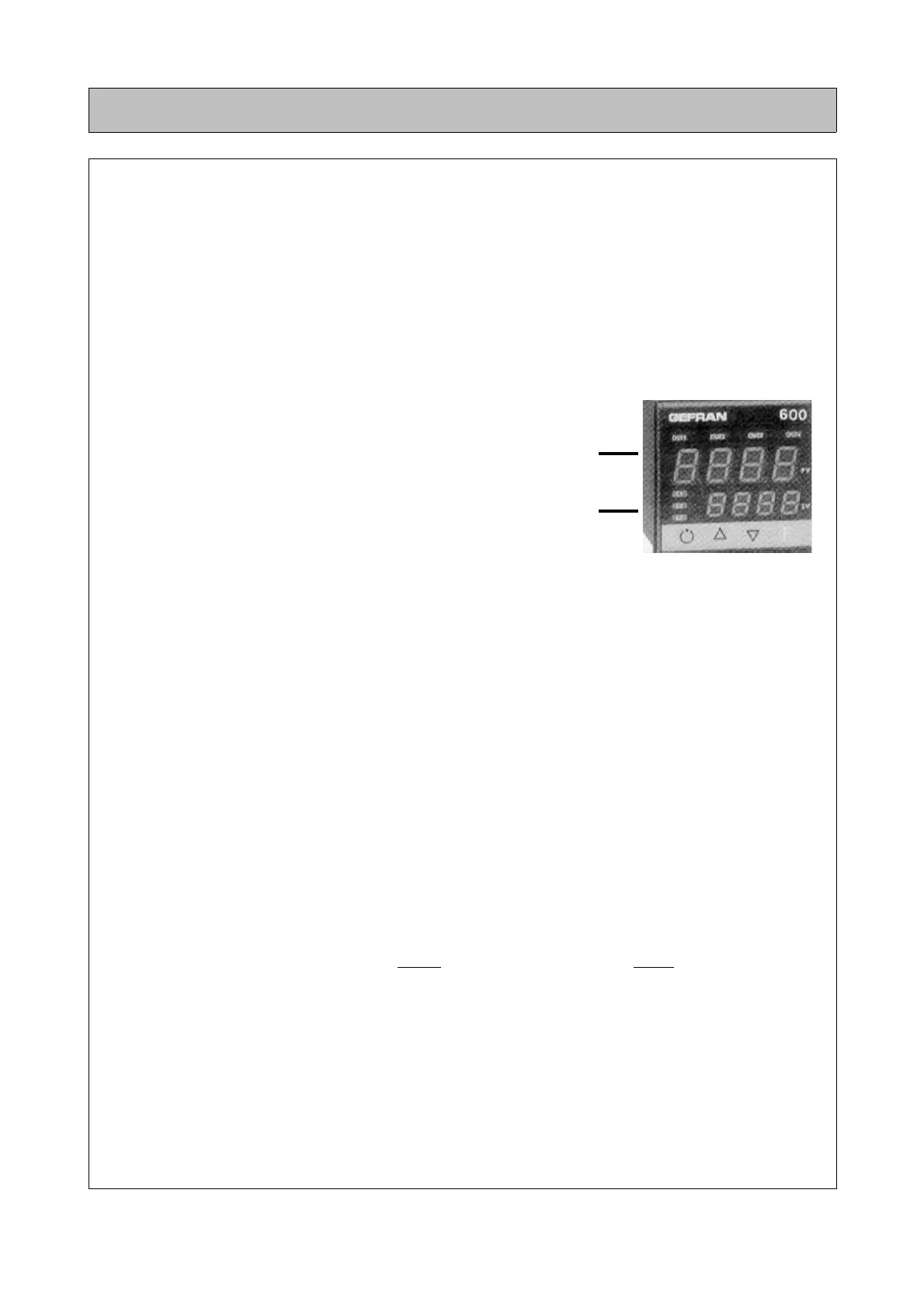
4 The temperature controller is always connected. The upper display
A
indicates the actual temperature of the metal being melted. The lower
display
B
indicates the chosen casting temperature. To set the casting
temperature SET POINT use the up or down buttons in the lower part
of the controller. The up button (
∧
∧∧
∧
) increases the SET POINT value
the down button (
∨
∨∨
∨
) decreases the SET POINT value.
To memorize the SET POINT value keep button F pushed until the
set point value will appear again on the display. If wishing to exclude
the SET POINT push button O and the numbers 100.0 appear on the
display B and controller will show current temperature on display
A.
Should a number different from 100.0 appear on the display, push
button (∧) until 100.0 is reached.
To restore SET POINT setting, push button
O
again.
5 For chrome-cobalt the displayed temperature is accurate when the blue filter closes the window of the machine
cover. We recommend to exclude the SET POINT and to work on the maximum power position.
The blue glass filter must not close the window when melting precious alloys.
♦ PRECAUTIONS TO BE TAKEN DURING TEMPERATURE CONTROL
A During melting process, if some metal pieces stick isolated against the crucible wall while metal lying on the
crucible bottom is melting, temperature reading will be inaccurate. Check the melting process in the crucible
and using the appropriate rod drop the isolated metal pieces into the molten metal. These operations are made
with closed machine cover. The rods will be introduced through the mesh of the machine cover.
B When using the graphite crucibles it is the graphite which acquires heat from the coil and transfers it to the
metal. The light emitted by the heated graphite will be read by the optical sensor and consequently it is
necessary to regulate power in such a way to have a slow melting process so that the gradual temperature
increase is transferred to the metal and the colour of the crucible is similar to the colour of the melting metal.
C The alloys for dental application are more than 150 and during melting each of them emits a different light,
named “emissivity”, that is detected by the photodiode and transformed into temperature degrees with the
possible errors ranging from ± 2% to 5%.
D When the molten alloy takes a spherical shape, it has completely adhered to the crucible wall and the
superficial layer of oxyde breaks, it is the correct moment to start centrifugation.
An eventual waiting time of 5 t 15 seconds will depend on alloy quality and quantity and if metal is partially
recovered from previous castings. Take note of the thermal level value shown on the display A at the moment
of centrifugation : it will be an indication for all subsequent castings.
PICTURE 5
A
B
MODULAR 6


 To Next Page