15
TECHNICAL INFORMATION ON MELTING PROCESS
INFORMATION ON INDUCTION MELTING PROCESS
♦ The electromagnetic field (melting heat) heats the graphite crucible which transfers the heat to the alloy and
melts it.
♦ The electromagnetic field does not heat the ceramic crucible, it is the alloy which acquires the heat by
induction from the coil and melts.
♦ If the quantity of alloy in the ceramic crucible is small, its small mass will acquire a small part of the induction
field which will be not sufficient to reach the melt. It is necessary to follow the indications of the smallest alloy
quantities permitted in the ceramic crucibles given in the next chapters.
♦ The metals and the alloys have different behaviours towards the magnetic field. For example: the same mass of
gold behaves differently from the same mass of alloy for ceramic techniques or Chrome-Cobalt, therefore the
heating power must be regulated accordingly.
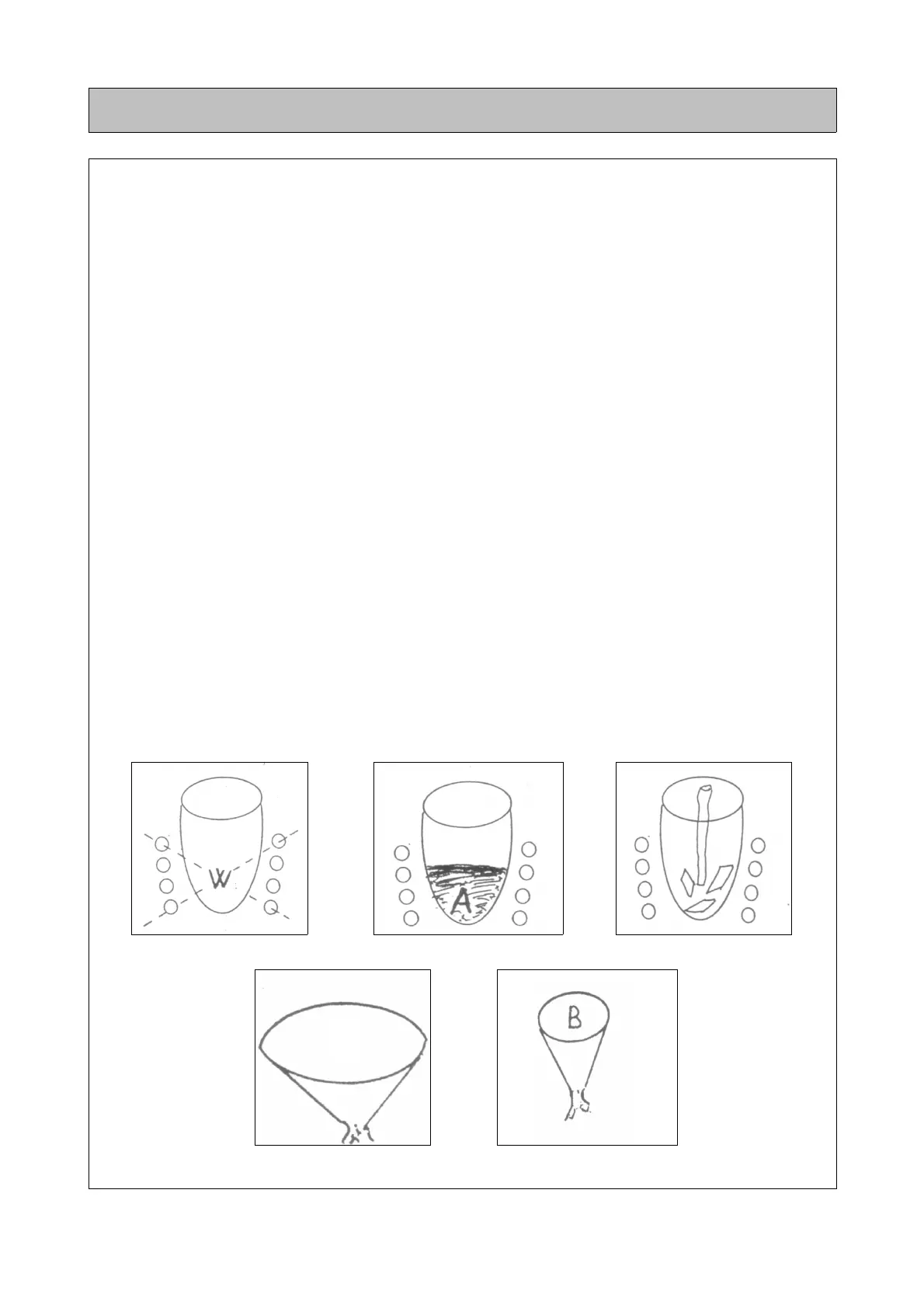
♦ The magnetic field generated by the induction coil which surrounds the crucible, reaches the highest efficiency
in the area indicated by W, therefore place the metal in this area.
♦ The metal must occupy the area indicated by A and must be put together and close to the crucible sides. If, for
example, some small alloy plates or rods are put in the crucible vertically, these will not build a sufficient mass
to acquire the electromagnetic field (Fig. C).
♦ For heating process it is necessary to follow the instructions given in the next chapters.
♦ When the casting wax model is designed, take care to make the reduced sprue button B and not the large button
D otherwise the latter, if recovered, will not enter into the crucible properly and it will have difficulties to
reach the melt. Furthermore due to its thermal expansion, it may break the crucible.
D
C
MODULAR 6


 To Next Page