18
MELTING AND CASTING OF NON-PRECIOUS OR PRECIOUS ALLOYS FOR THE CERAMIC
TECHNIQUE WITH PALLADIUM CONTENTS OVER 30%.
♦ Non-precious alloys used for the ceramic technique melt in a particular way and do not always run together and
become a fluid mass. Certain alloys are molten when the piece of metal loses its shape and slumps. Some of
them need a slow heating and only by experience it is possible to determine which heating power rate must be
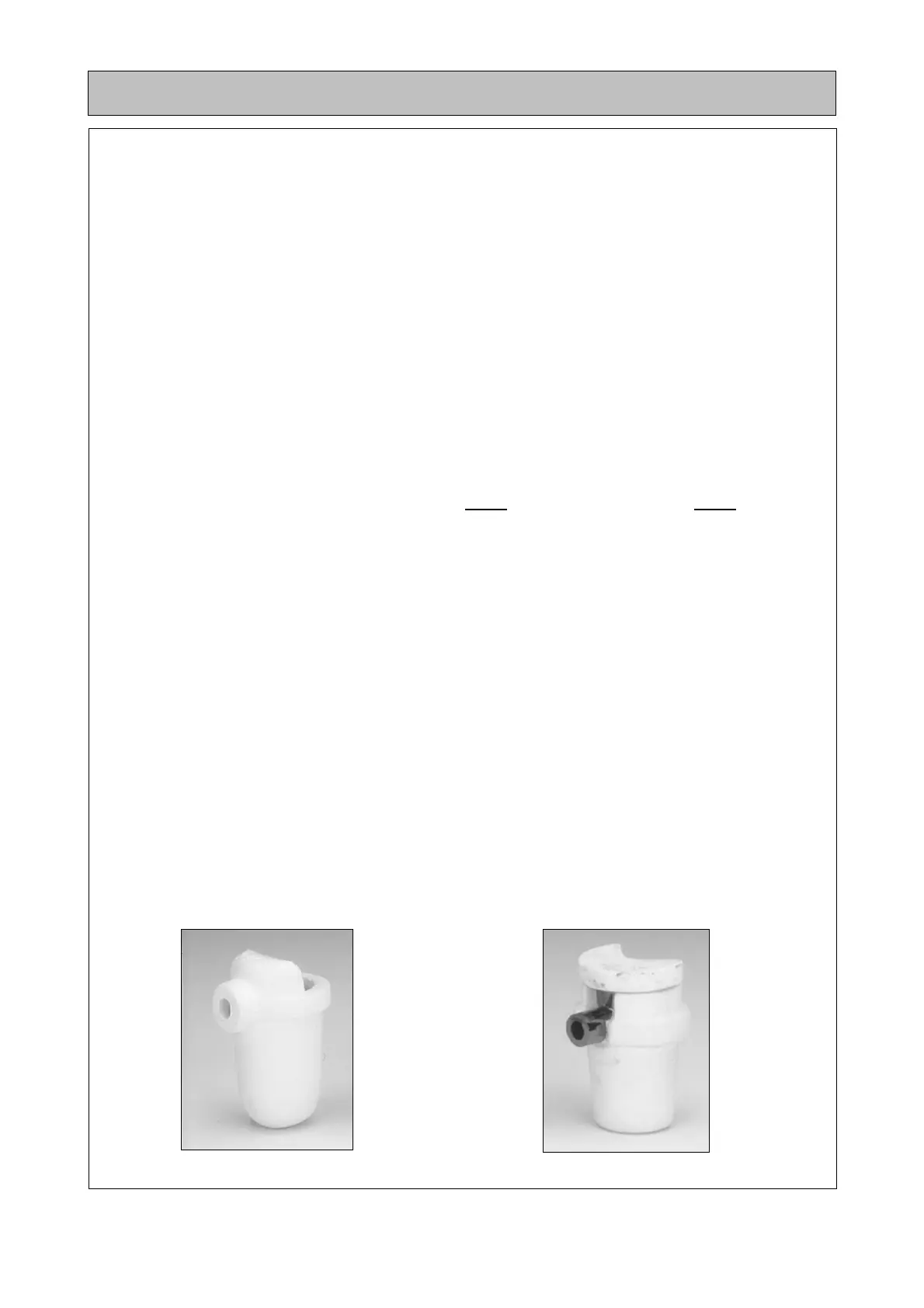
used. Use crucible A100.481
♦ The alloy must be put in the crucible as described in the section Chrome-Cobalt-Molybdenum melting and
casting process. Consider the points mentioned on page 15.
♦ For the precious alloys with palladium it is possible to use the ceramic crucible A100.481 in a min. quantity of
20 grs. We recommend the use of the Sinter glass carbon crucible A100.460 in which it is possible to melt
quantities of alloy from 5 to 80 grs.
♦ The use of the sinter crucible A100.460 requires a particular attention.
Put the alloy into the crucible and slowly heat it on a medium/high power position until the alloy reaches a dark
red colour. Increase the heating power slowly and gradually to enable the alloy to take the heat from the
crucible wall and reach the fluidity, checking that the colour of the crucible is same as the colour of the alloy.
If necessary use a very small portion of deoxidizer supplied by the precious alloys manufaturers. The crucible
has a long active life if it is used properly (40-60 castings).
♦ All alloys have a “melting interval” expressed in temperature degrees, indicating the start of the melt and the
liquidus point ex. 1150-1200 °C. After the alloy has reached its liquidus point ( a complete melt) it is necessary
to attain the ideal casting temperature. This period of “overheating” the alloys is referred to as the “heatsoaking
interval”. The ideal casting temperature is generally 50-200 °C higher than the liquidus point of the alloy and
it must be left at this temperature from 5 to 30 seconds according to its quantity.
⇒ EXAMPLE = Precious alloy with melting interval 1150-1200 °C and casting temperature 1350 °C.
–
Set the SET-POINT on 1350 °C and when this temperature has been reached, place the flask on the centrifugal
arm. When the machine cover is opened, power is interrupted and it will be automatically reset when cover is
closed. The operator will decide when it is the correct moment to cast. The heatsoaking interval from 5 to 30
seconds depending on the metal quantity is generally indicated by the alloy manufacturer or by personal
experience.
♦ Heating process must take place slowly and gradully. It might be necessary with the use of a steel rod, to
collect the unmolten pieces on the crucible bottom. When the metal has slowly reached the complete melt, wait
5-10 seconds and then cast.
A100.481
A100.460
MELTING AND CASTING PROCESS
MODULAR 6


 To Next Page