Service manual TD25
12
Other faults
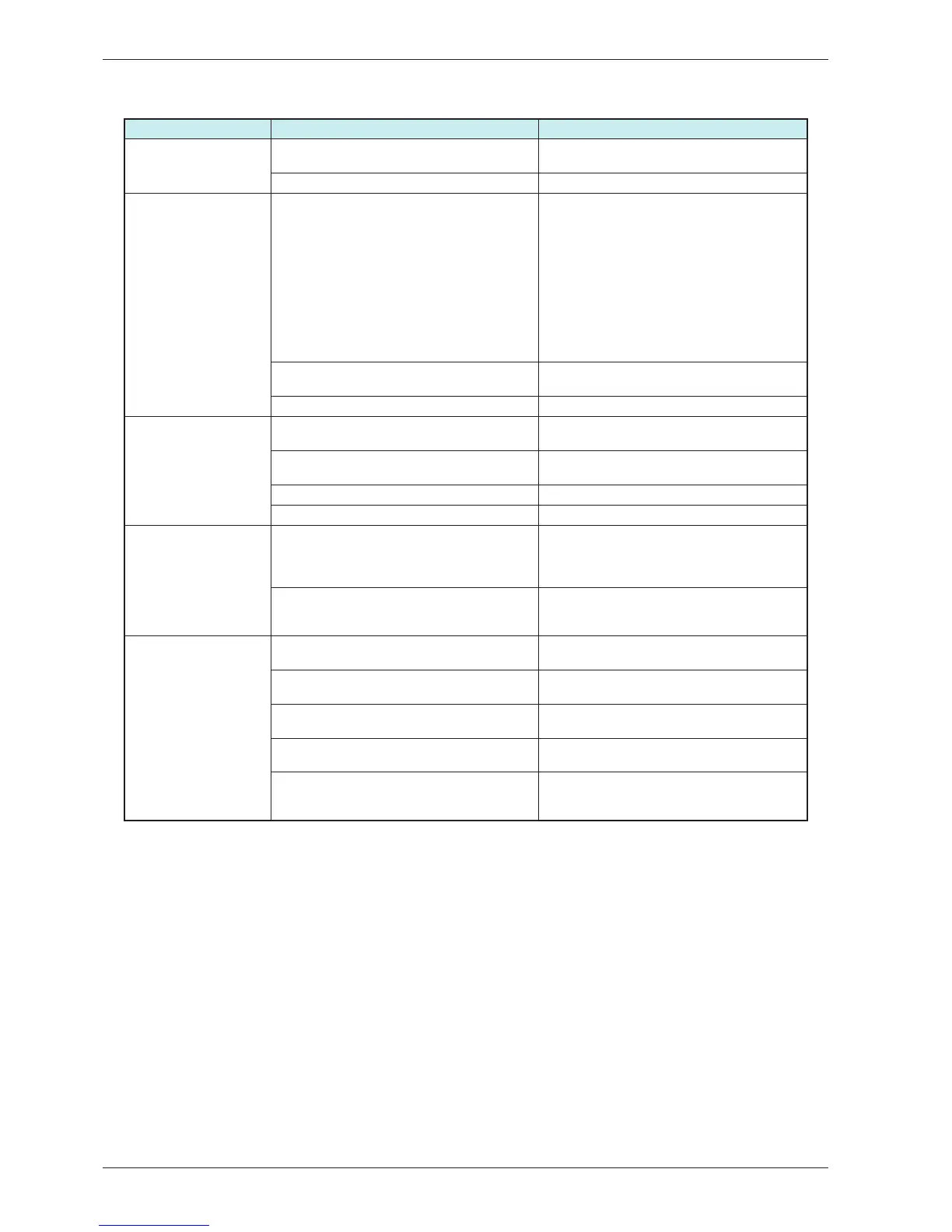
Fault symptom Cause Action
The machine will not start. The outer door is not properly closed. •
Check that the door pin is activating the door
switch.
The machine is not supplied with power. •
Check the fuses and connections.
The machine stops. The automatic overheating protection has tripped. Check if the customer has:
•
Opened the door and cleaned the filter and
condenser unit
• Left the door open long enough for the overhea-
ting protection to be reset
and the display and LEDs to light up
• Attempted to restart the programme
Service action:
•
Clean internal fan wheel, condenser, air ducts
and element.
• Check the seals.
The overheat protection in the motor has been
tripped.
•
Clean and check the motor.
• If necessary, replace the motor.
Defective control unit •
Replace control unit.
The washing does not
get dry.
Air leakage at the door seals is affecting the
drying results. •
Check the sealing strips.
Air leakage around the motor shaft affects the
drying result.
•
Check the seal around the motor shaft.
Defective rear thermistor •
Replace the thermistor.
Defective control unit •
Replace control unit.
Drying is uneven. Mixing of various types of items can lead to une-
ven drying results.
Customer information:
•
Check that different types of items are not
mixed in the same machine. Remove the dry
items.
How full the machine is affects the drying results. Customer information:
•
Check that the machine is not overfilled. Re-
move some of the washing if necessary.
Tumble-drying takes too
long.
The lint filter is blocked. Customer information:
•
Cleaning the lint filter.
The condenser unit is blocked. Customer information:
•
Clean the condenser.
The washing machine’s spinning affects drying. Customer information:
•
Spin at a minimum of 800 rpm.
The machine is in a room with poor ventilation. Customer information:
•
Open doors to adjacent rooms.
The evacuation hose is too long, blocked or bent. Customer information:
•
Try to make the hose length as short as pos-
sible with as gentle bends as possible.


 To Next Page