....
through water, when driving
through curves and when brak-
ing, which increases the risk of
an accident.
Tire pressure
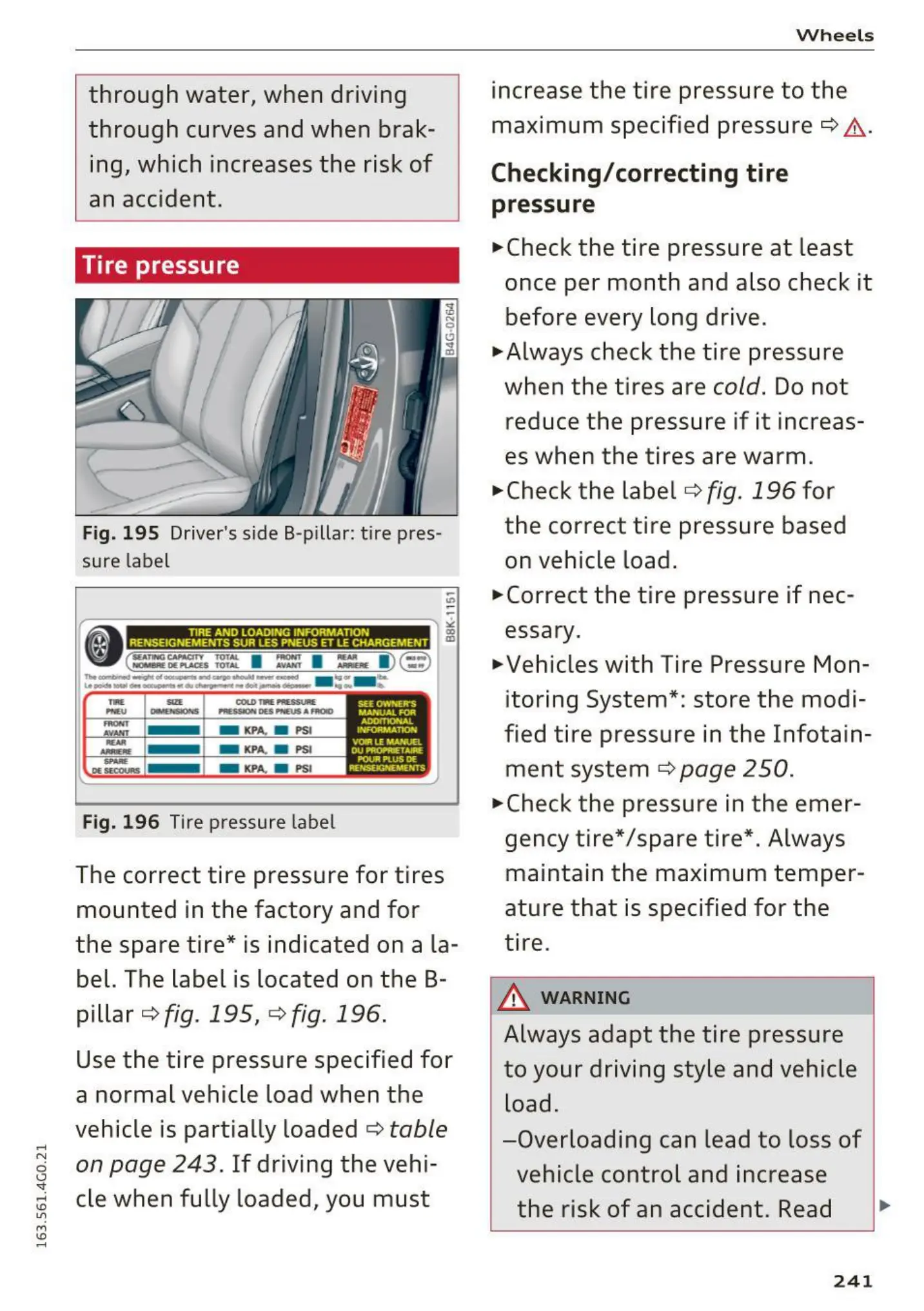
Fig. 195 Driver's side B-pillar : tire pres-
sure label
;;;
~
,---------------.,. ,,
<le::~~~ I ::: I :.. I )@ g:
n.. ....... _,_. ....... ....__. ...... _ __, . ... _ ...
............ .._. . .,~-------~ ... .
- KPA. - PSI
- KPA. - PSI
- KPA. - PSI
Fig. 196 Tire pressure label
The correct tire pressure for tires
mounted in the factory and for
the spare tire* is indicated on a la-
bel. The label is located on the 8-
pillar
c:> fig. 195, c:> fig. 196.
Use the tire pressure specified for
a normal vehicle load when the
vehicle is partially loaded
c:> table
~
on page 243. If driving the vehi-
~
~
cle when fully loaded, you must
Ln
"'
\0
....
Wheels
increase the tire pressure to the
maximum specified pressure
c:> &.-
Checking/correcting tire
pressure
.,,.Check the tire pressure at least
once per month and also check it
before every long drive .
.,,.Always check the tire pressure
when the tires are
cold. Do not
reduce the pressure if it increas-
es when the tires are warm .
... check the label
c:> fig. 196 for
the correct tire pressure based
on vehicle load.
.,,.Correct the tire pressure if nec-
essary .
... vehicles with Tire Pressure Mon-
itoring System*: store the modi-
fied tire pressure in the Infotain-
ment system
c:> page 250.
.,,.Check the pressure in the emer-
gency tire*/spare t ire*. Always
maintain the maximum temper -
ature that is specified for the
tire .
_& WARNING
Always adapt the tire pressure
to your driving style and vehicle
load.
-Overloading can lead to loss of
vehicle control and increase
the risk of an accident. Read
241








 To Next Page