through curves and when brak-
ing, which increases the risk of
an accident.
Tire pressure
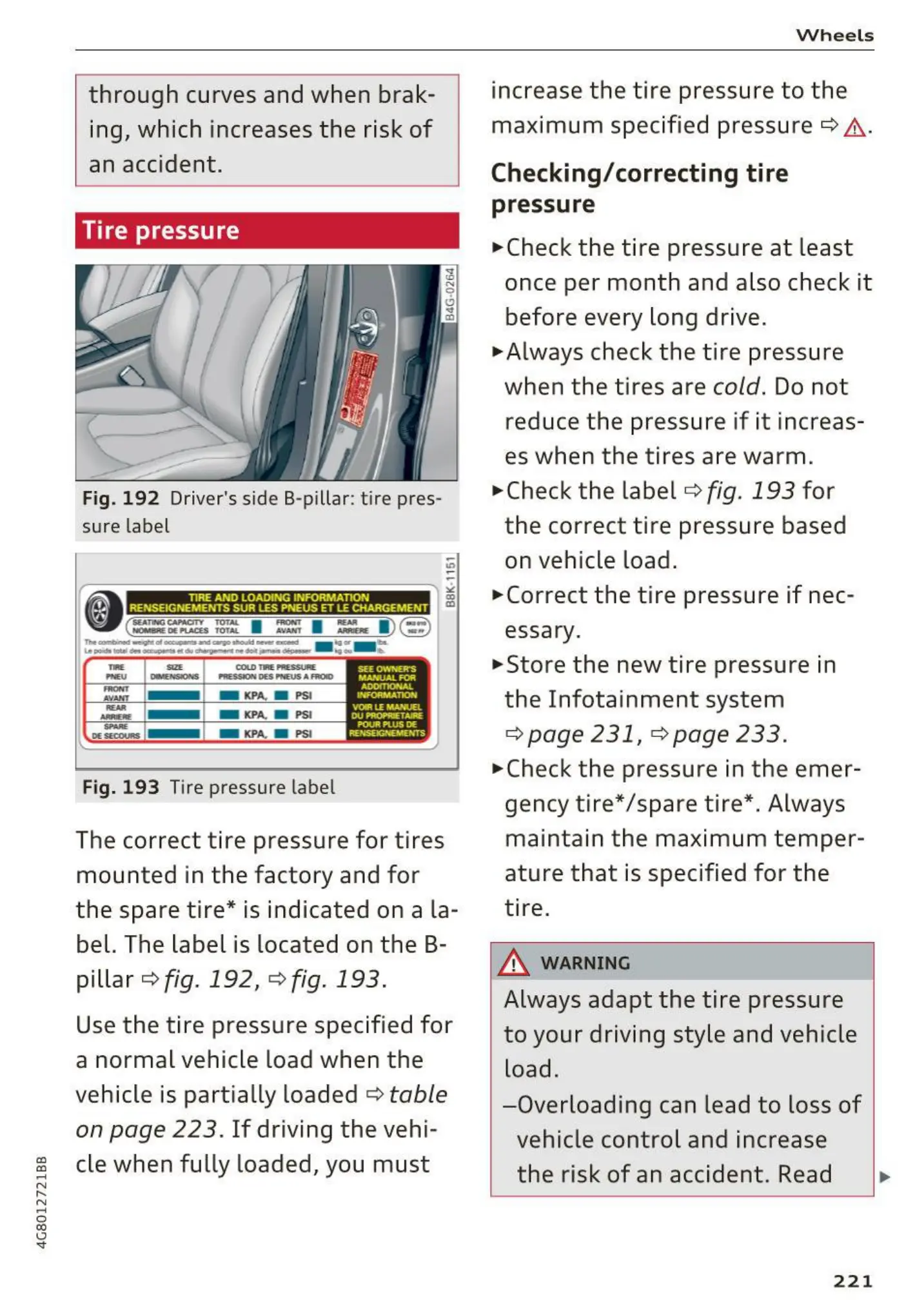
Fig. 192 Driver's side B-pillar : tire pres-
sure label
"'
-
-
~-------------------,£
<l e::=.~: I =: I :,,. I)@ g:
n,.,_,......._.___. ... _.,._.. _ __. . ... _ ...
leooodl__._.,_,.d:.,~w._;.,.-~ •• ._
tM£. IIZl COLO tlllf fllllESSt.lW.
PNfU Nl:4fN$IOM$ "IIISaoN OE$ PMEU$ A FROID
-
AYIJff - KPA, a PSI
Fig. 193 Tire pressure label
The correct tire pressure for tires
mounted in the factory and for
the spare tire* is indicated on a la-
bel. The label is located on the B-
pillar ¢
fig. 192, ¢ fig. 193.
Use the tire pressure specified for
a normal vehicle load when the
vehicle is partially loaded ¢
table
on page 223.
If driving the vehi-
; cle when fully loaded, you must
N
"
N
...
0
CX)
I..J
st
Wheels
increase the tire pressure to the
maximum specified pressure¢ &.-
Checking/correcting tire
pressure
.,,.Check the tire pressure at least
once per month and also check it
before every long drive .
.,,.Always check the tire pressure
when the tires are
cold. Do not
reduce the pressure if it increas -
es when the tires are warm .
... check the label ¢
fig. 193 for
the correct tire pressure based
on vehicle load .
.,,.Correct the tire pressure if nec-
essary.
... Store the new tire pressure in
the Infotainment system
¢page 231, ¢page 233 .
.,,.Check the pressure in the emer-
gency tire* /spare tire*. Always
maintain the maximum temper-
ature that is specified for the
tire.
A WARNING
Always adapt the tire pressure
to your driving style and vehicle
load.
-Overloading can lead to loss of
vehicle control and increase
the risk of an accident. Read
221



 To Next Page