....
N
....
N
0
J:
"".
....
I.O
"'
....
"'
....
Tires and wheels 249
Occupant loading and distribution for vehicle normal load for various designated seating
capacities
Designated seating capacity, Vehicle normal load, number Occupant distribution in a nor-
number of occupants of occupants mally loaded vehicle
4
2
2 in front
5 3
2 in front, 1 in back seat
Cold tire inflation pressure
Tire pressure affects the overall handling, performance and safety of a vehicle.
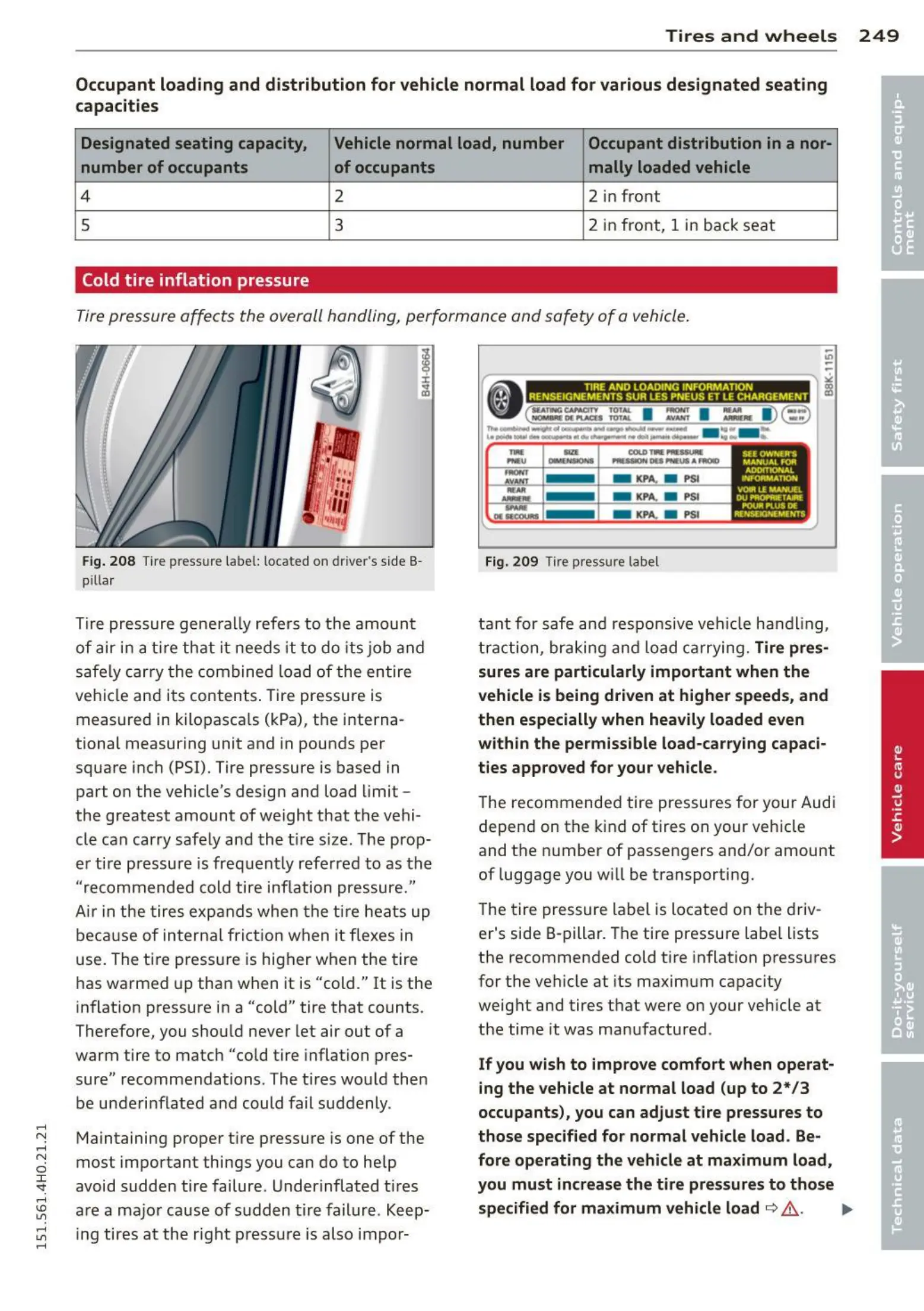
Fig. 208 Tire pressure label: located on driver's side B-
pillar
Tire pressure generally refers to the amo unt
of air in a t ire that it needs it to do its job and
safely carry the combined load of t he entire
vehicle and its contents . Tire pressure is
measured in kilopascals (kPa), the interna -
tional measuring unit and in pounds per
squa re inch (PSI). Tire pressure is based in
part on the vehicle's design and load limit -
the greatest amount of weight that the vehi-
cle can carry safely and the t ire size. The prop-
er tire pressure is frequent ly referred to as the
"recommended cold tire inflation pressure ."
Air in the tires expands when t he tire heats up
because of internal friction when it flexes in
use. The tire pressure is higher when the tire
has warmed up than when it is "cold ." It is the
inflation pressure in a "cold" tire that counts.
Therefore, you should never let air out of a
warm tire to match "cold tire inflation pres-
sure" recommendations. The t ires would then
be underinflated and could fail suddenly .
Maintaining proper tire pressure is one of the
most important thi ngs you can do to help
avoid sudde n tire failure . Underinflated t ires
are a major cause of sudden tire failure . Keep-
ing tires at the right pressure is also impor-
-
"'
-
-
~
-- ,e
• (:::=~. ~: I =: I :,.. I )( :::) l3
n,........,..,.__...,~ ........ ....,_...... • ... _ ..
, ....................................... ..,_ "" ..
-
""u
-
-
-
...........
- KPA. a PSI
- KPA.
a PSI
- KPA. a PSI
Fig. 209 Tire pressure label
tant for safe and respons ive vehicle hand ling,
traction, braking and load carrying.
Tire pres-
sures are particularly important when the
vehicle is being driven at higher speeds, and
then especially when heavily loaded even
within the permissible load-carrying capaci-
ties approved for your vehicle.
The recommended t ire pressures for your Audi
depend on the kind of tires on your vehicle
and the number of passengers and/or amount
of luggage you will be transporting.
The tire pressure label is located on the driv-
er's side B-pillar. The tire pressure labe l lists
the recommended cold tire inflat ion pressures
for the vehicle at its maximum capacity
weight and tires that were on your veh icle at
the time it was manufactured.
If you wish to improve comfort when operat-
ing the vehicle at normal load (up to 2*/3
occupants), you can adjust tire pressures to
those specified for normal vehicle load. Be-
fore operating the vehicle at maximum load,
you must increase the tire pressures to those
specified for maximum vehicle load
¢ ,&.. IJi,,-


 To Next Page