Page | 5
Weight Explanations
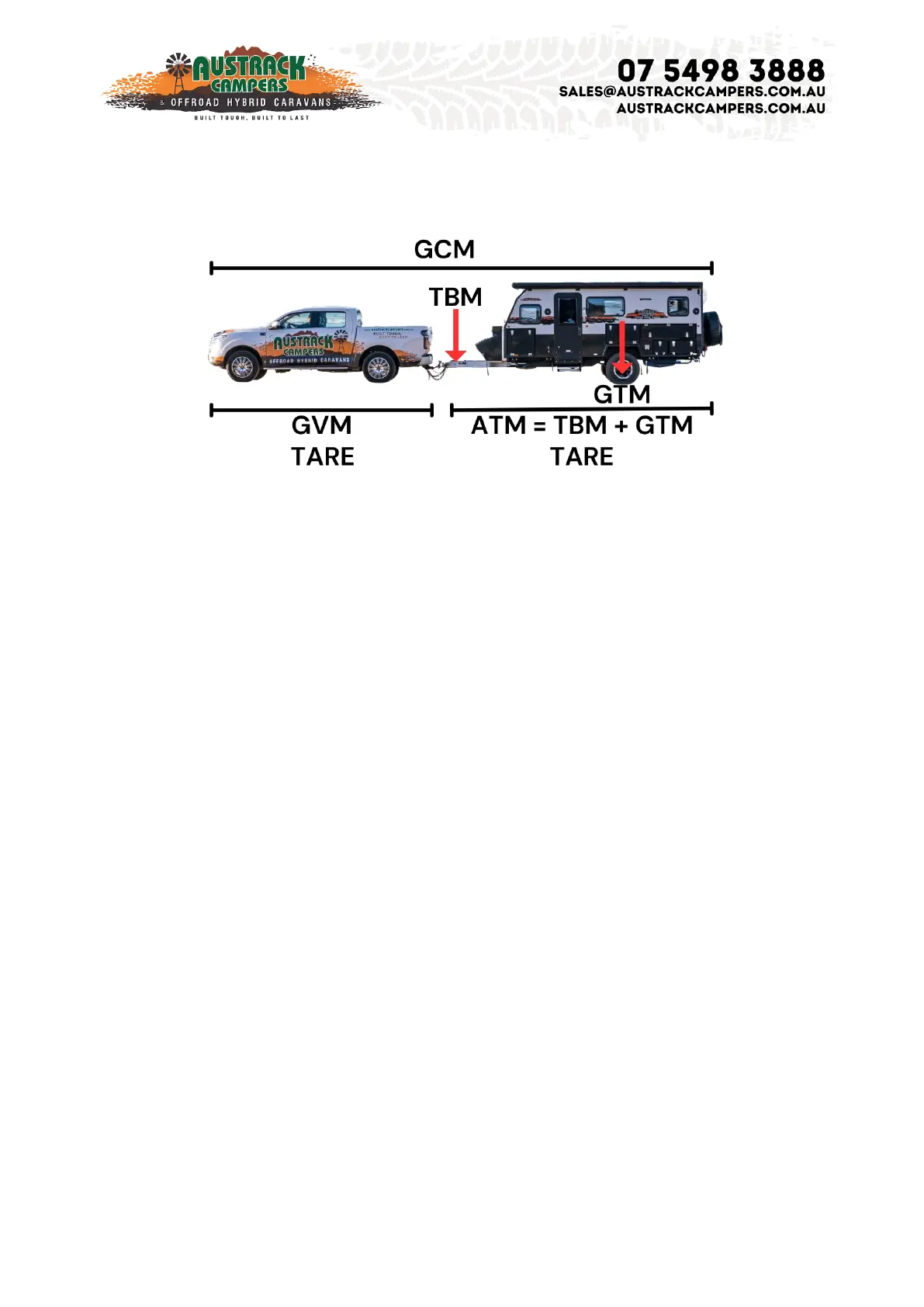
GCM Gross Combination Mass. The weight of your fully loaded vehicle and fully loaded trailer when
hitched together.
GVM Gross Vehicle Mass. This is the weight of your fully loaded vehicle.
TARE The weight of the vehicle or trailer without water, fuel or any cargo.
ATM Aggregate Trailer Mass. The maximum your trailer can weigh fully loaded.
GTM Gross Trailer Mass. The maximum weight on the axle when fully loaded.
TBM Tow Ball Mass. The weight exerted on the vehicle when hitched. This weight transfers to your
vehicle when hitched and becomes a part of the vehicles GVM.
GCM = ATM + GVM
ATM = TBM + GTM
Payload = ATM – TARE
Your Vehicle’s towing capacity is the maximum weight your vehicle can legally and safely pull when
towing, however it is also crucial to know the Gross Combination Mass allowed by the towing vehicle.
State laws regulate all towing requirements, including speed limits. It's crucial to understand and
adhere to towing capacity limits for several reasons.
Exceeding these limits is both dangerous and against the law. It also places undue stress on your
vehicle's brakes and components, leading to damage and wear. Furthermore, an overweight vehicle
usually isn't covered by insurance.
When it comes to towing your camper, one of the most critical factors to consider is the tow ball
weight. This often-overlooked aspect of towing can significantly impact your safety and the handling
of your camper on the road.
A general rule of thumb is that the tow ball weight should be around 9-11% of the loaded camper's
total weight. For example, if your loaded camper weighs 3,000 kg, your ideal tow ball weight should
be between 270 kg (9%) and 330 kg (11%).



 To Next Page