16
Basic Safety Rules
Note: READ THE ENTIRE MANUAL
CAREFULLY BEFORE USING THIS
SHOTGUN.
Note: FIREARMS CAN BE DANGEROUS
AND CAN POTENTIALLY CAUSE SERI-
OUS INJURY, DAMAGE TO PROPERTY
OR DEATH, IF HANDLED IMPROPERLY.
THE FOLLOWING SAFETY RULES ARE
AN IMPORTANT REMINDER THAT
SHOTGUN SAFETY IS YOUR RESPON-
SIBILITY.
1. NEVER POINT A FIREARM AT
SOMETHING THAT IS NOT SAFE
TO SHOOT.
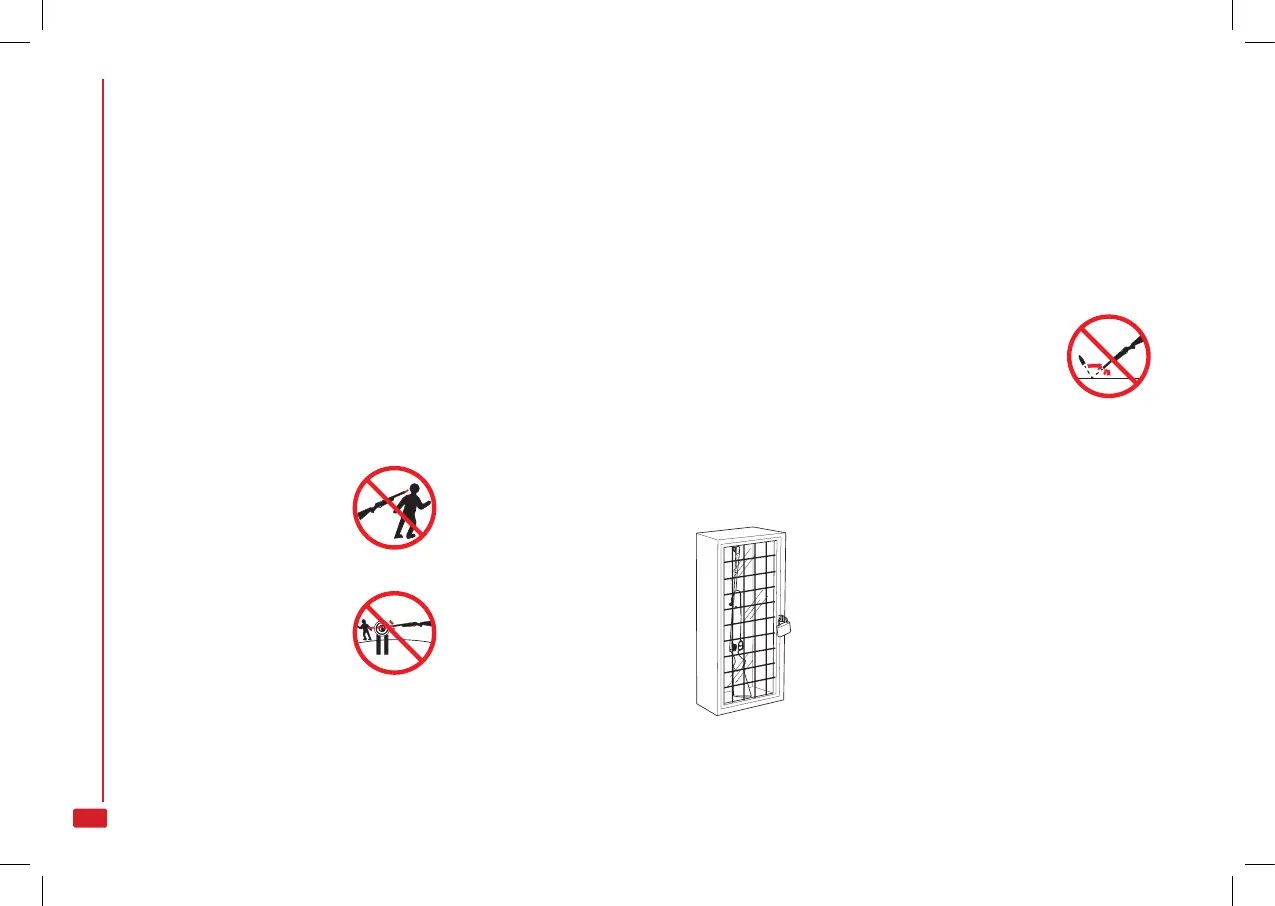
Never let the muzzle of a
rearm point at any part of
your body or at another
person. This is especially
important when loading or
unloading the rearm.
When you are shooting at
a target, know what is be-
hind it. Some bullets can
travel over a mile. If you
miss your target or if the bullet pene-
trates the target, it is your responsibility
to ensure that the shot does not cause
unintended injury or damage.
2. ALWAYS TREAT A FIREARM AS IF
IT WERE LOADED.
Never assume that a rearm is unload-
ed. The only certain way to ensure there
are no cartridges in a rearm is to open
the chamber and visually and physically
examine the inside to see if a round is
present. Removing or unloading the
magazine will not guarantee that a re-
arm is unloaded or cannot re. Firearms
and ries can be checked by cycling or
removing all rounds and by then open-
ing and inspecting the chamber so that
a visual inspection of the chamber for
any remaining rounds can be made.
3. STORE YOUR FIREARM SO THAT
CHILDREN CANNOT GAIN AC-
CESS TO IT.
It is your responsibility
to ensure that children
under the age of 18 or
other unauthorised per-
sons do not gain ac-
cess to your rearm. To
reduce the risk of acci-
dents involving chil-
dren, unload your re-
arm, lock it and store
the ammunition in a separate locked
location. Please note that devices in-
tended to prevent accidents - for exam-
ple, cable locks, chamber plugs, etc., -
may not prevent use or misuse of your
rearm by a determined person. Fire-
arm storage in a steel gun safe may be
more appropriate to reduce the likeli-
hood of intentional misuse of a rearm
by a child or unauthorised person.
4. NEVER SHOOT AT WATER OR AT
A HARD SURFACE.
Shooting at the surface of
water or at a rock or other
hard surface increases
the chance of ricochets or
fragmentation of the bullet
or shot, which can result in the projectile
striking an unintended or peripheral tar-
get.
5. KNOW THE SAFETY FEATURES
OF THE FIREARM YOU ARE US-
ING, BUT REMEMBER: SAFETY
DEVICES ARE NOT A SUBSTITUTE
FOR SAFE HANDLING PROCE-
DURES.
Never rely solely on a safety device to
prevent an accident. It is imperative that
you know and use the safety features of
the particular rearm you are handling,
but accidents can best be prevented by
following the safe handling procedures
described in these safety rules and


 To Next Page