User’s instructions
40
specific ingredients (nuts, chocolate, etc.).
USE - Interruptions to the power supply and power cuts
continue to work through the program. With longer power cuts the display will automatically return to the
starting time of the relevant program; it will then be necessary to start the breadmaker again.
USE - Storing and cutting bread
the use of a sharp electric knife, or a serrated bread knife.
keep it for a longer period of time.
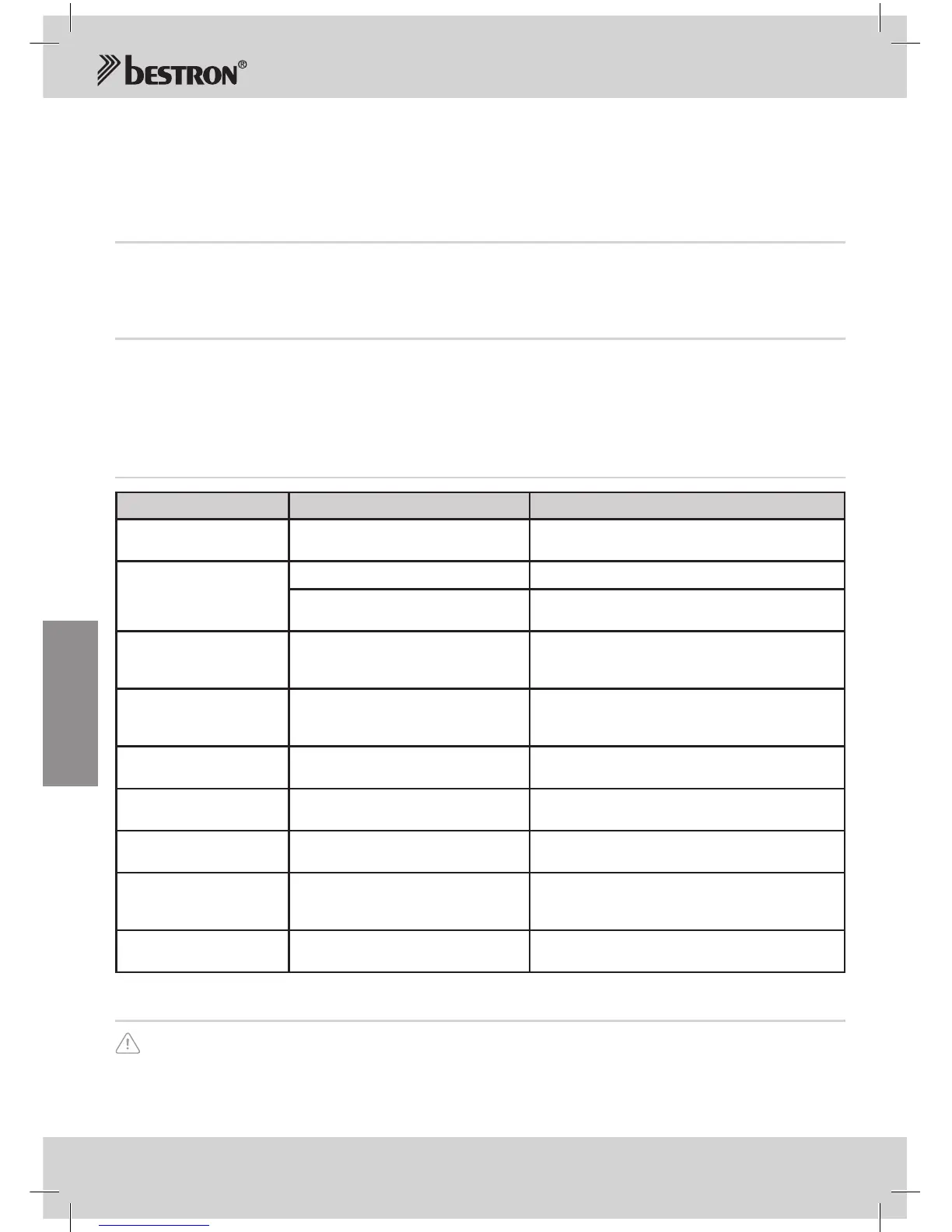
TROUBLESHOOTING TABLE
Problem Cause Solution
The crust is too thick. The bread has been kept warm
for too long, and it has dried out.
Remove the loaf from the baking tin shortly
after the end of the baking time.
not evenly mixed and/
or baked properly.
The dough is too thick to be
kneaded properly.
The display shows
The temperature in the
breadmaker is too high.
breadmaker, and open the lid to allow the
interior to cool.
The motor makes a
sound, but the dough
is not being kneaded.
The baking tin has not been
fitted correctly, or the dough is
too stiff to be kneaded.
properly; always take care when weighing
out the ingredients for the dough.
The loaf is too small. No yeast, or the yeast is not
working properly.
Make sure that the conditions are right for
the yeast.
The dough rises above
the baking tin.
Too much yeast and/or water
added.
Reduce the quantity of moisture and/or
yeast.
The loaf collapses
whilst it is baking.
Too much water or yeast makes
the dough too soft and weak.
Reduce the quantity of moisture and/or
yeast.
centre is found to be
hollow.
Too much water and/or yeast
added, no salt added.
Reduce the quantity of moisture and/or
yeast, and add more salt.
the baking tin.
Too little water added. Use more water.
CLEANING AND MAINTENANCE
liquids.



 To Next Page