7
Section 1: Installation Guidelines
The installation details are basic guidelines to assist
installation, however due to the great diversity of marine
craft it is unrealistic to give definitive instructions.
Therefore Beta Marine can accept no responsibility for any
damage or injury incurred during the installation of a Beta
Marine Engine whilst following these guidelines.
• All engines should be placed within an enclosure
separated from living quarters and installed so as to
minimise the risk of fires or spread of fires as well as
hazards from toxic fumes, heat, noise or vibrations in
the living quarters.
• Unless the engine is protected by a cover or its own
enclosure, exposed moving or hot parts of the engine
that could cause personal injury should be effectively
shielded.
• Engine parts and accessories that require frequent
inspection and/or servicing must be readily accessible.
• The insulating materials inside engine spaces shall be
non-combustible.
INSTALLATION RECOMMENDATIONS
{
VENTILATION
{
An engine will produce radiated heat - approximately
equal to 1/3 of the engine output power. Additionally,
larger Amp starter battery and/or domestic battery bank
charging alternators create high amounts of heat, building
ambient temperatures further*.
*A symptom of which is black alternator belt dust
As a consequence, it is highly important and the vessels
owner and/or installation engineer/s responsibility
to ensure that the engine compartment has adequate
ventilation to enable both efficient internal combustion
and effective transference of heat out of the engine
compartment/room.
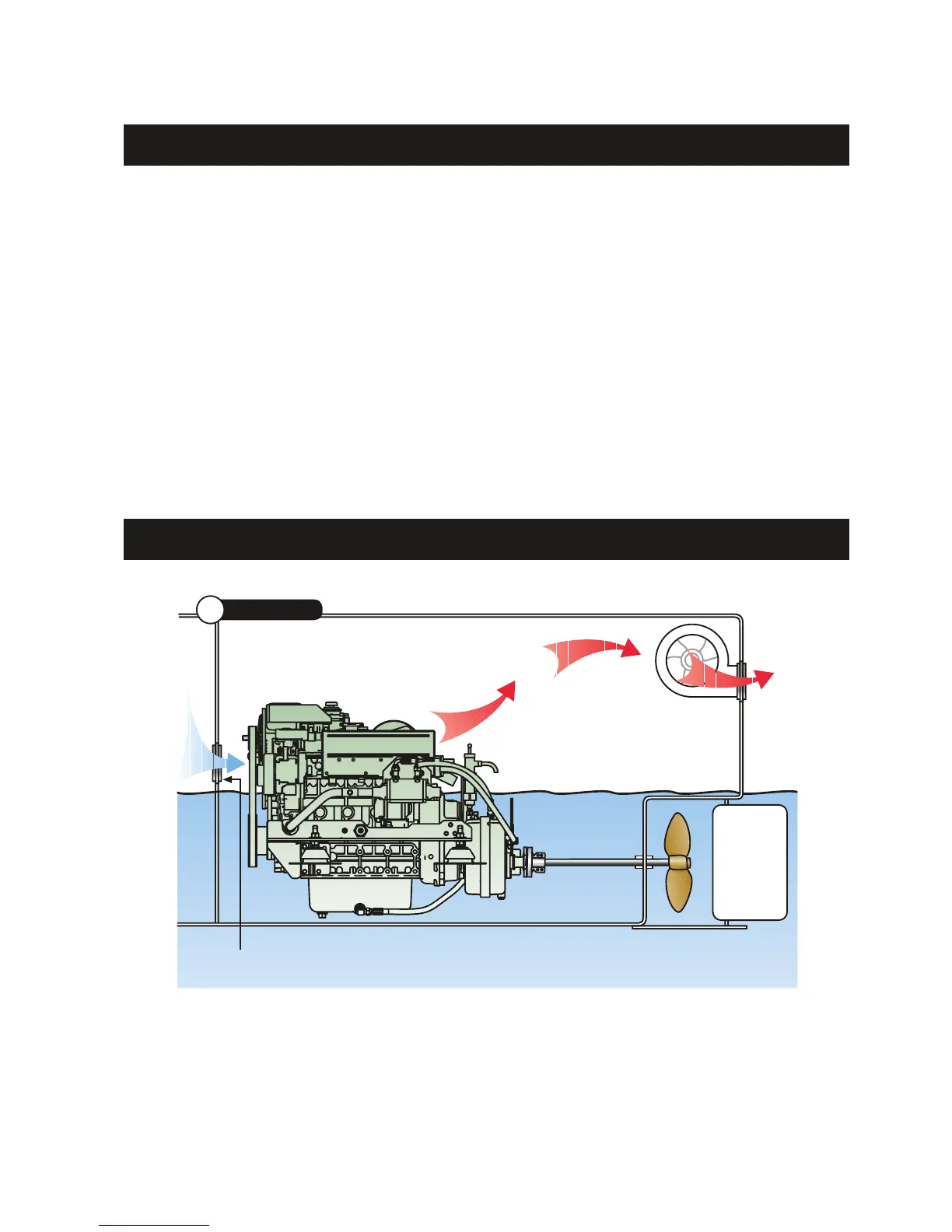
Extraction fan as high as
possible. Recommended
fan size for Beta 10 -
Beta 85: 220m3/h
Ensure water trap is fitted
to prevent ingress of water
Air intake as low as possible (approx.
crankshaft height) and opposite to the
fan. The intake should be twice the size
of the outlet
4
Ventilation



 To Next Page