FED (E2) 02/2015 page 31/60
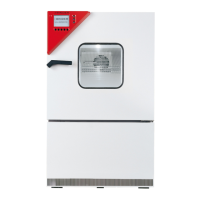
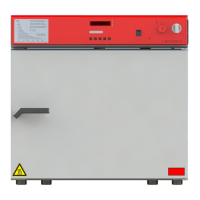
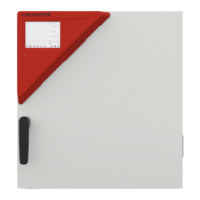
8.4 Mostly gas-tight version (option for FED 53 and FED 115)
With this option the chamber is additionally sealed, so the loss when introducing gases is decreased. The
chamber is not completely gas-tight, so it is impossible to establish overpressure. The sealing diminishes
the release of vapors via the housing that may be set free from the charging material when heated.
Carrying-off via the regular evacuation duct, e.g. into a waste air installation, is likely to further reduce
emissions.
The chamber is not completely gas-tight. Gases from inside the chamber can escape into the
surrounding atmosphere.
Observe the occupational exposure limit OEL for the released substance set by the national
authorities (formerly maximum permitted workplace concentration). Respect the relevant
regulations.
Any harmful gas that might escape has to be led out via good room ventilation or a suitable
exhaust system. Place the chamber, if necessary, below a gas vent.
The air flap does not close the exhaust duct completely. The delivered plug serves to avoid emerging of
vapors or loss of introduced inert gas, if any, via the exhaust duct. Due to special demands of heat
resistance, use the delivered plug only.
CAUTION
Use of inappropriate plug.
Danger of inflammation.
To close the exhaust duct use the delivered plug only.
For drying purpose, please remove the plug in order to permit dissipation of the generated vapor, which
would lead to condensation in the inner chamber.
8.5 Inert gas connection with mostly gas-tight version (option for FED 53 and
FED 115)
With this option the chamber is additionally sealed, so the loss when introducing inert gases is
decreased. For details on the mostly gas-tight version please refer to chap. 8.4.
The chamber is equipped with two ports for inert gas (nitrogen or noble gases).
The ports are located on the top panel in the middle and on the right side at the bottom right. Each
of these ports can be used as inlet or outlet, depending on the nature of the inert gas:
• lighter gas (nitrogen, helium): lower port as inlet
• heavy gas (e.g. argon): upper port as inlet
Connection
Observe the legal requirements and relevant standards and regulations for the safe handling of gas
cylinders and inert gases.


 To Next Page