GENERAL INFORMATION
CB5A-040 page 4/24
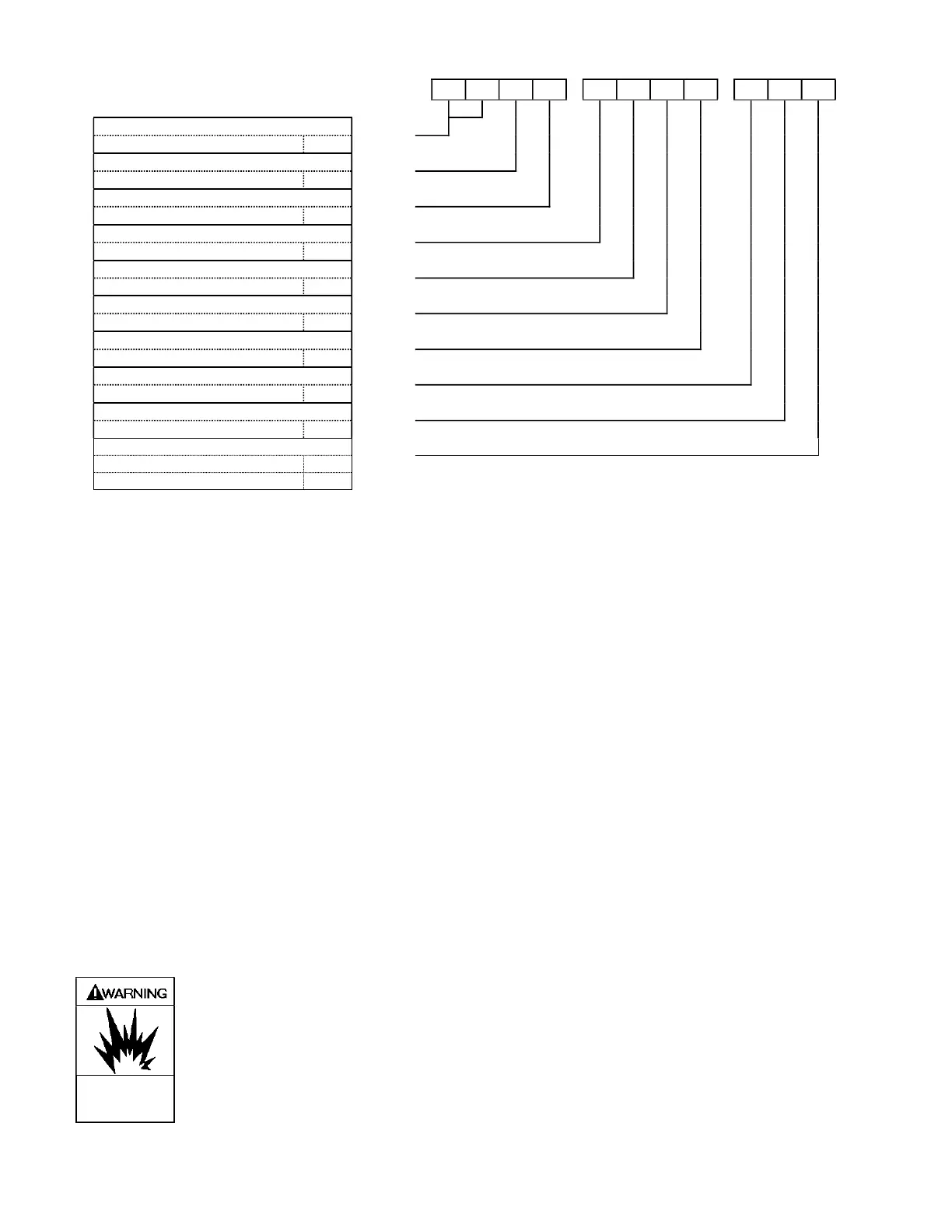
An 11 character "I.D. No." identifies the construction of the compressor.
B A B A
C 1 T A
4 C 0
VALVES Code Fields
Steel, w/ Liquid Relief BA 1 & 2
O-RINGS Field 3
Buna-N B
GASKETS Field 4
Aluminum A
PISTON RINGS Field 5
Carbon Filled PTFE C
SEAL (PACKING) ORIENTATION Field 6
All Lips up 1
SEAL MATERIAL Field 7
PTFE T
CYLINDER & HEAD Field 8
Ductile Iron A
PISTON RODS Field 9
Black Surface Steel 4
CRANKSHAFT & OIL FILTER Field 10
Spin-on Oil Filter (std) C
FLYWHEEL * Field 11
Standard Flywheel 0
No Flywheel N
* Models Configured prior to 11/01/2017 used an “A” in this position to indicate standard selections.
Note: A 'Z' in any field indicates a non-standard option. No model is available with all shown options.
MAXIMIZING COMPRESSOR LIFE
Life of critical compressor components such as piston
rings, valves and packing will vary considerably with
each application, installation, and operating procedures.
Premature failure of wear parts can often be attributed to
one of the following causes:
Excessive Temperatures
Primary causes are:
Operating at pressures other than those originally
specified.
Handling a different gas than originally specified.
Clogged strainer or filter elements.
Line sizes too small, or other flow restrictions.
Excessive ambient temperature or suction gas
temperature.
Valve problems. (See Foreign Material.)
Badly worn piston rings. (See Foreign Material.)
Lower operating temperatures will increase valve and
piston ring life significantly.
Extreme temperatures caused by
abnormally high discharge pressure or
valve problems can be a source of
ignition in explosive atmospheres
causing severe personal injury or death.
Hazardous gases
can cause property
damage, personal
Foreign Material
Solid particles in the gas stream will:
Rapidly wear the piston rings and score the cylinder
wall.
Destroy the rod packing causing excessive leakage
and score the piston rods.
Lodge in the valves causing loss of capacity and
broken valve plates and springs.
Liquid in the gas stream will:
Cause broken valve plates and springs.
Destroy the compressor if present in sufficient
quantity.
On new installations, it is suggested that the valves
and piston rings be inspected after the first few
hundred hours of operation. This will give an early
indication of any abnormal problems and allow for
corrective action to be taken before a costly failure
results. Although piston ring life will vary from
application to application, wear will be fairly
consistent on subsequent sets of rings.



 To Next Page