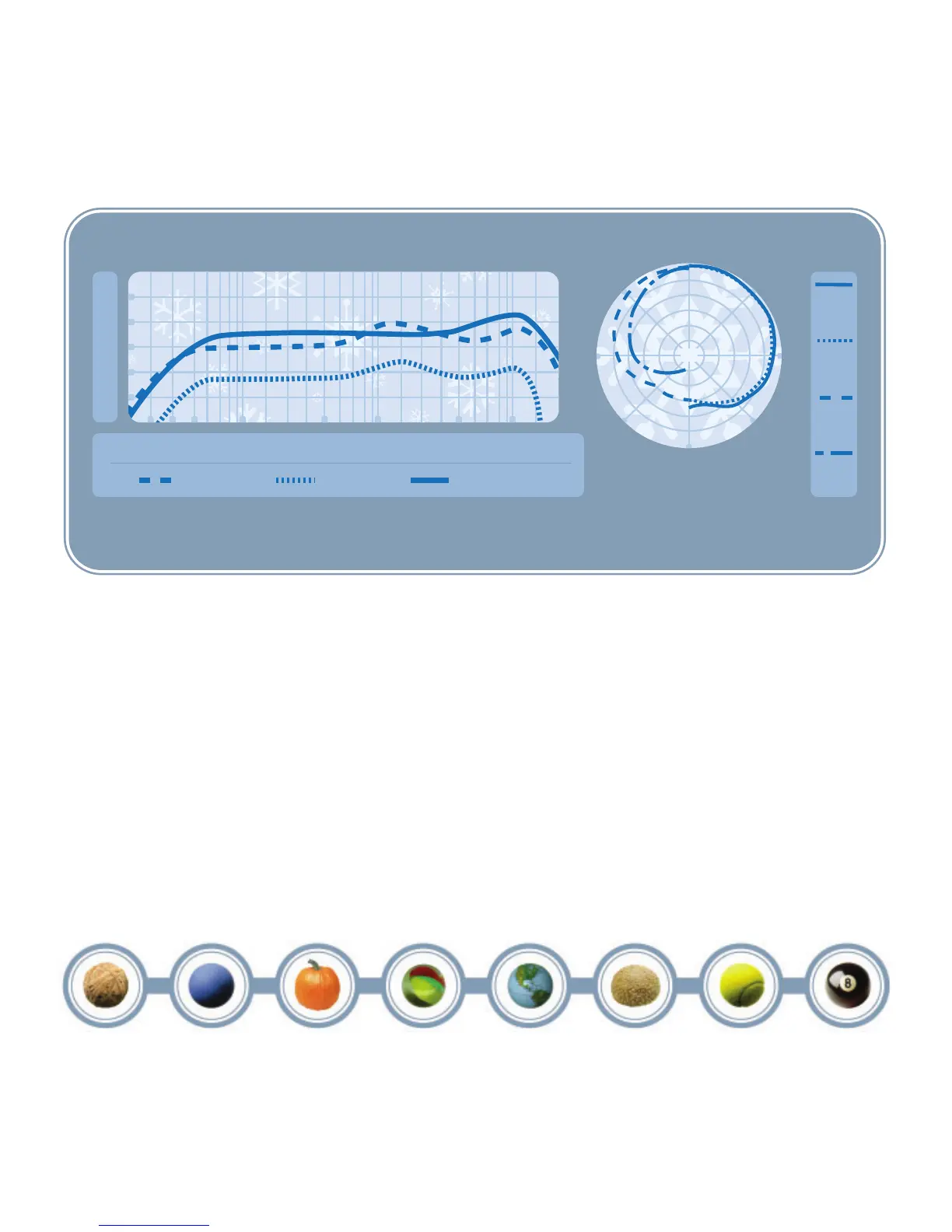
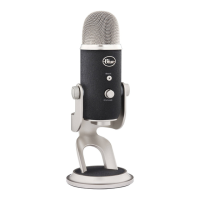
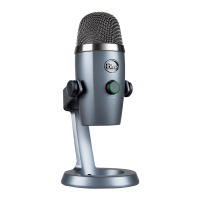
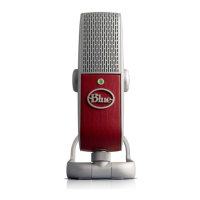
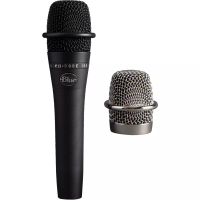
This frequency chart is only a start. It gives the recordist a basis of the sound provided. How the microphone reacts in a particular application will differ greatly because of many
variables. Room acoustics, distance from sound source (proximity), tuning of the instrument and mic cabling are only a few of the interacting issues. For an artist or an engineer,
how the microphones are used creates the basis of the sound.
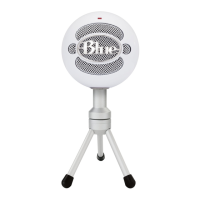
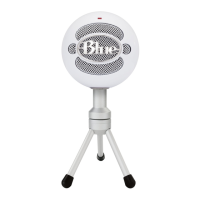
of applications coupled with an ease of use never before offered in a studio microphone. Because
of its rugged construction, dual-capsule design and high-spl specification, you can use the
Snowball virtually anywhere — including the Arctic Circle!
Why TWO capsules? (well, of course, two capsules are better than one!)
The Snowball uses two separate capsules to offer you a wide variety of applications. The first cap-
sule generally “hears” what’s right in front of it in a fixed cardioid pattern with a neutral sonic sig-
nature (engineering geeks call this
unidirectional). The second capsule generally “hears” everything
around it with a brighter overall sound (engineering geeks call this omnidirectional).


 To Next Page