G12�Driver�Assistance�Systems
3.�KAFAS
7
In�principle,�the�evaluation�electronics�in�the�KAFAS�stereo�camera�use�the�same�effect�as�is�used�in�a
human�to�create�spatial�vision.�This�is�known�as�the�parallax�shift�between�two�images.
The�KAFAS�stereo�camera�not�only�enables�the�position�of�an�object�to�be�determined,�but�also�its
movement�and�direction�of�movement.�For�every�pixel�of�a�detected�object,�the�direction�of�movement
on�the�horizontal,�vertical�and�longitudinal�axis�can�be�determined.
The�KAFAS�stereo�camera�has�a�detection�range�of�up�to�approximately�40m�ahead�of�the�vehicle�and
up�to�approximately�5m�in�front�of�the�vehicle�on�the�right�and�left.�The�overall�detection�range�of�the
KAFAS�stereo�camera�is�approximately�500�m.
3.2.�Person�recognition
The�KAFAS�stereo�camera�captures�the�scene�in�front�of�the�vehicle�and�detects�entire�rear�views�of
moving�and�stationary�vehicles�in�the�field�of�view�using�image�processing.�The�KAFAS�stereo�camera
also�ensures�that�driving�lane�information,�vehicle�positions�and�movements�are�determined�at�the
same�time.
With�the�aid�of�the�image�data�from�the�KAFAS�stereo�camera,�objects�can�be�clearly�identified�as
vehicles�and�their�transverse�movements�as�lane�changes.�The�KAFAS�stereo�camera�also�detects
people�and�cyclists.
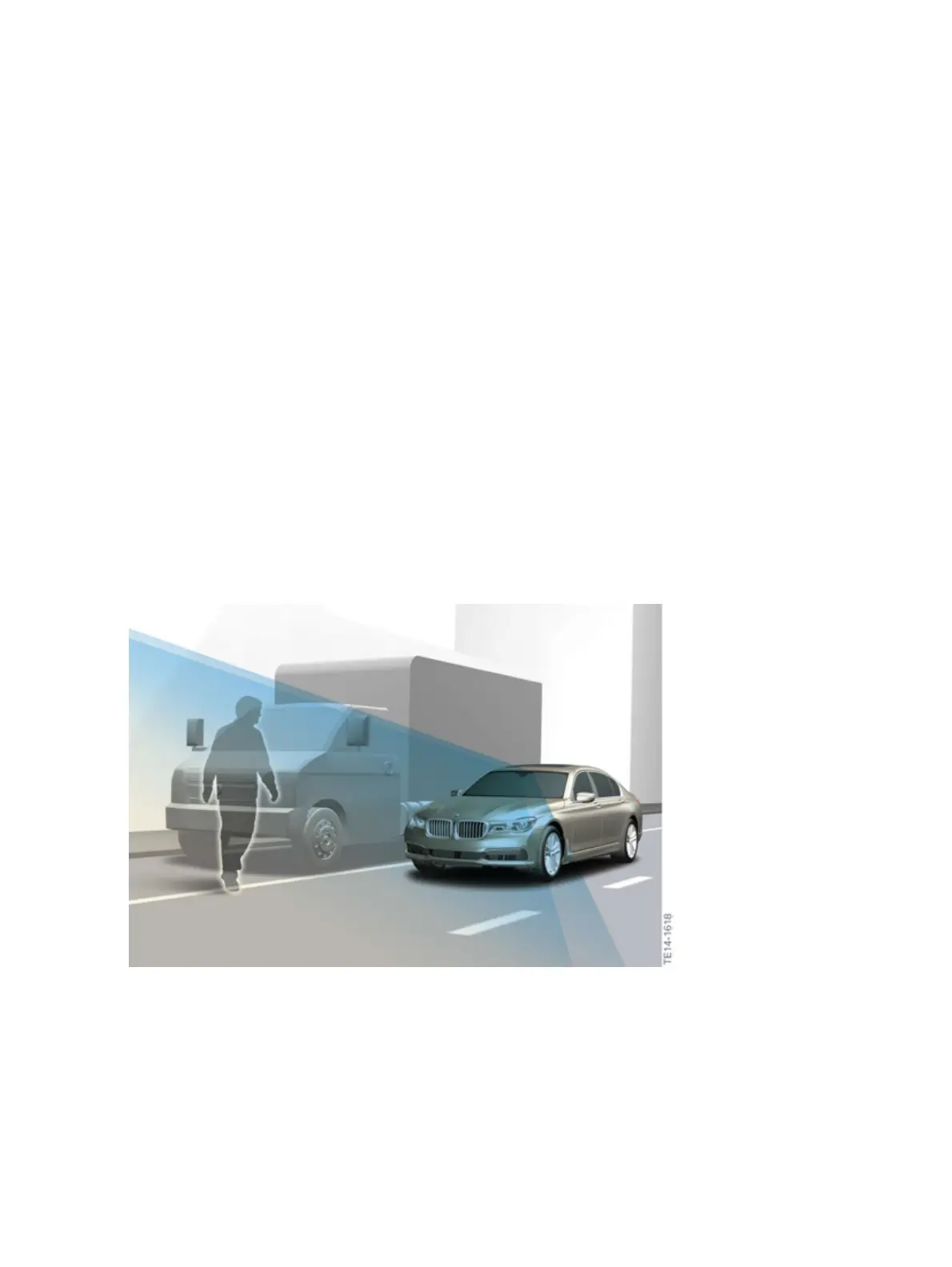
Example�of�pedestrian�recognition�by�the�KAFAS�stereo�camera:�pedestrian�approaching�from�the�side�steps�into�the�road�and�is�partially�hidden
The�two�separate�optical�paths�are�also�beneficial�in�challenging�conditions,�for�example�difficult
lighting�conditions,�where�there�is�low�contrast�between�the�image�and�background�or�when�several
objects�are�closely�lined�up�one�after�the�other.
Thanks�to�the�redundant�image�detection�of�the�stereo�camera,�it�is�now�possible�to�reliably�detect
obstacles�and�determine�their�size�from�a�single�image.



 To Next Page