G12�Driver�Assistance�Systems
7.�Collision�Warning
21
7.1.2.�Pedestrian�warning�with�city�braking�function
The�pedestrian�warning�with�city�braking�function�(Daytime�pedestrian�detection�OE�ZN2)�is�designed
to�prevent�possible�collisions�with�pedestrians�in�urban�areas�or�reduce�the�effects�of�an�accident.�The
system�warns�of�a�possible�collision�with�pedestrians�from�a�speed�of�approximately�10km/h�up�to�a
maximum�speed�of�60km/h�and�assists�the�driver�with�a�brake�intervention�shortly�before�a�collision.
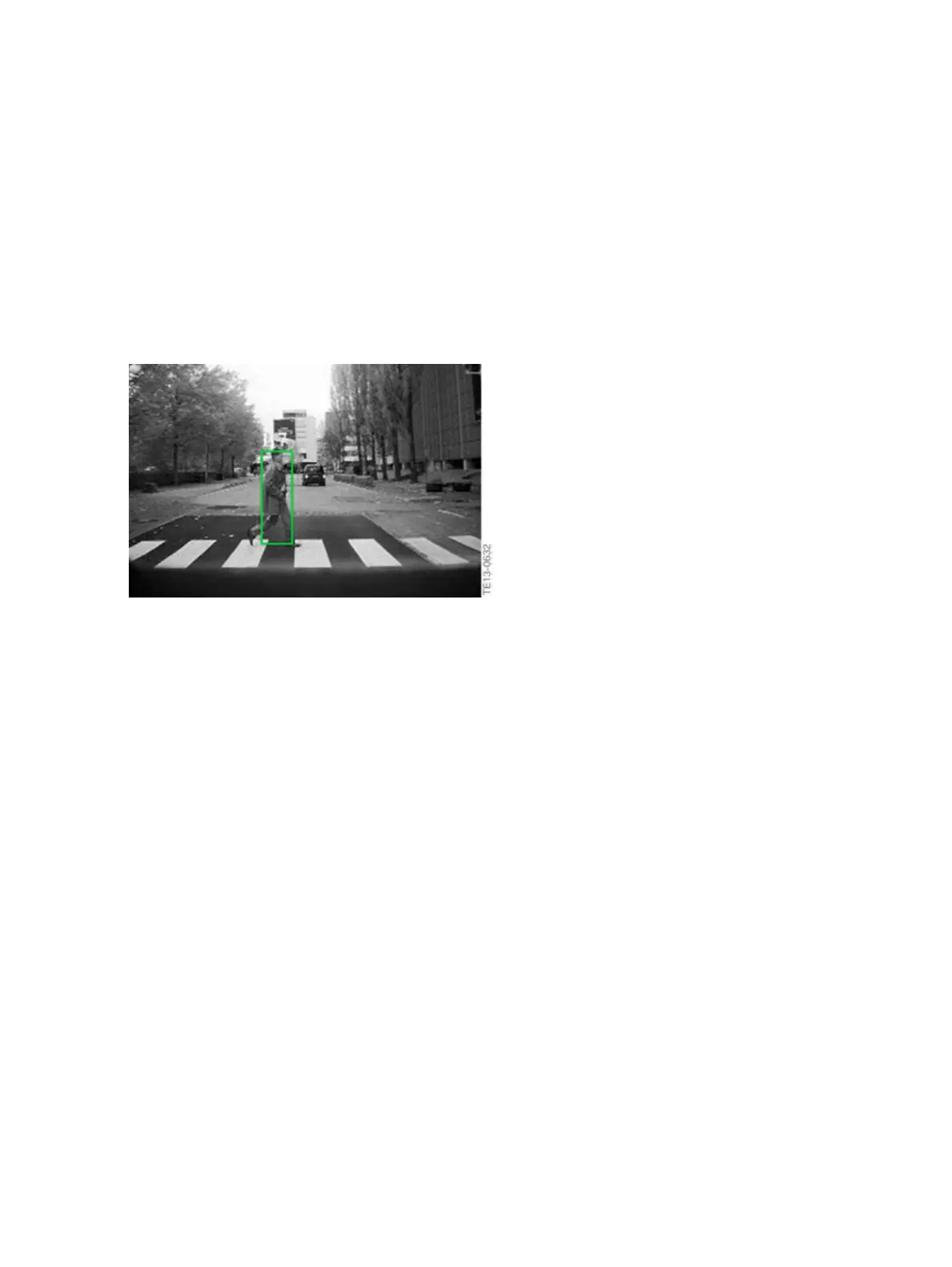
The�KAFAS�stereo�camera�captures�the�scene�in�front�of�the�vehicle�and�detects�pedestrians�in�the
field�of�view�using�image�processing.
Example�of�person�recognition�by�KAFAS�camera
Based�on�the�calculated�positions,�distances�and�the�movement�of�the�detected�pedestrians,�an�acute
warning�is�issued�in�critical�situations.�An�early�warning�is�not�available�for�the�pedestrian�warning�with
city�braking�function�(OE�ZN2).
With�an�acute�warning�the�vehicle�is�decelerated�by�roughly�4m/s².�The�duration�of�the�brake
intervention�is�limited�to�approximately�1.5seconds.�Additional�dangers�for�the�traffic�behind�are
therefore�avoided.
7.2.�Warning�and�braking�function
The�operating�principle�of�the�collision�warning�is�based�on�a�detection�and�warning�algorithm.
Machine�vision�detects�pedestrians�and�vehicles�in�the�detection�range�of�the�camera.�If�there�is�a
risk�of�a�collision,�a�warning�symbol�is�shown�in�the�instrument�cluster�(KOMBI),�or�in�the�Head-Up
Display�for�vehicles�with�the�Head-Up�Display�standard�equipment�(OE610).�The�warning�function�is
divided�into�two�stages.�The�next�probable�movement�of�an�object�is�determined�based�on�the�current
movement�of�the�detected�object�and,�taking�into�account�the�movement�of�the�object,�a�collision
risk�is�identified.�If�a�situation�is�evaluated�as�critical�by�the�warning�algorithm,�a�warning�is�issued�and
braking�is�introduced�based�on�a�multistage�warning�concept.�The�warnings�and�brake�interventions
differ�for�pedestrians�and�vehicles.



 To Next Page