Engine Oil
Bobcat 2200 Gasoline and Diesel Vehicle Operation & Maintenance Manual Page 39
NOTE: Use only Bobcat oil filters designed for your engine.
6. Tighten the oil filter by hand 2/3 turn after gasket contact. Do not use a band wrench or channel lock pliers.
Engine Oil Filling
1. Add engine oil; use a funnel or pour spout to direct the oil into the opening (Figure 26 or Figure 27). With
filter change, the engine requires 1 qt.-25 oz. (1.7 L) of oil per change for gasoline vehicles and 3 qt.
(2.8 L) for diesel vehicles. Refer to oil viscosity guidelines for selection of oil grade (Figure 28 or
Figure 29). See following CAUTION.
CAUTION
• Do not exceed recommended oil capacity. Doing so will decrease engine performance or
result in damage to the engine.
2. Connect the battery cables, positive (+) cable first, and tighten terminals to 20 ft-lb (27.1 N·m). Coat ter-
minals with Battery Terminal Protector Spray (1014305 CC).
3. With the Forward/Reverse handle in the NEUTRAL position, start and run the engine for a few minutes.
Observe both the drain plug and the oil filter from under the vehicle and watch for oil leaks. If a leak is
detected, check the tightness of the oil filter and drain plug. Tighten, repair, and/or replace components
as necessary.
NOTE: Wait five minutes after turning off the engine before removing the dipstick.
4. Remove the dipstick and check the engine oil as a final step. Replace the dipstick.
OIL VISCOSITY
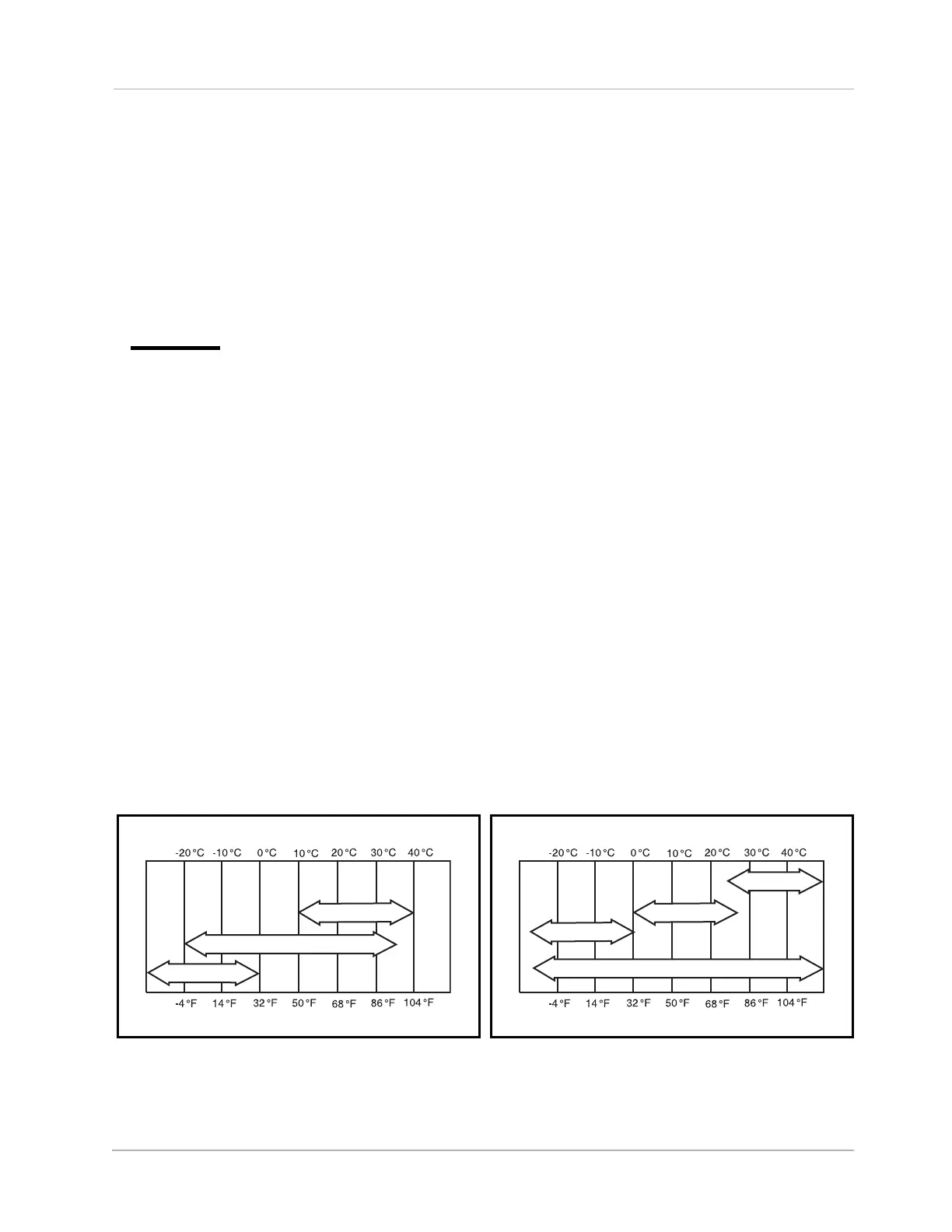
Choose the viscosity according to the temperature as shown in the appropriate oil viscosity chart (Figure 28
or Figure 29). See following NOTE.
NOTE: Use engine oil with API classification SJ for gasoline engines and CF for diesel engines.
Using multi-grade oils (5W-20, 10W-30, and 10W-40) will increase oil consumption. If multi-grade oil is used,
check the oil level more frequently.
Figure 28 Oil Viscosity Chart – Gasoline Vehicles Figure 29 Oil Viscosity Chart – Diesel Vehicles
SAE 5W-30
SAE 10W-30
SAE 30
SAE 10W-30/SAE 10W-40
SAE 20
SAE 30
SAE 10W



 To Next Page