16
5. Working with operation tools
5.1 Annular cutters
Annular cutters only cut material at the periphery of the hole, rather than converting the entire
hole to shavings. As a result, the energy required to make a hole is lower than for a twist drill.
When drilling with an annular cutter, it is not necessary to drill a pilot hole.
WARNING: Do not touch the cutter or the parts close to the cutter immediately after
operation, as they may be extremely hot and cause burns to the skin. Ensure nobody
is in the work area where the metal core is ejected.
DRILLING CONDITIONS
The ease with which material can be drilled depends on several factors including tensile
strength and abrasion resistance. Whilst hardness and/or strength is the usual criterion, wide
variations in machinability can exist among material showing similar physical properties.
The drilling conditions are dependent on requirements for tool life and surface finish. These
conditions are further restricted by the rigidity of the tool and the work piece, lubrication and
machine power available. The harder the material, the lower the cutting speed.
Some materials of low hardness contain abrasive substances leading to rapid cutting edge
wear at high speeds. Feed rates are governed by rigidity of set-up, volume of material to be
removed, surface finish and available machine power.
DRILLING A HOLE
Now that you have read the explanatory information and safety recommendations above, you
are ready to actually start drilling. Follow these 12 steps for best drilling result:
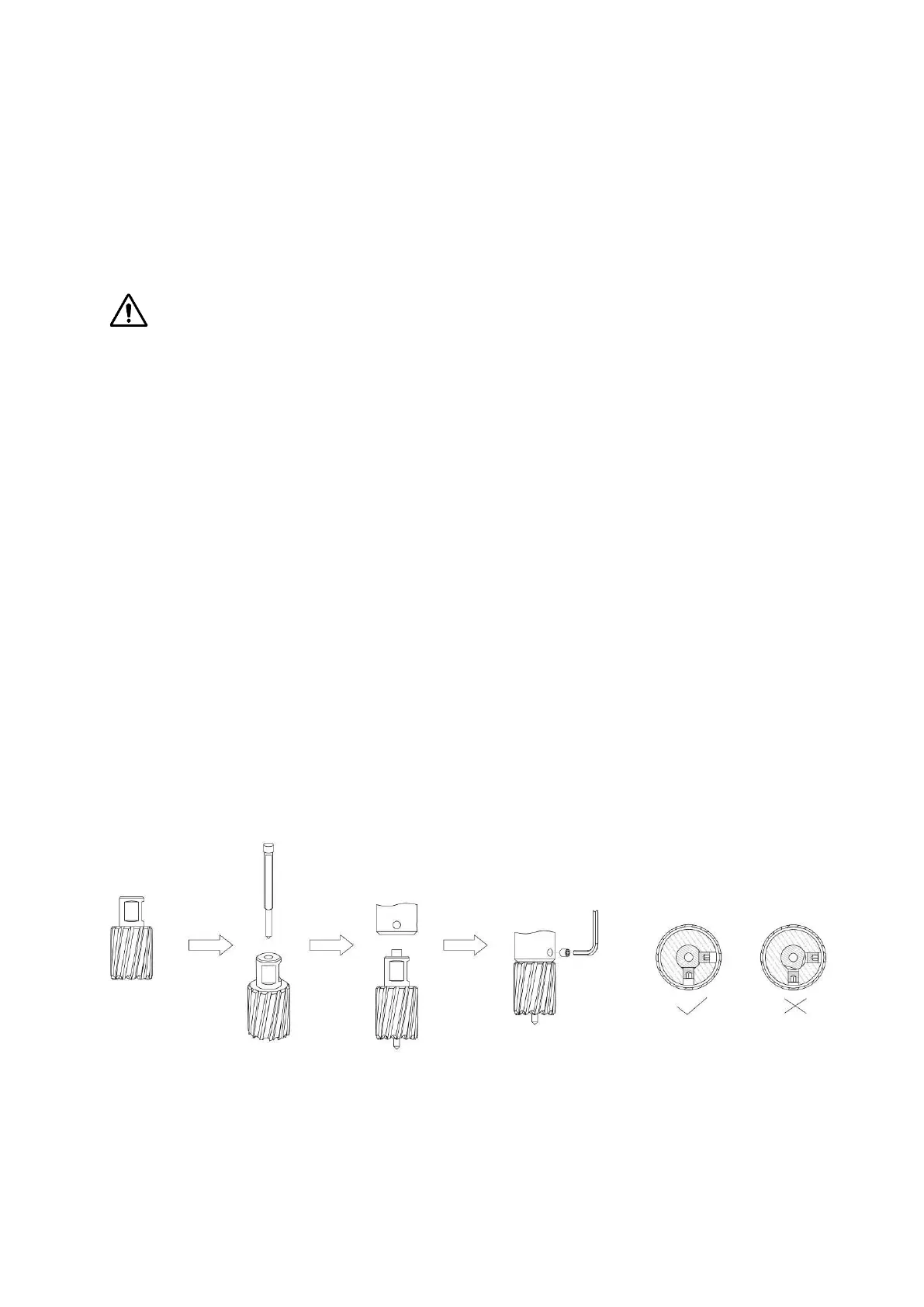
1. Install the annular cutter
- Place the pilot pin into the cutter;
- Align the flat faces on the cutter shank with the screws in the tool holder;
- Make sure the cutter shank is entered fully and correctly ;
- Tighten the screws
[image 5-1]
2. Precisely mark the centre of the hole;
3. Use the pilot pin to position the machine and in the correct position, with the tip of the
pilot pin to meet the marked center of the hole;



 To Next Page