Need help?
Do you have a question about the Bosch B444 and is the answer not in the manual?
Details the three methods for activating the B444-C communicator: using RPS tools, submitting a support ticket, or calling Bosch Installer Services.
Lists certifications for the B444-C module by region, including USA (CSFM, FCC, UL) and Verizon (Open Development Certified).
Provides links to text-based installation guides and other documentation for the Conettix Plug-in cellular module on the Bosch security website.
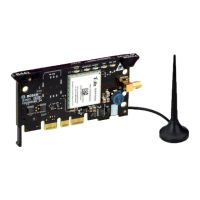
Details the physical dimensions of the module and its cellular band capabilities (LTE CAT1 B4, B13; 750/1700/2100 MHz).
Specifies the operating temperature range (0°C to +49°C), humidity (0% to 93% non-condensing), and power requirements (12V nominal).
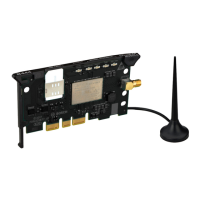
The Conettix Plug-in cellular module VZW LTE, model B444/B444-C, is a device designed to provide cellular communication capabilities for security systems. This module facilitates the transmission of data and signals over a cellular network, offering an alternative or backup communication path to traditional landlines. Its primary function is to enable remote monitoring and control of security systems, ensuring reliable communication even when wired connections are unavailable or compromised.
The B444/B444-C module acts as a cellular communicator, allowing a security panel to send and receive information via a cellular network. This includes alarm signals, status updates, and remote commands. By leveraging cellular technology, the module ensures that critical security events are promptly reported to monitoring stations or designated recipients. It supports LTE CAT1, operating on specific bands (B4, B13) and frequencies (750/1700/2100 MHz), which are compatible with Verizon Wireless (VZW) networks in the USA. This compatibility is crucial for ensuring reliable service and broad coverage within the Verizon network footprint.
The module integrates with existing security panels, typically by plugging into a designated slot or port. Once installed, it establishes a cellular connection, effectively turning the security system into a cellular-enabled device. This capability is particularly valuable in scenarios where landline services are not available, are too costly, or are prone to disruption. For instance, in new constructions without landline infrastructure or in areas where copper lines are being phased out, the cellular module provides an essential communication backbone. It also serves as a robust backup in case the primary communication path (e.g., internet or landline) fails, enhancing the overall resilience of the security system.
The activation process is a critical step to enable the module's functionality. It involves assigning a unique phone number, an IP address, and a data plan to the communicator. This ensures that the module can properly connect to the cellular network and transmit data. Without activation, the module cannot establish a cellular connection or perform its communication functions. The activation process is managed through specific tools and services provided by Bosch, ensuring that each module is correctly configured and provisioned for service.
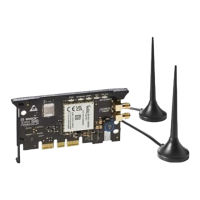
The B444/B444-C module is designed for straightforward integration and operation within a security system environment. Its plug-in form factor simplifies installation, allowing technicians to quickly connect the module to a compatible security panel. The physical dimensions of the module (approximately 93.5 mm x 50 mm x 15.25 mm for the main unit, and a 90 mm antenna with a 2.5 m cable) are designed to fit within typical security panel enclosures, ensuring a neat and professional installation.
One of the key usage features is its reliance on cellular communication, which offers several advantages. It provides a wireless communication path, eliminating the need for physical wiring to a phone line or internet router for alarm signaling. This flexibility makes it suitable for various installation environments, including remote locations, temporary setups, or buildings where running new wires is impractical. The module's support for LTE CAT1 ensures efficient data transmission, which is optimized for the low-power, low-bandwidth requirements of security system communications. This efficiency contributes to longer battery life for the security panel (if applicable) and reduced data consumption.
The module's operation is largely automatic once activated. It continuously monitors the cellular network for connectivity and automatically attempts to re-establish a connection if it is lost. This self-healing capability enhances reliability, ensuring that the security system remains connected and capable of reporting events. The module is also designed to operate within a wide range of environmental conditions, with an operating temperature range of 0°C to +49°C (32°F to 120°F) and a non-condensing humidity range of 0% to 93%. These specifications make it suitable for installation in typical indoor environments where security panels are usually located.
For installers and service providers, the module offers multiple activation methods to streamline the setup process. These methods include using cellular activation tools within RPS (Remote Programming Software), submitting a support ticket via the Bosch Cellular Portal, or calling Bosch Installer Services directly. This flexibility allows installers to choose the most convenient and efficient method based on their workflow and available resources. The requirement for an IMEI (International Mobile Equipment Identity) and ICCID (Integrated Circuit Card Identifier) during activation ensures that each module is uniquely identified and properly registered on the cellular network.
While the B444/B444-C module itself requires minimal direct maintenance, its ongoing functionality is supported by several features and processes designed to ensure continuous operation and easy troubleshooting. The activation process, as described, is a one-time setup that establishes the module's cellular service. Once activated, the module is designed for long-term, reliable operation without frequent intervention.
One important aspect of maintenance is monitoring the module's status. Although not explicitly detailed as a user-facing feature in the provided information, security panels typically provide indicators or logs that show the communication status of connected modules. This allows installers or system administrators to quickly ascertain if the cellular connection is active and functioning correctly. In case of communication issues, the activation methods double as troubleshooting avenues. For example, contacting Bosch Installer Services can help diagnose and resolve problems related to cellular connectivity or data plan issues.
The module's certification by various regulatory bodies, such as CSFM (California State Fire Marshal), FCC (Federal Communications Commission), and UL (Underwriters Laboratories), signifies its adherence to specific safety and performance standards. These certifications (UL 365, UL 636, UL 864, UL 985, UL 1023, UL 1076, UL 1610) indicate that the module has been tested and found compliant with requirements for central station burglar alarm units, hold-up alarm units, fire alarm control units, household fire warning systems, burglar alarm units, proprietary burglar alarm units, and household burglar alarm systems, respectively. This compliance ensures that the module is built to a high standard, reducing the likelihood of failures and simplifying maintenance by ensuring a reliable foundation.
Documentation and support resources are crucial for maintaining the module. Bosch provides a text-based installation guide and other documentation on its website (www.boschsecurity.com), as well as detailed information on the Conettix Cellular Portal (www.conettix.com/Cellular.aspx). These resources offer comprehensive instructions for installation, activation, and troubleshooting, empowering installers to effectively manage the module throughout its lifecycle. Access to these resources helps in quickly resolving any operational issues that may arise, minimizing downtime for the security system.
Finally, the module's design for continuous operation and its robust cellular technology inherently contribute to low maintenance. Unlike wired connections that can be physically cut or damaged, cellular communication offers a degree of resilience. The module's ability to automatically reconnect to the network after a temporary disruption further reduces the need for manual intervention. The focus on reliable components and adherence to industry standards means that once installed and activated, the B444/B444-C module is expected to provide consistent and dependable communication for the security system with minimal ongoing maintenance effort.
 General
| Model | B444 |
|---|---|
| Manufacturer | Bosch |
| Protection Class | IP30 |
| Maximum number of Keypads | 8 |
| Series | B Series |

 To Next Page