04 - E-Lyte 4.3 Set Up
24
Your Whyte bike is tted with an air spring rear shock absorber. This
means that the air pressure in the shock absorber determines the
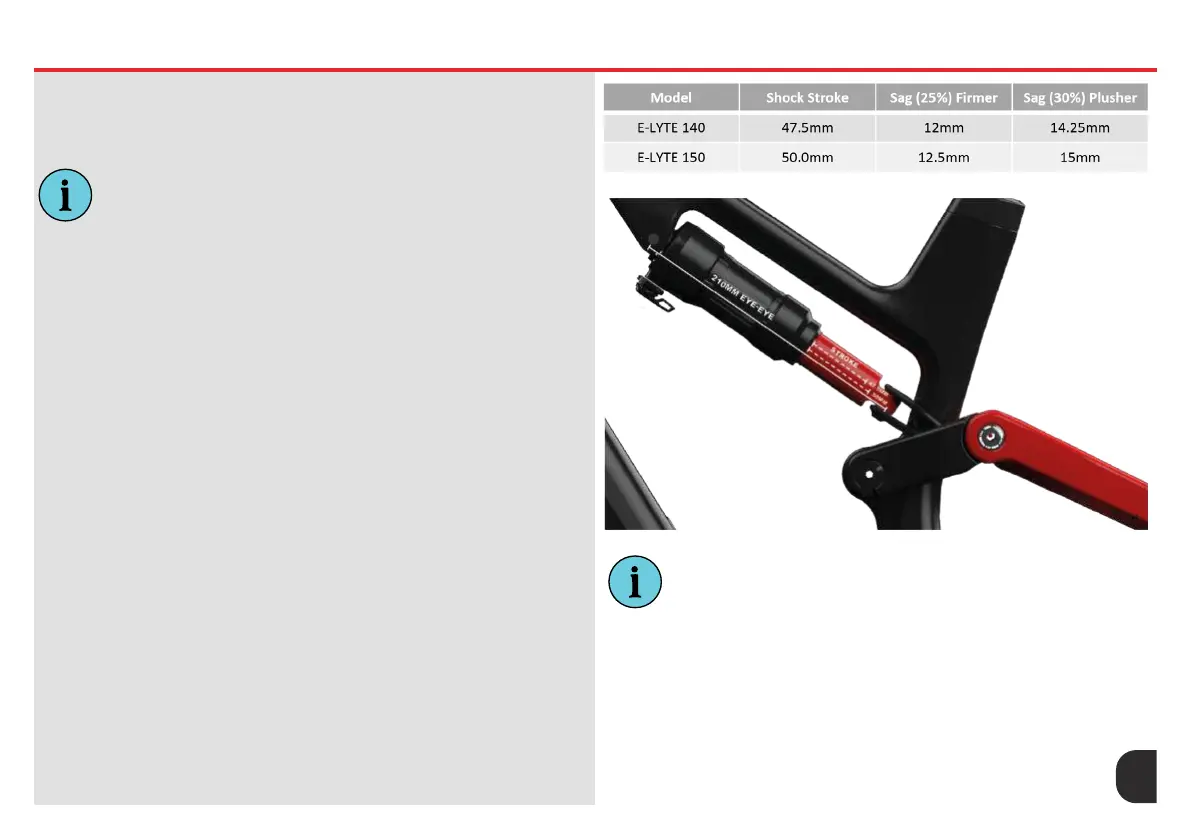
spring rate. The correct ‘sag’ can be found using the sliding ‘O’ ring
tted to the shaft of the shock piston. Slide the ‘O’ ring against the
shock body. Gently sit on the bike in your normal riding position and
with normal riding gear, including back pack if applicable, and also raise
your feet off the oor. Carefully dismount and measure the distance the
‘O’ ring has moved away from the shock body.
The optimum distance for the 4 Bar Horst-Link rear suspension
system is shown in the table. If the sag level is lower than the specied
distance, t a shock pump and release air pressure. Conversely, if
the sag level exceeds the distance specied, t the shock pump and
increase air pressure. Repeat the ‘sag’ test until the recommended sag
distance is achieved.
Rear Suspension Set-up - Rebound Damping:
When the damper unit is being compressed, this is known as the
compression stroke. As the suspension unit recovers from compression
back towards its full length, this is called the rebound stroke. All the
shocks tted as standard to the Whyte full suspension mountain
bikes have factory set compression damping, and manually adjustable
rebound damping.
INFO: For Whyte bikes tted with wireless suspension control
systems, please refer to the manufacturers instructions at all
times.
INFO: When tuning suspension settings Whyte recommends
always setting the rear shock rst and fork second. Make sure
you are wearing all the gear you would normally wear on a ride
such as shoes, helmet, or rucksack.
Rear Shock Setup:
Tools required to set up your rear shock:
• Suspension Shock Pump




 To Next Page