
 Need help?
Do you have a question about the Bosch ZEMO SU-E FS 12 and is the answer not in the manual?
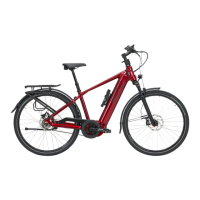
The ZEMO pedelec is a premium quality electric bicycle designed for comfortable daily use and suitable for riding on public roads. It features an electric drive system that assists pedalling, a robust chassis, and various adjustable components for optimal rider comfort and safety.
The pedelec combines muscle power with an electric drive system. When the rider applies a certain level of muscle power to the pedals, the motor activates gently to assist the pedalling motion. The motor's assistance level depends on the pedalling force applied, with more muscle power resulting in higher motor assistance, regardless of the selected assistance level. The motor automatically switches off when the rider stops pedalling, the temperature is outside the permitted range, an overload occurs, or the shut-off speed of 25 km/h is reached.
A push-assist system can be activated, allowing the motor to drive the pedelec at a maximum speed of 6 km/h as long as the push-assist button on the handlebars is pressed. This system is useful for pushing the pedelec up stairs or on a bicycle rack. The electric drive system stops when the button is released. The pedelec does not have a separate emergency shut-off button; in an emergency, the motor can be stopped by removing the on-board computer, and mechanical brakes are used to bring the bicycle to a safe halt.
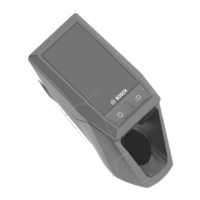
The on-board computer, controlled by seven buttons on the handlebars, manages the system and displays messages. It has an internal lithium-ion battery that is charged by the pedelec battery when the drive system is switched on. The eBike Flow app, accessible via Bluetooth®, allows riders to register, change settings, analyse routes and ride data, and activate premium functions. Software updates are automatically transferred via the app. An activity tracking function records activities, provided the rider agrees to location data being saved. A lock function, when activated, deactivates the e-bike drive unit assistance by removing the on-board computer, acting as a digital key.
Pedelec:
BOSCH LED Remote on-board computer (BRC3600):
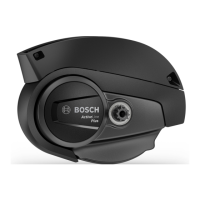
BOSCH Performance Line CX motor (BDU3740, BDU3741):
BOSCH PowerTube 750 battery (BBP3770 horizontal, BBP3771 vertical):
Bicycle lighting:
BOSCH Charger (BPC3400):
Riding Positions: The pedelec offers various riding positions (roadster, city bike, trekking bike, sports bike) depending on the rider's preference, physical fitness, and desired trip distance/speed. These positions affect upper body angle, arm-to-body angle, and saddle-handlebar height difference, influencing comfort, visibility, power transmission, and muscular strain.
Saddle Adjustment: The saddle's purpose is to absorb body weight, provide support, and enable different riding positions. It can be adjusted for height, horizontal position, and angle. Retractable seat posts with remote controls allow riders to lower the seat post at traffic lights and raise it again. Saddle width can be determined using corrugated cardboard or a gel cushion to match sit bone distance. Saddle hardness can be adjusted in air cushion saddles via a pump valve.
Handlebar Adjustment: Handlebars are used for steering and supporting the upper body, and they mount most controls and displays. Handlebar width should match the rider's shoulders. Hand position is optimal when the forearm and hand are in a straight line, preventing nerve pinching. Angle-adjustable stems allow changes to handlebar height and distance from the upper body, improving ride comfort and saving space when parking. Multi-position handlebars and bar ends offer varied grip options to reduce strain on longer rides.
Suspension: Both rigid and suspension forks are available. Suspension forks improve ground contact and comfort through suspension and damping. They absorb impacts and prevent the fork from oscillating uncontrollably. Sag (negative deflection) can be adjusted to optimise ride performance on different terrains. Compression and rebound damping can be fine-tuned to adapt to terrain changes and rider preferences.
Braking System: The pedelec uses handbrakes on the handlebars. The left lever controls the front wheel brake, and the right lever controls the rear wheel brake. Disc brakes are permanently screwed to the hub, with braking force transferred via brake fluid (hydraulic) or wire (mechanical). Grip distance and inclination angle of the handbrake levers can be adjusted for easier reach and to prevent wrist bending.
Gear Shift: The pedelec is equipped with either a chain or belt drive. Gear shift units (switch control panels or shifters) are located on the right side of the handlebars (or left for SHIMANO SW-E7000 derailleur gears). Riders can select appropriate gears to optimise speed, range, and pedalling efficiency.
Tyres: Tyres vary in design, profile, and width. Tyre pressure, indicated on the sidewall in psi or bars, must be adjusted to body weight and checked regularly. Correct tyre pressure is crucial for load bearing capacity, wear, rolling resistance, and puncture protection. Different tyre types (tube-type, tubeless, tubular, solid, mixed) are available.
Regular Checks: Before each ride, riders should check:
Cleaning: Basic cleaning involves using a damp cloth, sponge, brush, dish-washing detergent, silicone/Teflon oil, and acid-free lubricating grease. Specific cleaning instructions are provided for:
Servicing: Regular servicing includes:
Inspection and Maintenance Intervals:
Troubleshooting: The manual provides solutions for common issues such as:
Repair: Special expertise and tools are required for most repairs, which should be carried out by a specialist dealer. This includes replacing tyres, tubes, spokes, brake linings, rims, brake discs, and tensioning the chain. Instructions are provided for removing paint damage and impact damage on the frame, suspension fork, and seat post.



 To Next Page
 General