MY22Z0a - 12_1.0_25.07.2022
35
Description
3.3.3 Chassis
The chassis comprises two components:
•Frame and
• steering system
3.3.3.1 Frame
The frame absorbs all forces which act on pedelec
from body weight, pedalling and the ground. The
frame also acts as a carrier for most components.
The frame geometry determines the pedelec’s
ride performance.
3.3.3.2 Steering system
The steering system components are:
• Steering headset
•Stem,
• Handlebars
•Fork.
3.3.3.3 Steering headset
The steering headset (also known as a bike
headset or simply a headset) is the fork bearing
system in the frame. A distinction is made
between two different types:
• Conventional steering headsets for fork steerers
with thread and
• Steering headsets for threadless fork steerers,
what are known as headsets.
3.3.3.4 Stem
The stem connects the handlebars to the fork
steerer tube. The stem is used to adjust the
handlebars to body size. The stem is used to
adjust the handlebar height and the gap between
the handlebars and saddle (see Section 6.5.6).
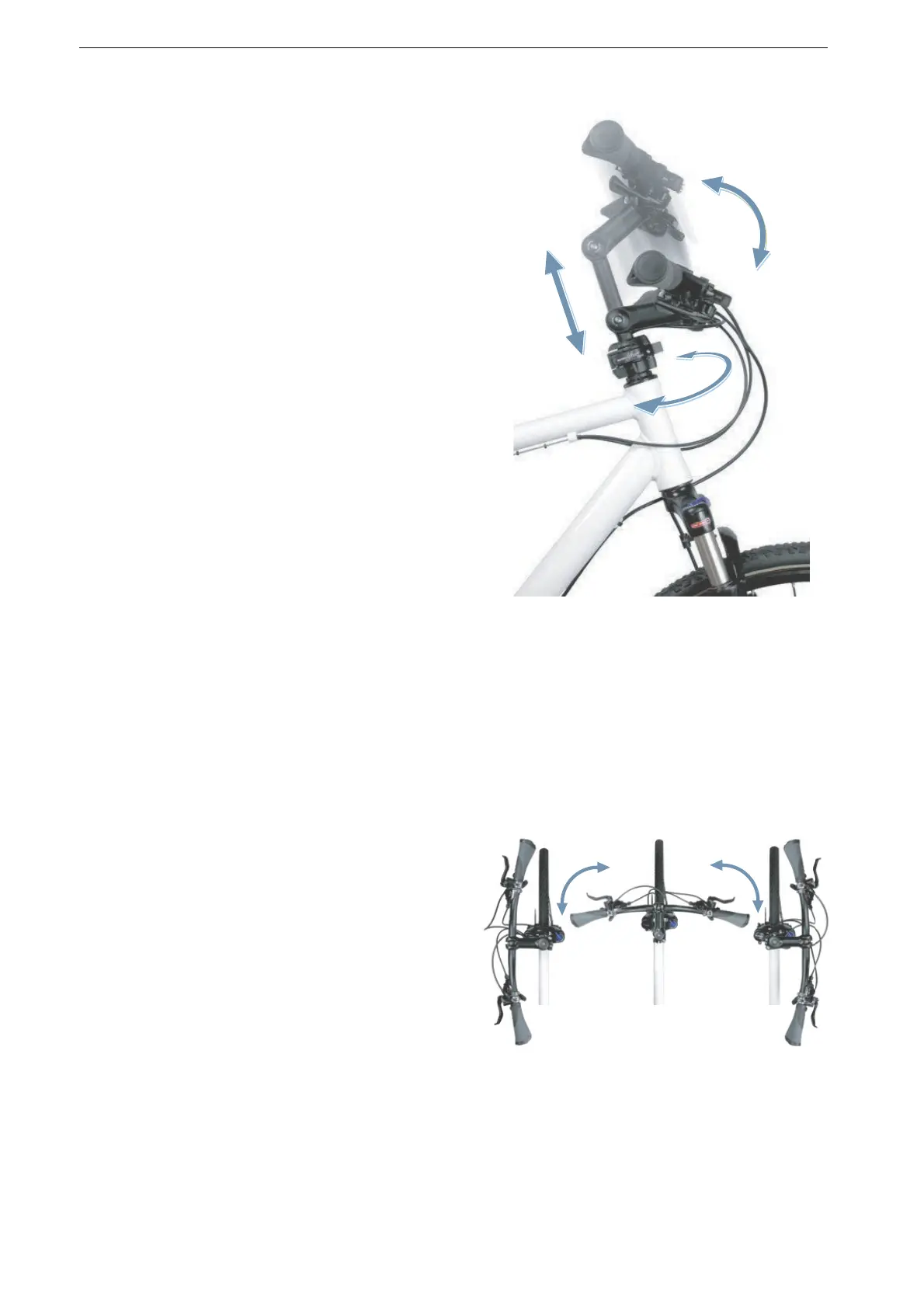
Quickly adjustable stems
Quickly adjustable stems are an extension to the
fork steerer. You can change the height and angle
of quickly adjustable stems without any tools. Up
to 3 settings can be adjusted, depending on the
model:
Figure 13: Example – BY.SCHULZ seat Speedlifter Twist
Pro SDS
1 Height adjustment
2 Twist function
3 Stem angle adjustment.
Adjusting the height and stem angle increase ride
comfort as different riding positions can be
adopted on longer rides. The twist function saves
space when parking.
Figure 14: Twist function, using BY.SCHULZ as an
example




 To Next Page