BROOKS AUSTRALIA RFP6 Installer ISSUE 4
6
Operating Principle
Light scattering - transmitter produces pulses of light which are detected by a
receiver when smoke enters the sensing chamber.
Advantages
• No radioactive material
• No legal requirements for disposal
• Particularly responsive to smouldering fires and dense smoke given off from
foam filled furnishings, bed linen or over-heated PVC wiring
• Less prone to false alarms due to fumes from cooking or gas/oil heaters
• Ideally suited adjacent to kitchens and bedrooms
• Suitable for general use
Disadvantages
• More expensive to produce
• Prone to false alarms due to dust build up or steam - must be kept clean
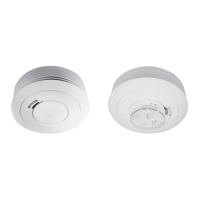
1.2.3 Heat model
Residential type Heat Alarms require the least maintenance of any alarm, because
they are virtually impervious to contamination. There are instances where a smoke
alarm installation is not recommended, the kitchen being the prime example. Yet
this area of a house is the source of some 40% of fires. An alternative method of
fire detection is in the opinion of many fire officers and specifiers, essential in this
and other vulnerable locations of residential properties. Fixed temperature heat
alarms are designed to trigger when the temperature reaches 58 degC. (136 degF.)
The alarms are not sensitive to smoke, but in a closed room with a vigorous fire they
will tend to respond faster than a smoke alarm out in the hallway. A heat alarm
must be interconnected to your smoke alarms so that the alarm can be heard
throughout the building. This type, with consideration to the above, can be installed
in kitchens, laundry’s and garages.
Operating Principle
Thermistor sensor - resistance value varies with temperature.
Advantages
• Ideal for those areas where protection is deemed necessary but where the
use of smoke alarms will cause constant false/nuisance alarms, i.e., kitchens,
garages, laundries
• Whilst not sensitive to smoke, in a closed room with a vigorous fire this alarm
would tend to ‘alarm’ faster than a smoke alarm in an adjacent hallway



 To Next Page