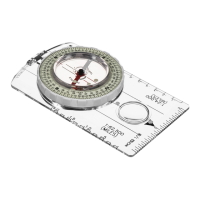
12 – Height Measurement
We can now apply clinometer measurement to height measurement and percent grade. In order to
calculate height of an object you must know distance to the object, and measure the angle of incli-
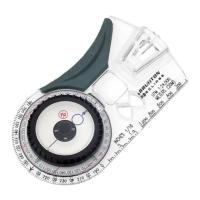
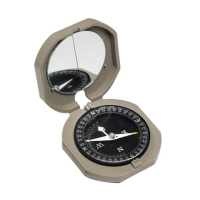
nation with the Eclipse 8099. The following example uses the 1° graduated dial clinometer.
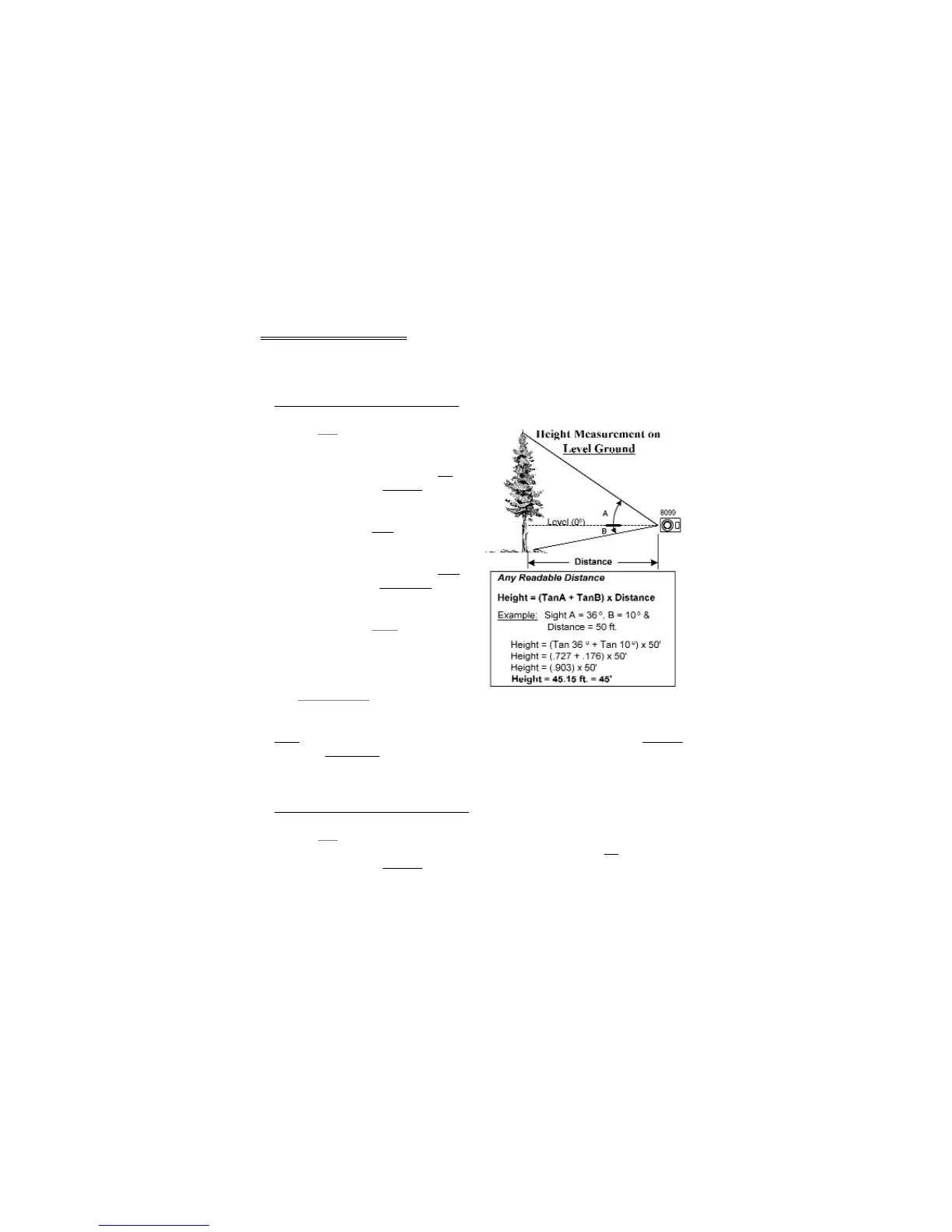
12.1 Level Ground Height Measurement
1. Measure distance to object (50 feet, this example)
2. Adjust blue orienting circle to clinometer
index mark.
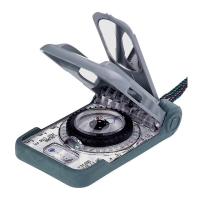
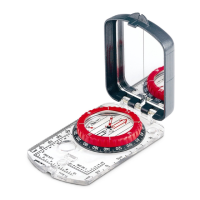
3. Position Eclipse 8099 at eye-level with
mirror extending outward to the left
.
· See section 11.3.a, Up Angle, for help.
4. Above the horizon (level, 0°), sight top of
object through sight hole. (Fig 43)
5. Read bearing from black scale (36°, this
example).
6. Position Eclipse 8099 at eye-level with
mirror extending outward to the right
.
· See section 11.3.b, Down Angle, for help.
7. Below the horizon (level 0°), sight base of
object through sight hole. (Fig 43)
8. Read bearing from green scale (10°, this
example).
9. Calculate height of object using the equation.
· Height = (TanA + TanB) x Distance
· Height = (Tan36° + Tan10°) x 50 feet
· Height = 45 feet
Note:
Do not calculate tangent of an angle by adding tangents of two smaller angles. Example:
Tan(60°) is not equal to Tan(30°) + Tan(30°). You must find Tan(60°) from another table, use
a calculator, or step back from object until the angle of inclination is less than or equal to 45°, to
use tangent tables provided on reference card 8.
12.2 Sloping Ground Height Measurement
1. Measure distance to object (75 feet, this example)
2. Adjust blue
orienting circle to clinometer index mark.
3. Position Eclipse 8099 at eye-level with mirror extending outward to the left.
· See section 11.3.a, Up Angle, for help.
22
Figure 43


 To Next Page