-18-
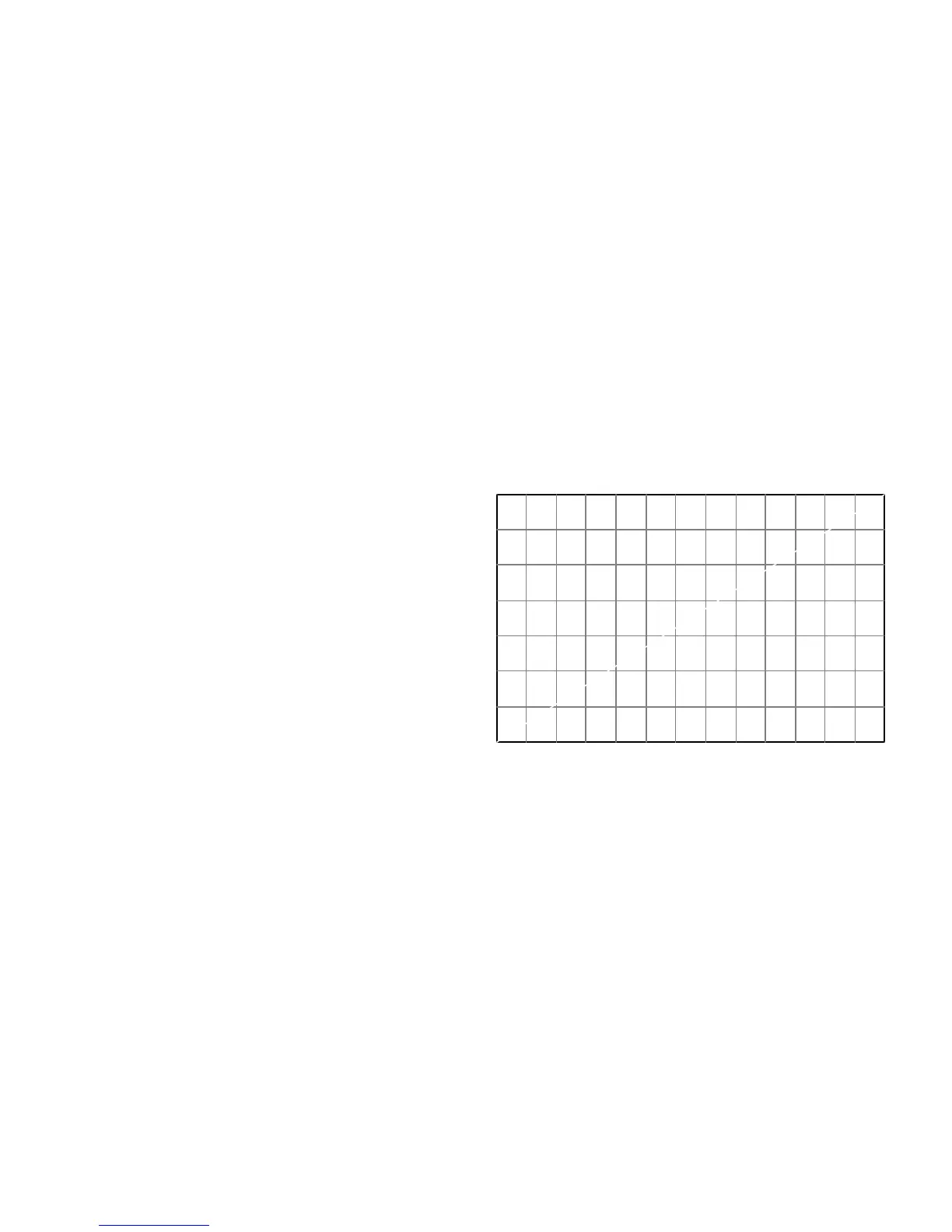
1.0
1.5
2.0
2.5
3.0
3.5
4.0
4.5
S.W.R.
0 50 100 150 200 250 300 350 400 450 500 550 600 650
kHz
TROUBLESHOOTING
Look for:
Operation at high power levels in areas where salt or pollution deposits have built up
on the insulators. The cure is to keep insulators clean through routine maintenance.
Symptom:
Intermittent operation. SWR jumps up and down suddenly, and reception is also
intermittent.
Look for:
Loose connections in the feedline or matching line (if used). Bad relay in rig. Bad
antenna switch or connecting cable. Broken or corroded connections at the
feedpoint. Bad radial/ground connection. Radial or antenna contacting metal when
wind blows. Loose hardware on the antenna. Check and secure all connections.
Symptom:
Antenna displays generally degraded performance after long period of time.
Look for: Lack of routine maintenance. Coax may be waterlogged or damaged. Build up of
salt or pollution deposits on insulators and capacitors. Radial system corroded or
rotted away. Owner must do routine maintenance at intervals, according to local
conditions.
Symptom: SWR is OK on 75 meter, but
goes up gradually when high
power is applied. This is
accompanied by heating of
200pF capacitor.
Look for: Bad ceramic capacitor. Replace.
Symptom: Antenna doesn't tune 80 meter
or 160 meter, even though
radials are in place and of
proper length.
Look for:
Antenna far out of tune;
operator has not followed
systematic tuning procedure.
Start with suggested settings in
instructions. Make an SWR chart to determine point of resonance. Adjust coils
carefully! Remember, tuning, is sharp on these bands, so it is easy to pass the
resonant point, then assume erroneously that the antenna isn't tuning.
BEFORE you call the manufacturer for help, please double check your installation, including all
connections and dimensions. Tune carefully and systematically. Have SWR curves available.
Be prepared to describe your installation in detail.



 To Next Page