31
Scale
Rough calcium-bearing deposits that can coat spa surfaces, heaters, plumbing lines
and clog filters. Generally, scaling is caused by mineral content combined with high pH.
Additionally, scale forms more readily at higher water temperatures.
Shock
Also called shocking the water, shock treatment, or superchlorination. Shocking the water
is adding significant doses of dichlor or MPS to oxidize non-filterable organic waste and
to remove chloramines and bromamines. Shock treatment breaks down organic waste
contaminants which cause odor and cloudy water. See page 35 for discussion of shocking
the water.
Total Alkalinity
Abbreviated as TA. Total alkalinity is the measure of the total levels of carbonates,
bicarbonates, hydroxides, and other alkaline substances in the water. TA is important for
pH control. If the TA is too low, the pH will fluctuate out of control, and if it is too high, the
pH becomes diicult to stabilize. See page 32 for testing for and balancing total alkalinity.
Trichlor
Used as a pool sanitizer. NEVER use trichlor in a spa. Trichlor is extremely acidic and will
lower the pH, causing corrosion to equipment. Using trichlor will void your warranty.
4.2 Water Testing Methods4.2 Water Testing Methods
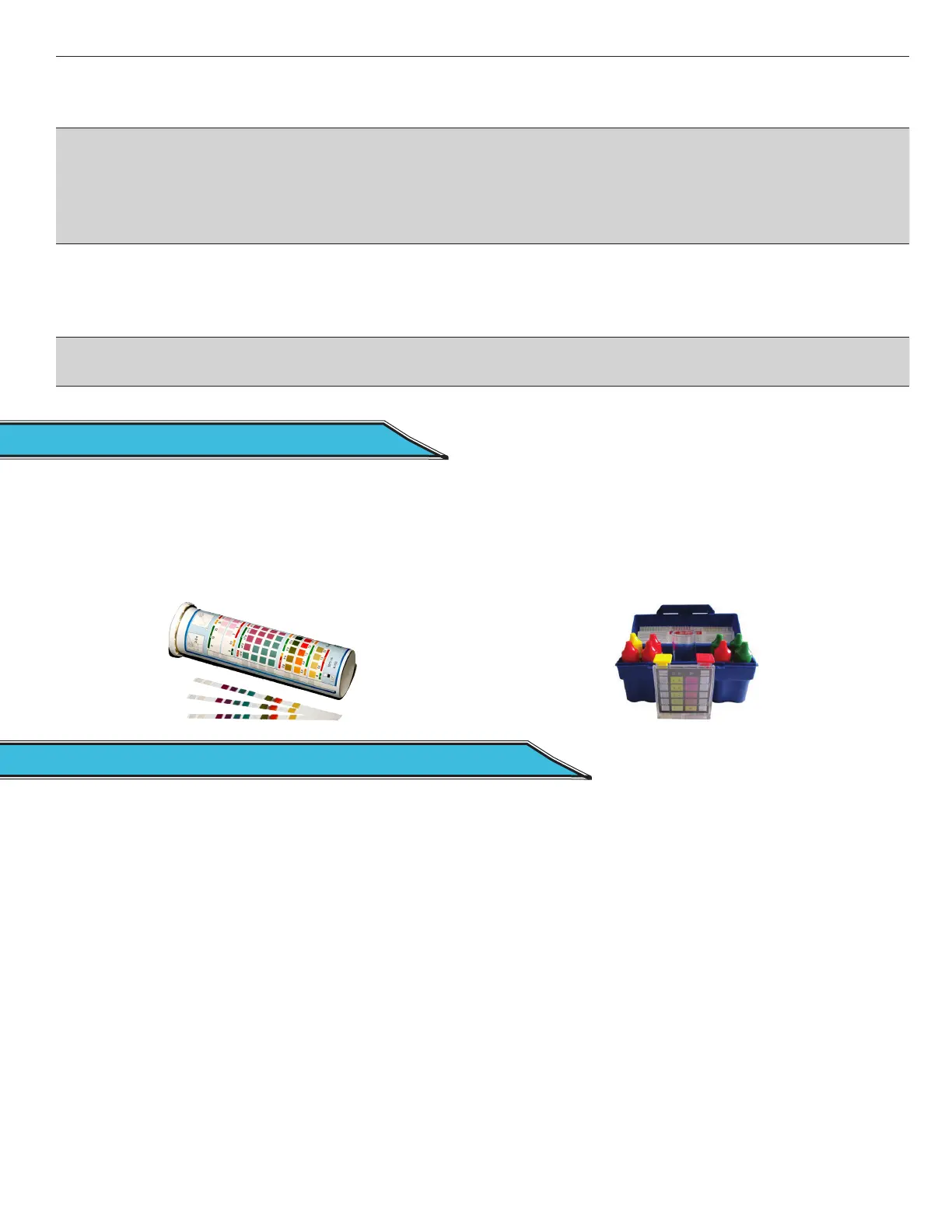
There are two testing methods to choose from:
Test strips are a convenient testing method commonly
used by spa owners.
The reagent test kit is a method which provides a high
level of accuracy but is more expensive and more
diicult to use.
4.3 Adding Chemicals to the Spa Water4.3 Adding Chemicals to the Spa Water
IMPORTANT: All spa water chemicals, including MPS (shock), chlorine, granulated pH increaser or decreaser,
granulated total alkalinity increaser, calcium hardness increaser, liquid stain and scale inhibitor, and liquid
de-foamer must always be added directly into or in front of the filter compartment while a jet pump is running,
and it must run for a minimum of ten minutes.
1. Fold back the cover.
2. Press the Jets or Jets 1 button.
3. Carefully measure the recommended amount of chemical and slowly pour it into the filter area. Use care not
to splash chemicals on your hands, in your eyes, on the spa surface, or on the siding.
4. Close the spa cover.
Warning: High sanitizer levels can cause discomfort to the user’s eyes, lungs and skin. Always allow the sanitizer
level to fall to the recommended range before using the spa.
IMPORTANT NOTE REGARDING SHOCK TREATMENT: Aer administering shock to your spa, leave the cover
open for a minimum of 20 minutes to allow the oxidizer gas to vent. A high concentration of trapped oxidizer
gas which may exist as a result of the shock treatment (not daily sanitation) may eventually cause discoloration
or vinyl degradation to the bottom of the cover. This type of damage is considered chemical abuse and is not
covered under the terms of the limited warranty.




 To Next Page