32
4.4 Balancing the Water Chemistry Levels4.4 Balancing the Water Chemistry Levels
Maintaining spa water chemistry can be tricky, especially since there are many methods of keeping your water
clear and clean. Follow the maintenance schedule on page 36 to determine how oen you should test your
water.
NOTE: We do not recommend any brand of chemical. See page 36 for a table of common chemicals used in
spas and their generic equivalents.
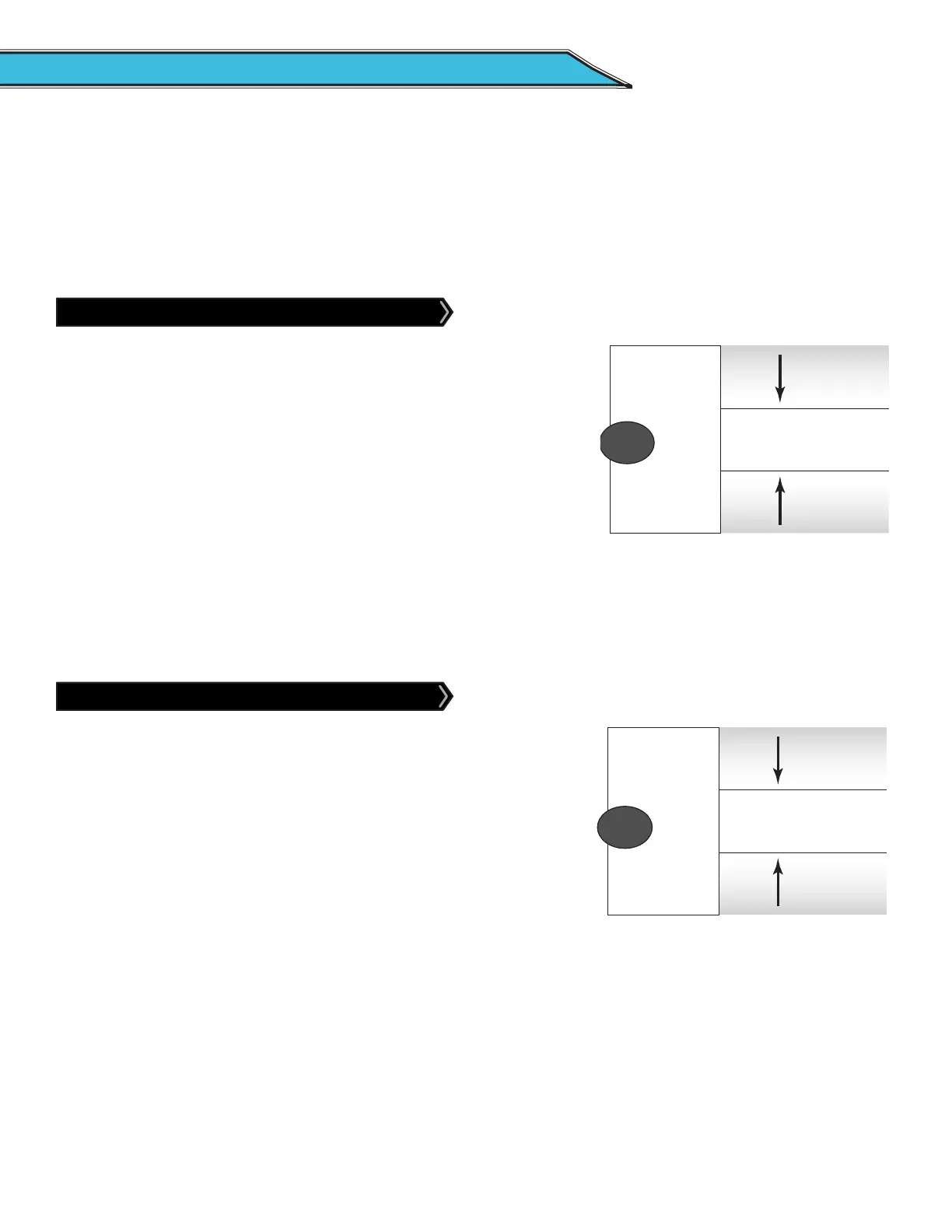
Balancing the Total Alkalinity (TA)
Total Alkalinity is a measure of the total levels of carbonates,
bicarbonates, hydroxides, and other alkaline substances in the
water. TA is referred to as the water’s “pH buer”. In other words, it’s a
measure of the ability of the water to resist changes in pH level.
8.2
8.0
7.8
7.6
7.4
7.2
7.0
6.8
6.6
Ideal pH balance
Add a pH
decreaser
Add a pH
increaser
pH too high
Too alkaline, causes
scaling
pH too low
Too acidic, causes
corrosion
pH
balance
120
140
160
180
100
80
Ideal TA balance
Add an alkalinity
increaser
Add an alkalinity
decreaser
60
40
20
TA too low
pH will uctuate
wildly
TA too high
pH will be too high
and may be dicult
to stabilize pH
TA
balance
200
225
250
275
175
150
Ideal CH balance
CH too low
Causes equipment
corrosion
CH too high
Causes scale to
deposit on spa and
equipment
Add a calcium
hardness increaser
Dilute the spa
with soft water
125
100
75
CH
balance
Balancing the Calcium Hardness (CH)
Calcium Hardness is a measure of the total amount of dissolved
calcium in the water. Calcium helps control the corrosive nature of the
spa’s water. That’s why calcium-low water (commonly known as “so”
water) is not recommended. It is very corrosive to the equipment, and
can cause staining of the spa shell.
See a spa dealer for guidance and recommendations on spa chemicals and supplies. Various chemicals oen
sold under brand names, but a spa dealer can advise you on generic chemicals that are oen much less costly
than proprietary brands.
If the TA is too low, the pH level will fluctuate widely from high to
low. Fluctuations in pH can cause corrosion or scaling of the spa
components. Low TA can be corrected by adding sodium carbonate
(pH/Alkalinity Up).
If the Total Alkalinity is too high, the pH level will tend to be high and may be diicult to bring down. It can be
lowered by using sodium bisulfate(pH/Alkalinity Down).
Once the TA is balanced, it normally remains stable, although the addition of more water with a high or low
alkalinity will raise or lower the TA reading of the water.
When the Total Alkalinity is within the recommended range, proceed to the next step.
8.2
8.0
7.8
7.6
7.4
7.2
7.0
6.8
6.6
Ideal pH balance
Add a pH
decreaser
Add a pH
increaser
pH too high
Too alkaline, causes
scaling
pH too low
Too acidic, causes
corrosion
pH
balance
120
140
160
180
100
80
Ideal TA balance
Add an alkalinity
increaser
Add an alkalinity
decreaser
60
40
20
TA too low
pH will uctuate
wildly
TA too high
pH will be too high
and may be dicult
to stabilize pH
TA
balance
200
225
250
275
175
150
Ideal CH balance
CH too low
Causes equipment
corrosion
CH too high
Causes scale to
deposit on spa and
equipment
Add a calcium
hardness increaser
Dilute the spa
with soft water
125
100
75
CH
balance
If the CH is too high (commonly known as “hard water”), formation of
scale on the spa’s shell surface and equipment can result. You can use
a generic calcium remover to remove hardness from water. CH can
also be decreased by dilution – a mixture of 75% hard and 25% so
water will usually yield a reading within the correct range. If so water is not available or practical for you, a stain
and scale inhibitor should be added to the spa water, according to label instructions.
If the CH is too low add CH Increaser.
Once the CH is balanced, it normally remains stable, although the addition of more water with a high or low
calcium content will raise or lower the CH reading of the water.
When the CH is within the recommended range, proceed to the next step.




 To Next Page