22
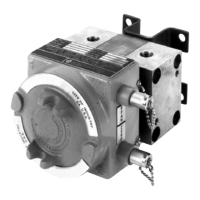
Section 4 Model 764 Differential Pressure Transmitter
Section 4—Maintenance
General Field and Periodic Maintenance
The electronic transmitter is basically maintenance-free and does not require
a routine preventative maintenance program other than periodic calibration
checks.
!
WARNING: Except for cleaning the DPU and replacement of O-rings, fas-
teners,andconnectorassemblies,noeldrepairorcomponentreplace-
ment on the Model 764 transmitter is authorized. Unauthorized repairs
voidanycerticationtoqualicationreportsfordesignbasisevent
performance.
DPU Inspection and Cleaning
!
WARNING: Improper disassembly of DPU products in high-pressure gas
applications (working pressures greater than 200 psig) can cause severe
injury, death, or substantial property damage. Before removing DPU
housing bolts, perform the following pressure check procedure.
Pressure Check
1. Back o all housing bolts (approximately 4 turns).
2. Check for internal pressure by attempting to move the housing in and out
along the bolts.
a. If the housing moves freely, no pressure is present and servicing/
repair may continue.
b. If housing does NOT move freely, the bellows may be pressurized
and be potentially hazardous if further disassembled. In this case,
tighten all bolts, tag the unit to specify "Gas in Bellows" and return
to the factory for repair.
Cleaning the DPU
1. After verifying that no internal pressure exists in the DPU, remove the
instrument from service and remove the eight pressure housing bolts.
2. Carefully remove the pressure housings from the unit.
IMPORTANT: If the accumulation of material is extensive, rapid removal of the hous-
ings may damage the bellows convolutions.
3. Remove accumulation from between bellows convolutions and housings
using a solvent, if possible.
IMPORTANT: Do not use sharp instruments to clean between bellows convolutions.



 To Next Page