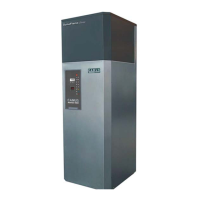
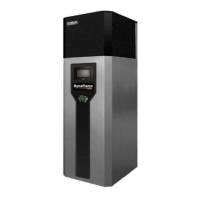
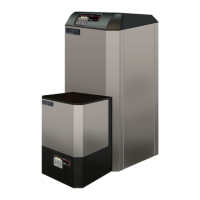
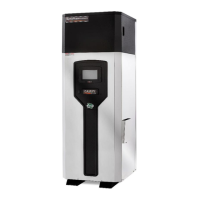
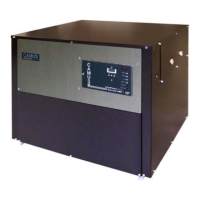
This document provides the installation, operation, and service manual for the Camus Blue-Flame Series of gas-fired commercial copper tube boilers, designed for both hydronic heating and hot water supply applications. These units are engineered for ease of use and maintenance, ensuring reliable performance in various commercial settings.
Function Description
The Camus Blue-Flame Series boilers are designed to provide efficient hydronic heating or instantaneous hot water supply. They are gas-fired units featuring copper tube heat exchangers, which are known for their excellent heat transfer properties. The boilers are intended to operate under non-condensing conditions, requiring inlet water temperatures to be maintained at 110°F or higher to prevent condensation and potential corrosion.
For hydronic heating, these boilers circulate hot water through a closed-loop system to provide space heating. For hot water supply, they are designed to deliver hot water on demand without the need for a storage tank, making them suitable for applications with variable loads such as restaurants, condominiums, apartments, and motels.
The control system of these boilers is designed to ensure safe operation. It includes safety devices such as a water flow switch, which ensures that the circulator operates before the gas valve opens, preventing the burner from firing without water flow. An optional low water cutoff device can also be installed, particularly if the boiler is situated above the radiation level of the building's system. A relief valve is also supplied to protect against overpressure.
Usage Features
The Blue-Flame boilers are designed for straightforward operation, with clear instructions provided for lighting and shutdown. Installation requires adherence to local codes, standards, and good industry practices, including proper electrical wiring, gas supply piping, and venting.
For outdoor installations, the units come with a windproof cabinet, a factory-supplied air intake, and a UL-approved vent cap, making them self-venting and weather-resistant. Indoor installations require the use of a provided draft hood and proper vent connections. Adequate air for combustion and ventilation is crucial, and installers must consider potential negative pressure conditions caused by exhaust fans or other air-handling units.
When connecting the boiler to a system that also uses chilled water, specific piping configurations are required to prevent chilled water from entering the boiler, which could lead to condensation and corrosion. A bypass line may be necessary for low water temperature systems to ensure the inlet temperature remains above 110°F, protecting the heat exchanger.
The control panel includes diagnostic lights to indicate conditions such as low water flow. The lighting instructions guide the user through the process of turning on the boiler, establishing the pilot flame, and igniting the main burners. The system includes a safety shut-off device that will cut off power to the gas valve within four seconds if the pilot gas is shut off, ensuring safe operation.
Maintenance Features
Maintenance is a key aspect of the Blue-Flame Series design, aiming to prolong the life and efficiency of the boiler. Regular inspections and cleaning are recommended.
Every six months, a qualified service technician should inspect the heat exchanger surfaces and vent piping for deterioration and carbon deposits. Soot and other obstructions should be removed from the chimney and flue to maintain proper draft. The procedure involves turning off electrical power and gas supply, allowing the boiler to cool, removing the draft diverter and vent pipe, and then cleaning the heat exchanger and coils.
The main burner and pilot burner flames should be checked every six months for proper characteristics. The main burner flame should be stable, quiet, and blue (for natural gas) or have yellow tips (for propane), with acceptable CO and CO2 levels. If burner characteristics are not met, the burner air inlets should be checked for lint or foreign material. Cleaning the burners involves removing the burner tray assembly, thoroughly cleaning all ports and air channels, and then reinstalling them.
The pilot burner's spark should be strong and continuous, with a spark gap of 1/8" to 3/16". The ignition electrode should be clean and free from carbon buildup. A properly set pilot flame should engulf the ignition sensor and ground plate.
Safety devices, including the low water cutoff (if equipped) and flow switch, should be periodically inspected (every six months) to ensure proper operation. Relief valves should be manually operated at least once a year.
The manual also emphasizes the importance of protecting the gas ignition system components from water during appliance operation and service. In case of unusual conditions like fire or flood, all gas and electrical supplies should be turned off, and the unit should not be operated until checked by a qualified agency. For units that are not operated for 60 days or more, a qualified service technician should check all controls before returning them to service.
The design of the Camus Blue-Flame Series focuses on providing a durable and efficient heating solution with built-in features that simplify both routine operation and necessary maintenance.


 To Next Page
 General