EasyManua.ls Logo

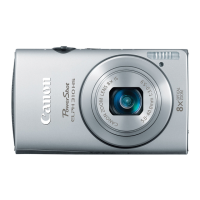
Canon PowerShot ELPH 310 HS - User Manual

Canon PowerShot ELPH 310 HS
212 pages
Print Icon
To Next Page IconTo Next Page
Loading...
Camera User Guide
ENGLISH
Make sure you read this guide, including the “Safety
Precautions” section, before using the camera.
Reading this guide will help you learn to use the camera
properly.
Store this guide safely so that you can use it in the future.
COPY

Table of Contents

Other manuals for Canon PowerShot ELPH 310 HS

Question and Answer IconNeed help?

Do you have a question about the Canon PowerShot ELPH 310 HS and is the answer not in the manual?

Summary

Checking the Package Contents

Using the PDF Manuals

Information on PDF manuals included in the CD-ROM, and how to access them.

Read This First

What Do You Want to Do?

Shoot

Guidance on shooting various scenes and effects, including people, other scenes, and special effects.

View

Instructions for viewing images, including slideshows and on a TV or computer.

Shoot;View Movies

Steps for shooting and viewing movie clips with the camera.

Print

Information on printing images, including options and procedures.

Save

Guidance on saving images, specifically to a computer.

Other

Covers miscellaneous functions like turning off sounds and using the camera abroad.

Conventions Used in This Guide

Safety Precautions

Getting Started

Attaching the Strap;Holding the Camera

Instructions on how to attach the camera strap and the correct way to hold the camera for shooting.

Charging the Battery

Compatible Memory Cards (Sold Separately)

About Eye-Fi Cards

Information and considerations for using Eye-Fi cards with the camera.

Inserting the Battery and Memory Card

Setting the Date and Time

Reappearing Date;Time screen

Guidance on what to do if the Date/Time screen appears each time the camera is turned on.

Setting the Display Language

Formatting Memory Cards

Pressing the Shutter Button

Taking Pictures (Smart Auto)

Viewing Images

Erasing Images

Shooting Movies

Viewing Movies

Transferring Images to a Computer for Viewing

System Requirements

Lists the system requirements for Windows and Macintosh to transfer images from the camera.

Installing the Software

Transferring and Viewing Images

Learning More

Components Guide

Mode Switch

Explains how to use the mode switch to change the camera's shooting mode.

Screen Display

Switching the Display

How to change the screen display using the down button for shooting and playback modes.

Indicator

Describes the indicator light on the back of the camera and its operation status meanings.

FUNC. Menu - Basic Operations

MENU - Basic Operations

Changing the Sound Settings

Muting Sounds

Instructions on how to mute or adjust the volume of camera sounds.

Adjusting the Screen Brightness

Using the Menu

Explains how to adjust screen brightness via the camera's menu settings.

Using the ∨ Button

Describes how to adjust screen brightness directly using the down button.

Returning the Camera to Default Settings

Power Saving Function (Auto Power Down)

Clock Function

Information on how to check the current time on the camera.

Shooting with Commonly Used Functions

Turning the Flash Off

Zooming In More Closely on Subjects (Digital Zoom)

Inserting the Date and Time

Using the Self-Timer

Changing the Aspect Ratio

Changing the Recording Pixel Setting (Image Size)

Changing the Compression Ratio (Image Quality)

Adding Effects and Shooting in Various Conditions

Shooting in Various Conditions

Take portraits (Portrait)

Guidance on taking portrait shots with a soft effect for people.

Take shots of kids and pets (Kids&Pets)

Tips for capturing children and pets without missing photo opportunities.

Take shots of fireworks (Fireworks)

Adding Effects and Shooting

Shooting with the Effects of a Fish-Eye Lens (Fish-eye Effect)

Taking Shots That Look Like a Miniature Model (Miniature Effect)

Shooting with the Effects of a Toy Camera (Toy Camera Effect)

Shooting in Monochrome

Shooting with Color Accent

Shooting with Color Swap

Making Short Movies Automatically (Movie Digest)

Detecting a Face and Shooting (Smart Shutter)

Detecting a Smile and Shooting

Camera automatically shoots when a smile is detected.

Using the Wink Self-Timer

Using the Face Self-Timer

Shooting Long Exposures

High-Speed Continuous Shooting (High-speed Burst)

Capturing the Best Facial Expressions (Best Image Selection)

Shooting Stitch Assist Images

Choosing Settings Yourself

Shooting in Program AE

Adjusting the Brightness (Exposure Compensation)

Turning the Flash On

Instructions on how to enable the flash to fire every time you shoot.

Adjusting the White Balance

Custom White Balance

How to adjust white balance to match light source in the actual shooting scene.

Changing the ISO Speed

Correcting the Brightness and Shooting (i-Contrast)

Continuous Shooting

Changing the Tone of an Image (My Colors)

Custom Color

Setting contrast, sharpness, color saturation, red, green, blue, and skin tones at 5 levels.

Shooting Close-ups (Macro)

Shooting Far Away Subjects (Infinity)

Using the Digital Tele-Converter

How to increase focal length by 1.5x or 2.0x for faster shutter speed.

Changing the AF Frame Mode

Face AiAF

Detects people's faces to set focus, exposure, and white balance.

Tracking AF

Center

Locks AF frame to the center for specific point focusing.

You can reduce the AF frame size

Instructions on how to reduce the AF frame size in the camera settings.

Changing the Composition with the Focus Lock

How to lock focus and exposure to recompose and shoot.

Choosing the Subject to Focus On (Tracking AF)

Magnifying the Focal Point

Shooting with the AF Lock

Shooting with Servo AF

Changing the Metering Method

Shooting with the AE Lock

Shooting with the FE Lock

Shooting with Slow Synchro

Red-Eye Correction

Checking for Shut Eyes

Using Various Functions for Shooting Movies

Shooting Various Kinds of Movies

Other Shooting Modes

Lists other shooting modes available for movies, such as iFrame and Super Slow Motion.

Shoot Movies That Look Like a Miniature Model (Miniature Effect)

Shooting Super Slow Motion Movies

Changing the Image Quality

Using the Wind Filter

Other Shooting Functions

Editing

Using Various Playback and Editing Functions

Quickly Searching Images

Searching Images Using Index Display

How to display multiple images at once to quickly find a desired image.

Searching Images by Scrolling

Methods for quickly searching images by scrolling or by shooting date.

Viewing Images in Filtered Playback

Viewing Movies Made with Movie Digest

How to select and view movies made in Movie Digest mode by date.

Viewing Slideshows

Choose a transition effect.

Selects a transition effect for displaying images in a slideshow.

Checking the Focus

Switch frames.

How to switch between different frames for focus checking.

Change the magnification level or location.

Adjusts magnification level and location for checking focus.

Magnifying Images

Viewing Each Image in a Group

Group playback

How to view grouped images individually and use FUNC. menu functions.

Ungrouping Images

Displaying Various Images (Smart Shuffle)

Changing Image Transitions

Protecting Images

Protect the image.

Instructions on how to protect important images from accidental erasure.

Erasing Images

Choosing a Selection Method

Selects the method for choosing images to erase.

Choosing Images Individually

Steps for selecting individual images for erasure.

Tagging Images as Favorites

Organizing Images by Category (My Category)

Choose a category.

Steps to choose a category to organize images.

Rotating Images

Resizing Images

Trimming

Adding Effects with the My Colors Function

Correcting the Brightness (i-Contrast)

Correcting the Red-Eye Effect

Printing

Canon-Brand PictBridge Compliant Printers

Information on using Canon PictBridge compliant printers for direct printing.

Printing Images

Easy Print

Simple steps to print pictures by connecting the camera to a PictBridge printer.

Making Print Settings

Choose a menu option.

Selecting menu options for print settings.

Choose the option settings.

Configuring the selected print setting options.

Trimming and Printing (Trimming)

Choose [Trimming].

Selecting the trimming function for printing.

Choose the trimming area.

Adjusting the frame to select the portion of the image to be printed.

Choosing the Paper Size and Layout for Printing

Choose a paper size.

Selecting the desired paper size for printing.

Choose the paper type.

Selecting the type of paper to be used for printing.

Choose the layout.

Selecting the layout for printing, such as bordered or N-up.

Printing Movies

Choose a printing method.

Selecting a method for printing movie clips.

Choosing Images for Printing (DPOF)

Adding Images to a Print List with the FUNC. Menu

Adding images to a print list using the FUNC. menu.

Print Settings

Choose a setting.

Selecting print settings like print type, date, and file number.

Choosing the Number of Copies

Choose an image.

Selecting individual images and specifying the number of copies.

Set the number of prints.

Setting the quantity of copies for each selected image.

Selecting a Range

Setting All Images to Print Once

Clearing All Selections

Printing chosen images (DPOF)

Choosing Images for a Photobook

Choosing a Selection Method

Selecting a method for choosing images for photobook creation.

Choosing Images Individually

Steps for selecting individual images for photobook use.

Customizing Camera Settings

Changing Camera Settings

Changing Sounds

Instructions on how to change the camera's operation sounds.

Turning Off Hints & Tips

Disables the display of function descriptions and tips in menus.

Low Level Memory Card Formatting

Changing the Start-up Screen

Registering Recorded Images as the Start-up Screen

How to set a recorded image as the camera's start-up screen.

Changing the File Number Assignment

Creating Folders by Shooting Date

Changing the Lens Retract Time

Turning Off the Power Saving Function

Setting the Screen Shut-Off Time

Using the World Clock

Changing Shooting Function Settings

Turning Off the AF Assist Beam

How to turn off the AF assist beam used for focusing in low light.

Turning Off the Red-Eye Reduction Function

Disables the red-eye reduction lamp used during flash photography.

Changing the Image Display Time Right After Shooting

Changing the Way the Image Displays Right After Shooting

Displaying Grid Lines

Changing the IS-Mode Settings

Turning Off the Powered IS Function

Changing Playback Function Settings

Turning Off the Auto Rotate Function

Disables the automatic rotation of vertically shot images during playback.

Choosing the Image that First Displays in Playback

Selects whether playback starts with the last viewed or last shot image.

Useful Information

Viewing Images on a TV

What if the images don’t display correctly on the TV?

Troubleshooting steps if TV output images are distorted or not showing.

Shooting Using a TV as the Display

Using the HDMI Cable (Sold Separately) with an HD TV

Using a TV Remote to Control the Camera

Summary of the Camera Control Panel Displayed on the TV

Using Household Power

Using an Eye-Fi Card

Please keep the following things in mind when using an Eye-Fi card.

Important considerations and warnings when using an Eye-Fi card.

Troubleshooting

Power

Troubleshooting steps for power-related issues like the camera not turning on or battery drain.

Lens will not retract.

Guidance on issues with the camera lens not retracting properly.

TV output

Troubleshooting steps for issues with TV output, like distorted or missing images.

Shooting

Troubleshooting common shooting problems such as the screen not displaying correctly.

Cannot shoot.

Steps to resolve issues where the camera cannot take pictures.

List of Messages That Appear on the Screen

Computer

Error messages related to transferring images to a computer.

Eye-Fi Card

Error messages related to transferring images using an Eye-Fi card.

Information Displayed on the Screen

Shooting (Information Display)

Explanation of icons and information displayed on the screen during shooting.

Scene Icons

IS Mode Icons

Playback (Detailed Information Display)

Summary of the Movie Control Panel in “Viewing Movies” (p. 33)

Functions and Menu Lists

Functions Available in Each Shooting Mode

Table showing function availability across different shooting modes.

FUNC. Menu

Shooting Menu

Set up Menu

Playback Menu

Print Menu

Handling Precautions

Specifications

Battery Pack NB-4 L

Battery Charger CB-2 LV;CB-2 LVE

Accessories

Supplied with Camera

Lists accessories that are included with the camera.

Separately Sold Accessories

Power Supplies

Details on separately sold power supplies like battery packs and AC adapters.

Flash

Information on separately sold flash accessories.

Trademark Acknowledgments

About MPEG-4 Licensing

FCC Notice

Canadian Radio Interference Regulations

To ensure proper operation of this product, use of genuine Canon accessories is recommended.

Recommendation to use genuine Canon accessories for optimal product operation.

Disclaimer

Canon PowerShot ELPH 310 HS Specifications

General IconGeneral
Sensor TypeCMOS
Effective Pixels12.1 MP
Optical Zoom8x
Digital Zoom4x
Screen Size3.0 inches
Video Resolution1920 x 1080 (Full HD)
ISO Sensitivity100-3200
Sensor size1/2.3 inch
LCD screen resolution461, 000 dots
Storage mediaSD/SDHC/SDXC
BatteryNB-9L
Battery TypeLithium-ion
Weight140 g
Image stabilizationOptical
Weight (including battery and memory card)Approx. 145 g
Shutter Speed15 - 1/2000 sec

Related product manuals