4-1
SECTION 4
TROUBLESHOOTING
Faulty functioning of the loader is frequently caused
by factors not related to the loader:
• Check the oil level in the tractor’s hydraulic tank.
Topuptothecorrectlevel.
• Check that the correct oil is used. Only use the oil
specified in the tractor instruction manual.
Incorrect oil can cause foaming, heating and
internal leakage.
• Make sure that hoses and couplings are correctly
installed and connected to the tractor. Hydraulic
couplings must be fully inserted.
• Check that the oil is clean and free from moisture.
Change the oil and filter as necessary.
• Check hoses and couplings for leakage, cuts and
twists.
• Low temperatures can cause slow movement
and/or that the loader does not function normally
until normal working temperature has been
reached. Check that the oil is at normal working
temperature before the loader is tested.
• When a hose kit is used, make sure that the
tractor valve has been adjusted for double action.
Check that flow control has been set to maximum
value.
• Operate the loader cylinders to their end
positions several times to remove air from hoses
and cylinders.
Most problems which occur with the loader are
simple in nature and can be easily rectified. Use the
“Trouble Shooting” on the following pages to help you
localize and rectify problems.
Please contact your dealer if you need more help.
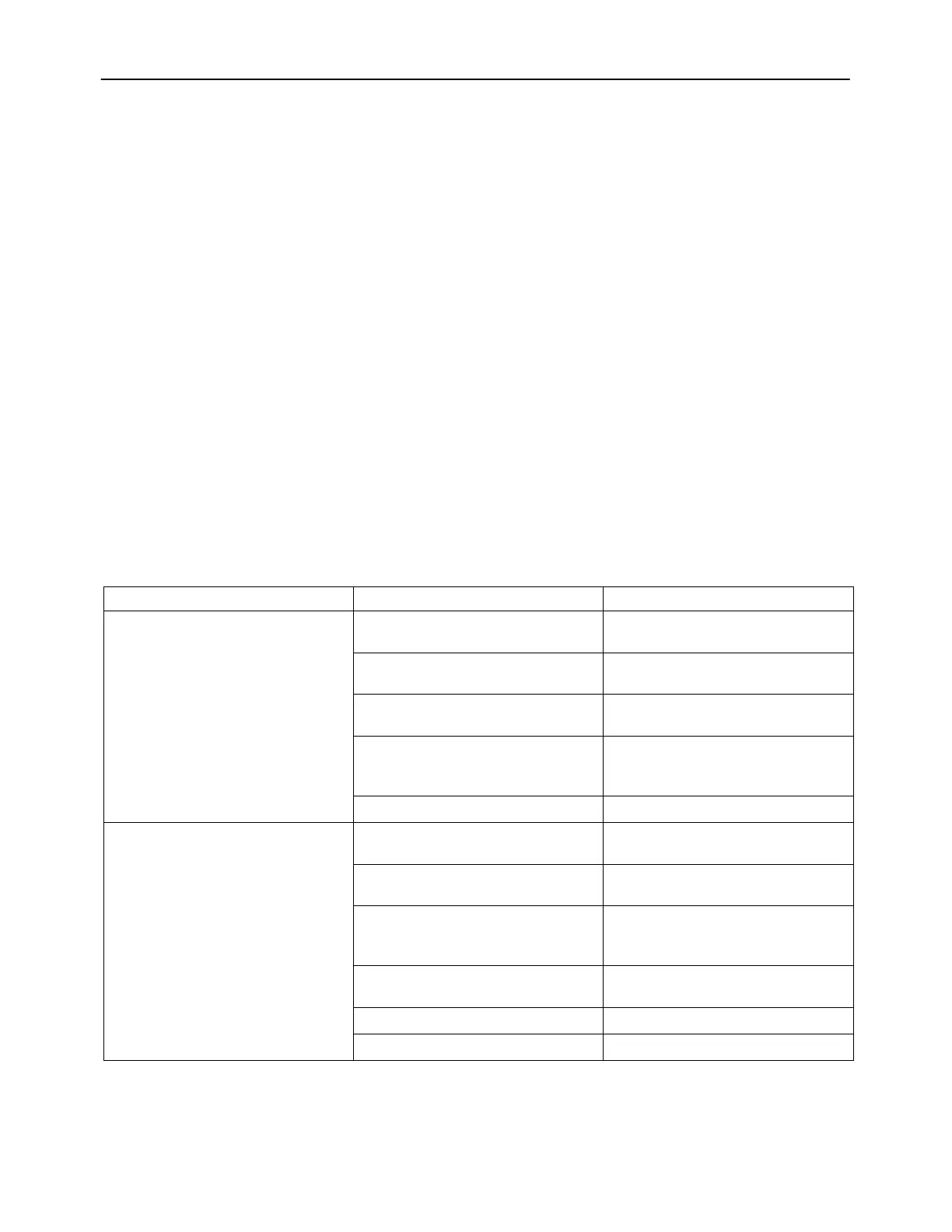
Problem
Possible cause Action
Lifting and bucket cylinders do not
function
Low hydraulic oil level. Check and top up with hydraulic
oil.
Hydraulic hoses wrongly con-
nected.
Check and connect the hoses cor-
rectly.
Hydraulic hoses to/from control
valve are “blocked”.
Check hoses for damage (kinks,
twists etc.).
Loader control valve or tractor
main reduction valve has stuck
open.
Contact your dealer
Low system pressure from pump. Contact your dealer
Lifting or bucket cylinders do not
function
Break in control cable for control
valve.
Inspect. Change if necessary.
Hydraulic quick--release couplings
not fully inserted.
Check coupling. Change cou-
pling(s) as necessary.
Blocked hydraulic hose/pipe. Look for damage to hose/pipe
which could block oil flow between
cylinder and control valve.
Piston unit damaged (does not
seal).
Contact your dealer.
Blocked control valve. Contact your dealer.
Damaged quick-release coupling. Change quick-release coupling.



 To Next Page